Beside the sink in many Rotterdam flats there’s a gap that has shrunk by 15 cm. A 60 cm front used to fill it. A 45 cm front sits there now, with a slim pull-out beside it where the spare width went. Narrow dishwashers are becoming the norm in these kitchens for reasons that are mostly arithmetic. Households are smaller and wall runs are short, while fronts come in steps of 15 cm. This article follows one couple’s kitchen through the change, weighs the gains against the losses, and shows when the switch pays off. Every capacity and daily figure below is an assumption, so substitute your own count.
Where Narrow Dishwashers Are Becoming the Norm, and Why
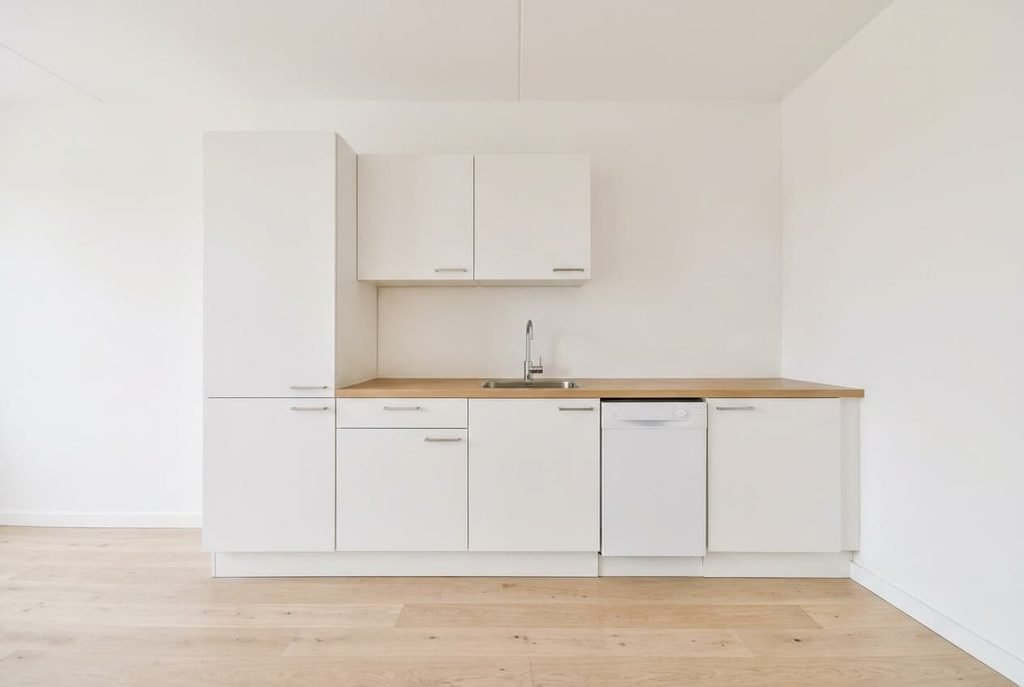
The shift began in kitchens that are a single wall of units. Older city blocks are full of them. The run is often 240 cm long. Sink and hob claim a share of it, which leaves the cupboards the remainder.
A machine takes a large bite of such a wall. At 60 cm it uses a quarter of the run, while a 45 cm one uses 18.75%. The sink already has the water connection, so the machine usually sits beside it. No other spot offers the same convenience.
Households have changed shape too. Many flats hold one or two adults, who fill a 60 cm drum slowly. They run it half empty or leave dirty crockery waiting for days. A smaller drum matches their pile more closely.
Cabinet fronts are sold in steps of 15 cm, so a 45 cm slot joins the 30 and 60 cm units around it without any fuss.
Nobody tracks this as a fashion, so read “the norm” here as a pattern in short kitchen runs. No national count backs it.
What 15 Centimetres Change Along a 240 cm Run
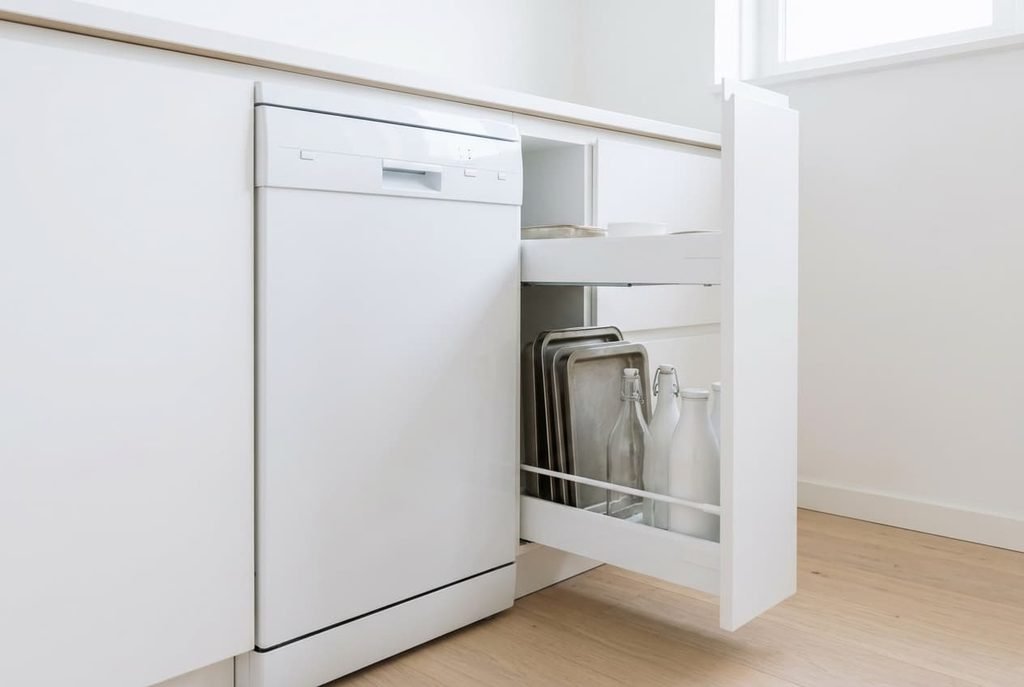
Take a couple in a Rotterdam flat with one 240 cm wall of units. Before the change it holds a 120 cm sink unit next to a 60 cm dishwasher and a 60 cm cupboard. Afterwards the sink unit and cupboard keep their places, and the dishwasher shrinks to 45 cm. That frees 15 cm for a pull-out, 60 cm deep, which reclaims 900 cm² (0.09 m²) of floor that a wider machine used to swallow. At that width the pull-out takes baking trays on edge or a row of tall bottles.
The cost sits in capacity. Assume the wide machine holds 12 place settings and the narrow one holds 9. Assume too that the couple use 5 settings a day. A wide machine fills in 2.4 days, so it runs about 3 times a week and 152 times a year. A narrow one fills in 1.8 days, which means about 4 runs a week and 203 a year, or 51 more. Its oldest plate waits at most 43 hours, against 58 hours for the wide drum, so the pile beside the sink stays smaller. That isn’t a dramatic change in daily life.
Put simply, the couple swap 51 extra cycles a year for a 15 cm pull-out, and whether that feels fair is the question the next sections settle. Narrow dishwashers are becoming the norm in kitchens where the answer is yes.
Are Narrow Dishwashers Becoming the Norm in Your Home?
Not every household gains. A pair with a short run gains most, because the pull-out is useful and the extra cycles cost little effort.
A family of four tells another story. Assume they use 12 settings a day. A wide machine then runs once daily, giving 365 cycles a year. A narrow one needs 1.33 loads a day, which means about 487 cycles. That’s 122 more, a third again. Somebody has to load and empty it far more often. Roasting trays or tall pans may still end up in the sink.
Hosts see the gap on the evening of a dinner party. Twelve settings from one meal fit the wide drum in a single go. The narrow one needs a second run before bed.
Three flatmates fall between the two cases. At 8 settings a day, the narrow drum runs 0.89 times daily, or 324 cycles a year, against 243 for the wide one, which is 81 more. Whether that suits a house is settled by who does the unloading, and a shared rota fixes that quickly. Single people sit at the other extreme. With 2 settings a day, a narrow machine takes 4.5 days to fill, which leaves crockery waiting far too long. That person may do better with a part-load rule every second day, or with a rack for hand washing.
Count your own household before reading on, because the result decides what follows.
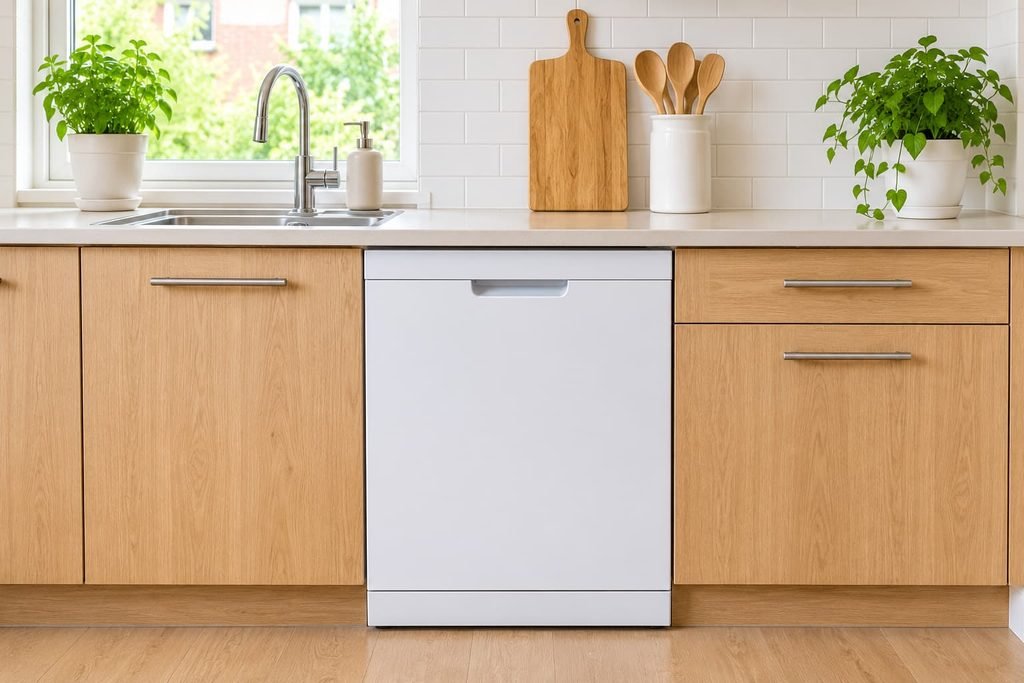
Should You Replace a Working 60 Centimetre Machine?
Keep it. A sound machine already earns its slot, and the 15 cm gain isn’t free, because the space beside a narrow replacement needs filling. Closing it with a plain panel gives nothing back. Resizing the unit and adding a new front is joinery rather than a swap.
The change makes sense when a kitchen is being redone for another reason, or when the old machine has failed beyond repair. At that moment a narrow dishwasher needs no extra work, so the choice becomes a plain comparison of the pull-out against the extra cycles. Narrow dishwashers are becoming the norm mostly through this route, at the moment of renewal and seldom through early replacement.
The plumbing helps. The machine stays beside the sink. Its water inlet and outlet keep their positions, so only the neighbouring cabinet changes.
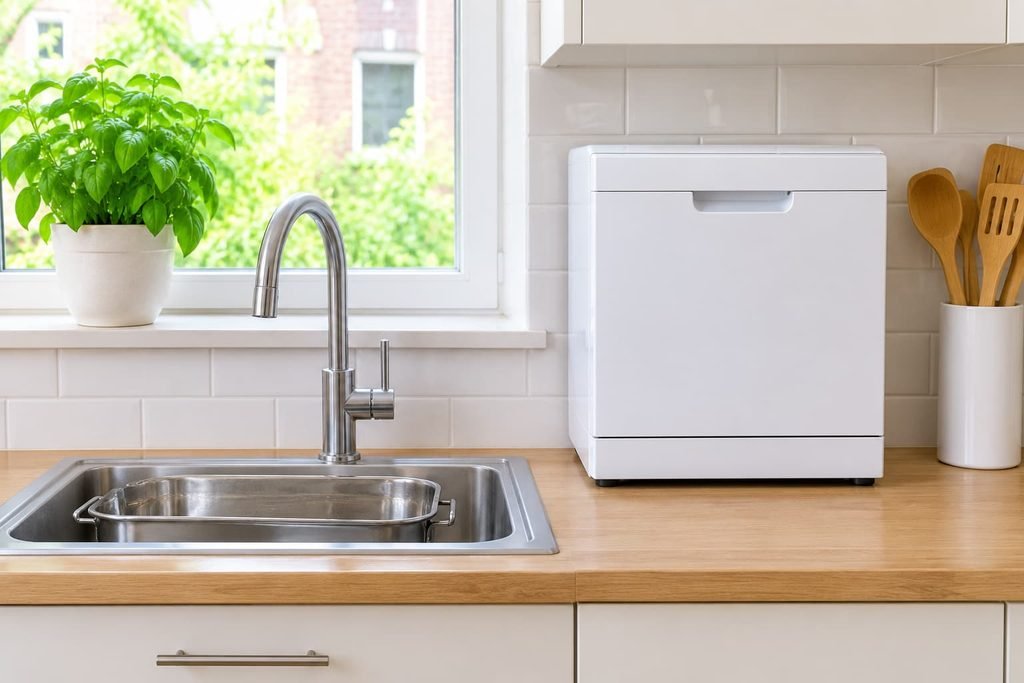
The Extreme Version: A Machine Too Small to Matter
Some kitchens go further and fit a compact machine about 30 cm wide that holds perhaps 6 settings. For our couple that means 304 cycles a year, nearly six a week, which is exactly double the wide machine’s workload for a gain of only 30 cm.
The width gained turns into a 30 cm pull-out that few cupboards can use well. Meanwhile the largest pans and serving dishes still go in the sink, as does the oven tray after every roast. The couple would load and empty a machine nearly every day for a strip too slim to hold much. Nobody should treat this size as the next step on the path, because the 45 cm width already captures most of what a short run can give.
One rule helps with any machine that small. If it would need a run on nearly every day, it has become a daily chore and the saving has gone.
A One-Week Count Before You Decide
Count the place settings you use for seven days, and write the largest daily figure on the fridge. Divide that figure by the narrow capacity of 9, and note the median day too, since a median near 5 settings points towards the narrow drum. If your busiest day is above 9 settings, keep the wide machine, because a daily second run is a recurring chore.
Then stick a 45 cm length of masking tape to the floor and stand a tray beside it. If the 15 cm gap would hold what you plan to store there, narrow dishwashers are becoming the norm in your kitchen for a good reason.
A week of counting costs nothing and settles the argument with real figures. Whatever the week shows, you’ll have figures of your own to choose a width from. A narrow machine rewards a couple who run it often and a flat that needs the spare strip. A wide one stays right where four people cook every day. Neither choice is a mistake once the count backs it.
Questions Readers Keep Asking
Should I replace a dishwasher that still works?
No. A working 60 cm machine already fills its slot, and a narrow one needs a resized cabinet next to it. Wait until the kitchen is being redone or the old machine fails, then compare the pull-out against the extra cycles for your own household size.
Who suits a narrow dishwasher best?
One or two adults in a flat whose run is short suit it best. They produce about 5 settings a day, so a 9-setting drum fills in under two days and the saved 15 cm becomes real storage. Families of four tend to prefer the wide drum, which saves about 122 cycles a year.
How long does a narrow dishwasher last?
Width alone doesn’t set the lifespan, and no figure here is a promise. Wear tracks how many cycles run, so a narrow machine in a busy family kitchen completes a third more of them than a wide one and ages sooner. For a couple the extra 51 cycles are a modest load.