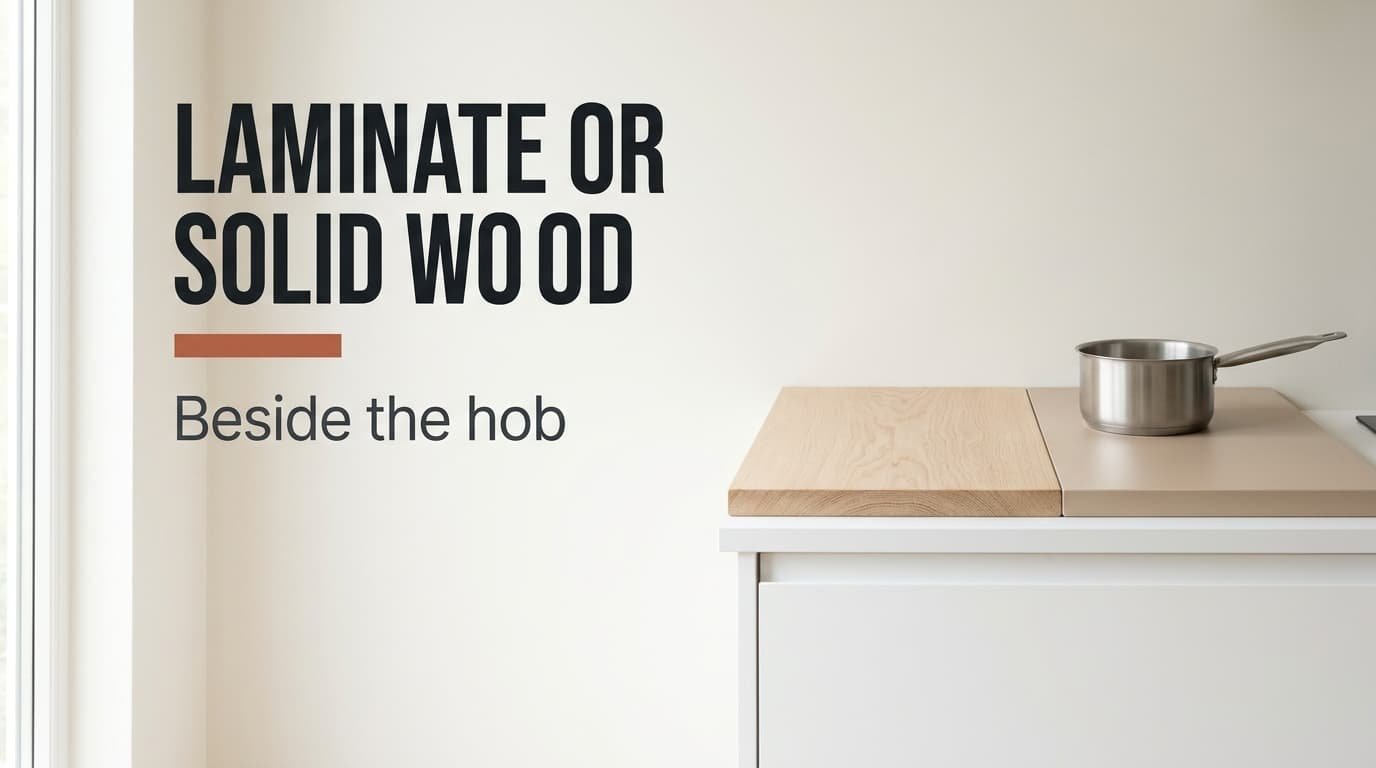
A laminate or solid wood worktop looks like a question of taste until the first hot pan lands next to the hob. Our test wall is a Dutch kitchen’s straight cooking line, where a worktop run of 240 cm by 60 cm holds a hob of 56 × 49 cm. Swap these figures for those of your own wall. Both materials suit that wall. They part ways over how they take heat and water, and over the work each one leaves for you. The page compares them point by point, tracks each across a typical fortnight at the hob and then weighs a route that keeps the worktop already fitted.
How a Laminate or Solid Wood Worktop Compares Beside the Hob
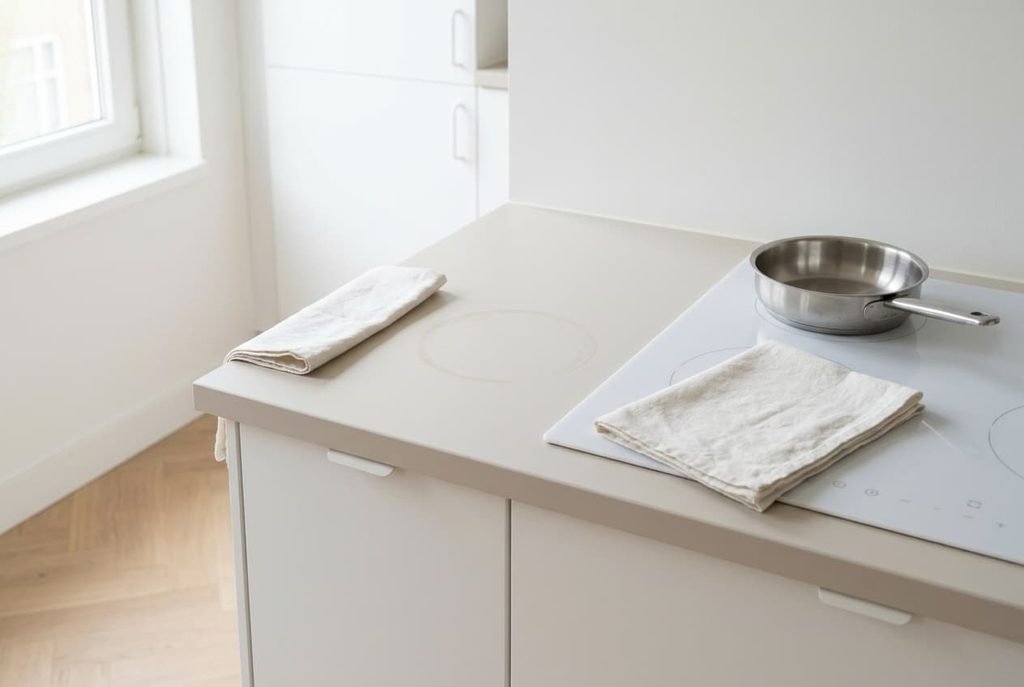
A worktop beside a hob has two jobs. It must stay flat under pans, and it must shrug off whatever you put down in a hurry. Put simply, the two materials differ in that laminate is a thin printed skin over a chipboard core, while solid wood is the same material all the way through. The skin measures about 1 mm. A hot pan that burns through it exposes the core, and the pattern is gone for good. Solid wood, at 40 mm, has no skin to lose. Damage stays shallow there, and a sander can remove it.
The sample wall shows the stakes. The run covers 240 × 60 = 14,400 cm², and the hob opening takes away 56 × 49 = 2,744 cm². That leaves 11,656 cm², or 1.17 m², of usable top. Allow a landing zone 40 cm wide at either side of the hob, at the full 60 cm depth, and the two zones add up to 4,800 cm². Roughly 41% of the usable surface is where hot pans actually land.
That short comparison skips the cut edges. The hob opening has a perimeter of 2 × (56 + 49) = 210 cm, and along that line the core is exposed to steam until somebody seals it. It also skips weight and fitting, which matter less here than the surface itself.
The Two Worktops Side by Side
The pair differs on six properties, and each follows from the way the material is made. That keeps the table valid for any worktop of either kind. Nothing in it relies on a particular make or finish. Read it downwards, since the surface row explains the next three. The wording is general, while the 41% figure belongs to our sample wall.
| Property | Laminate | Solid wood |
|---|---|---|
| Surface | printed skin about 1 mm thick on a core | wood throughout, 40 mm |
| Hot pan set down | leaves a permanent mark | scorches, and a light mark sands out |
| Water at the hob opening | edge sealed once at fitting | edge oiled, then renewed yearly |
| Scratch or cut | stays for good | sanded out in minutes |
| Routine care | wipe with a cloth | wipe, then oil once a year |
| Repairs available | none | about five light sandings |
In choosing a laminate or solid wood worktop for this wall, the repair row weighs most, because hot pans arrive without warning and no habit can predict them. Laminate asks for the least upkeep, whereas solid wood asks for about an hour a year, and that hour buys the five sanding passes in the last row.
How Laminate Behaves Day to Day
Laminate rewards a lazy routine. A cloth wrung out in warm water clears splashes, and the sealed surface soaks up neither cooking oil nor wine. Nothing needs renewing, and nothing needs booking in for later.
The weak point is heat. A pan base 24 cm across covers 452 cm², nearly a fifth of one 2,400 cm² landing zone, and a pan fresh from the ring can leave a ring of its own where the skin discolours or lifts. Pan handles are the second threat. They knock the front edge as they swing, and a chipped corner lays the core bare.
The hob opening is the third. The fitter should seal the whole 210 cm of cut edge once, before the hob goes in. When that step is skipped, steam from boiling swells the core a little each winter. The edge lifts, and that swelling stays for good.
Treat a mark as permanent. Replacing one section of a run means replacing the full length between joints, and that needs a fitter’s visit.
Solid wood asks for a small yearly ritual.
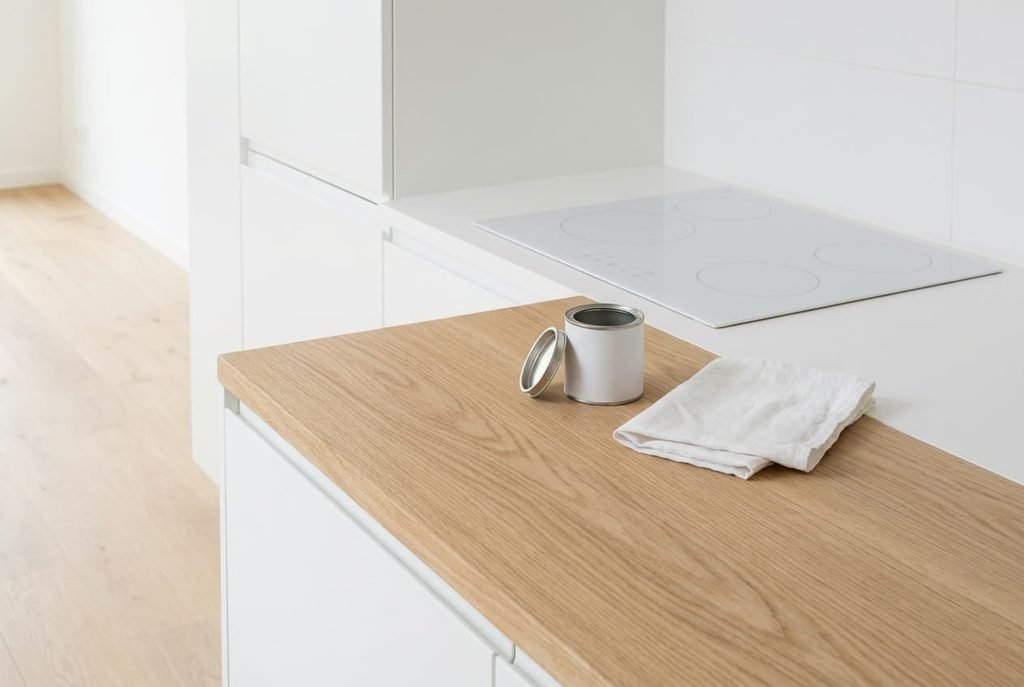
Oil is the only upkeep this material ever asks for.
The top gets a coat of oil before first use and another within the first year, then one a year after that. Assume an hour per coat for our 1.44 m² run, plus a day with the hob unused while the oil cures. That’s the sample cost, and your own wall will differ.
The oil also seals the 210 cm opening edge, so ask for it to be done before the hob is dropped in. Water that lingers on bare wood leaves a dark ring, and a fresh coat is the remedy.
Heat marks the surface without ending it. A pan set down too early leaves a pale brown scorch. A light sanding takes off about 0.2 mm, and a 40 mm top can lose 1 mm over its life without trouble, which allows five of them.
Wood shifts slightly as the seasons change, mostly across its width. That is why any laminate or solid wood worktop comparison must include fitting: only the wooden one needs a narrow margin beside the wall.
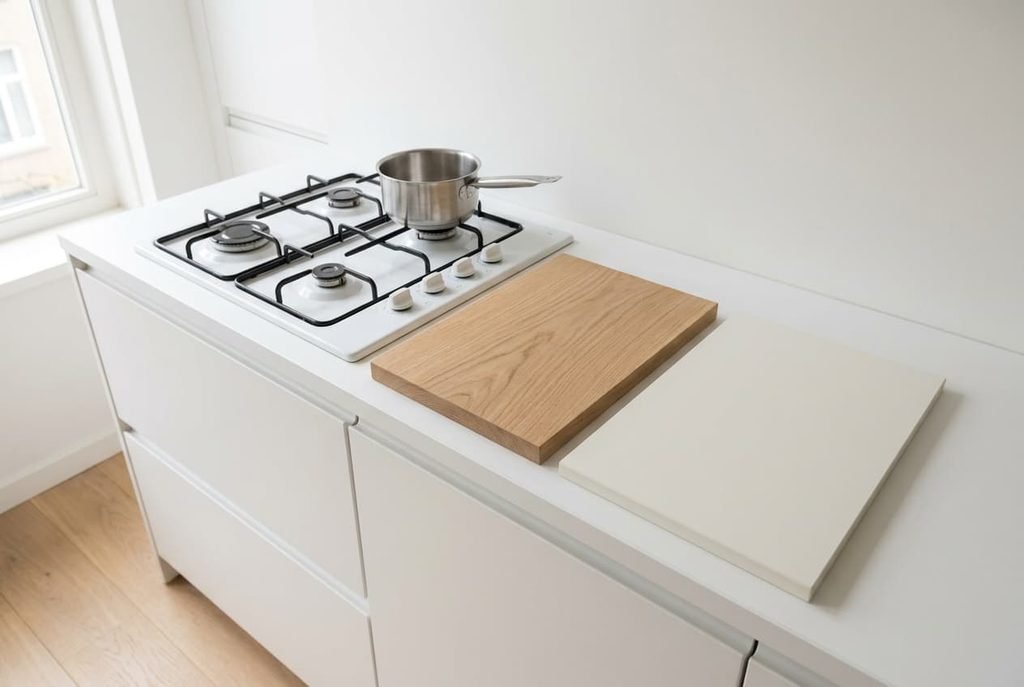
A Third Route: Keep the Worktop and Shield the Hob Side
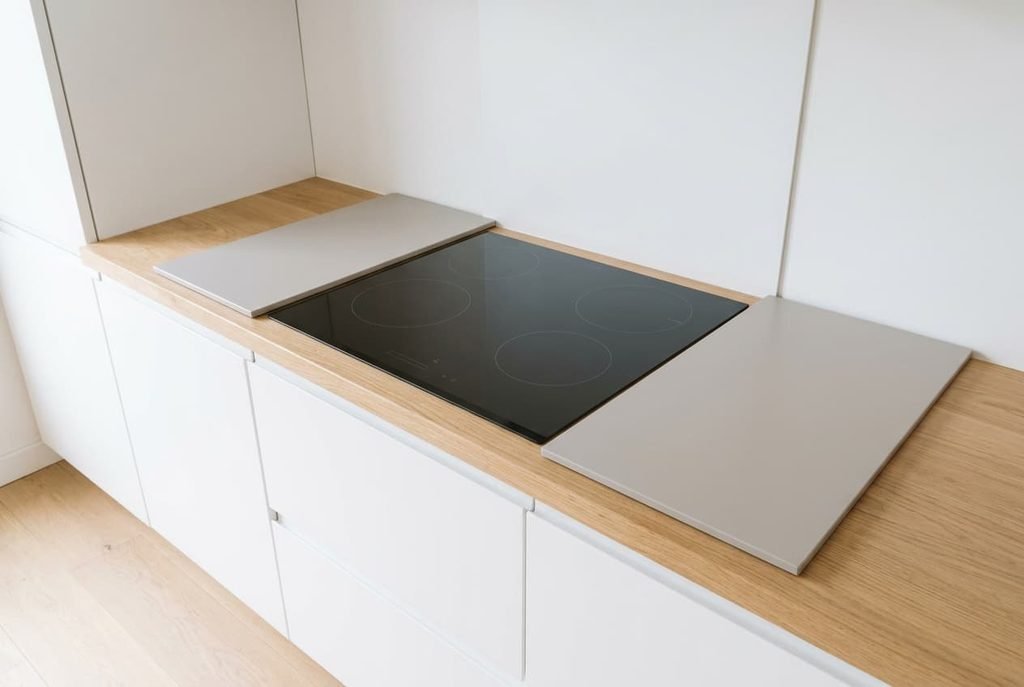
Some kitchens need neither material, because the worktop already fitted is sound. The cheaper move is a board across each landing zone, measuring 40 by 60 cm so that the pair covers all 4,800 cm². Hot pans then meet a surface made for them, and the worktop beneath stays as it is. Choose boards with a grip underneath, since a sliding board is worse than none.
The route has limits. Boards shorten the free working top. On our wall the usable 1.17 m² shrinks to 0.69 m² of bare surface, a loss of 41%, and every chopping job moves to the strip between them. Cleaning takes longer too, because crumbs hide under each board.
Keep the boards as a trial for a month. If you stop noticing them, the old worktop has years left. If they irritate you daily, you’ve learned which material to look for, and why.Which Suits a Cooking Wall: Solid Wood or Laminate Worktop?
Two branches cover most choices between a laminate or solid wood worktop. When you want a surface you never think about, choose laminate. You pay with a mark you can’t remove, and with a replaced section if the skin ever fails. You gain a wipe-clean top and an end to upkeep. Before the hob goes in, check that the full 210 cm of cut edge has been sealed.
When you accept an hour a year with a tin of oil, choose solid wood. You pay with that hour and an occasional scorch. You gain a top that sands back to clean wood. Ask for the cut edges to be oiled at fitting, and keep the hob zone clear while the oil cures.
Count your own landing zone first. Ours came to 4,800 cm², about 41% of the usable top, which is why the repair row mattered so much. Then ask which trade you’d rather live with: a mark that never leaves, or an hour of work each year. Whichever answer arrives quickly is usually the right one, since you’ve been picturing your own kitchen all along.
Questions Readers Keep Asking
Which lasts longer beside a hob?
Solid wood, usually, because a scorch can be sanded away and the top refinished several times. Laminate stays sound while its skin stays whole, and a single deep burn ends that. A well sealed laminate edge also matters, since steam swells an unsealed core slowly but for good.
How often does solid wood need oiling?
Twice in the first year, then once a year. Water that stops beading on the surface is the sign it’s due. Wipe the top clean and let it dry. Apply a thin coat, then take off the excess after a few minutes. Keep the hob zone out of use for a day while it cures.
Which suits a small rented kitchen?
Laminate usually fits a rental better, since landlords rarely object to a surface that needs no oil and can’t be refinished into a different look. If the worktop is yours to choose and you expect to stay for years, solid wood earns its yearly hour.