A sofa moved out of its corner leaves four neat pits in the pile, and they stay long after the sofa has gone. Fibre that was bent under a weight keeps its bend. The pits look permanent, yet in most cases the pile is only pressed down and not damaged beyond repair. Before you decide the carpet is spoiled, find out how deep the damage runs, because dents left in a carpet often lift with little more than water and patience. Take a flat in Utrecht, one floor up, that came with a fitted carpet, a 90 kg sofa on four small feet and a landlord who expects the floor back in good order.

What Heavy Feet Leave Behind: Dents in the Carpet
A carpet pile is made of thousands of small fibre bundles standing upright. A foot presses on them and bends each fibre sideways. After a few weeks the fibres settle into that bend, much as a sleeve keeps the crease of a fold. The fibres have been bent, not removed, and that’s why a dent can be undone at all.
That single fact decides everything that follows.
The load explains where the dents sit. Our sofa weighs 90 kg. Each of its four feet therefore carries 22.5 kg. A foot measuring 4 by 4 cm covers 16 cm². Every square centimetre under it carries 1.4 kg. A cup 8 cm across covers about 50 cm² and brings that figure down to 0.45 kg.
Dry fibre resists being moved. Water that gets between the fibre chains lets them slide. A bent fibre then relaxes and can be stood up again. Wool tends to spring back well, whereas many synthetic fibres hold a set for longer. The duration of the load matters as well. Dents left in a carpet by a sofa that stood for three weeks relax far more easily than those from three years.
Confirm Which Kind of Dents Left in a Carpet You Have
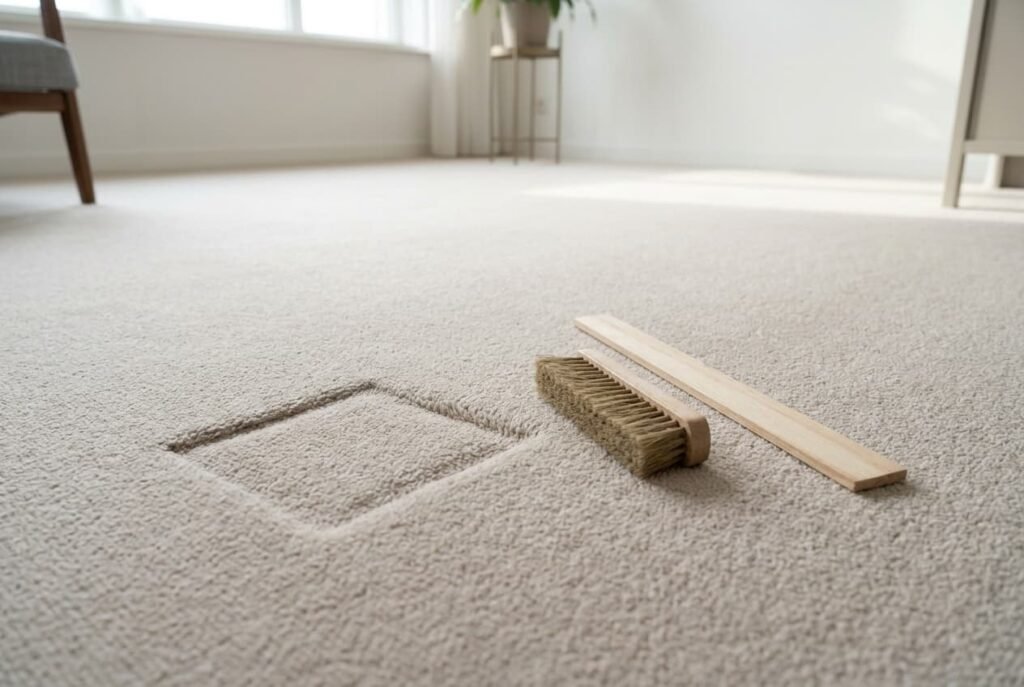
Not every dent is a bent fibre, and three short tests come before any treatment. Move the furniture aside and brush the dent with a dry stiff brush against the lie of the pile for half a minute. A dent that shallows by about half means crushed pile, and the fixes below will work.
Next, rest a ruler over the dent and slide a pencil under it. If a hollow 3 mm deep stays behind with the fibres upright, the underlay beneath has been squashed. Pile treatments can’t reach it, and only a lighter load will help.
Finally, hold a torch low along the floor. A flat, shiny patch with fewer fibres is worn pile, which no amount of moisture restores. In our flat the fresh dents of three weeks are the first kind. The older ones under the sofa’s back feet often mix the first two kinds. Expect to treat them in more than one round. Record what every test shows. The pattern tells you which of the fixes below deserves your time.
Four Ways to Lift the Pile, From Free to Paid
Start at the top. The bills grow as you go down, and only some dents ever reach the lower rungs. Each fix tackles a different cause, and a step that fails tells you something about dents left in a carpet like yours.
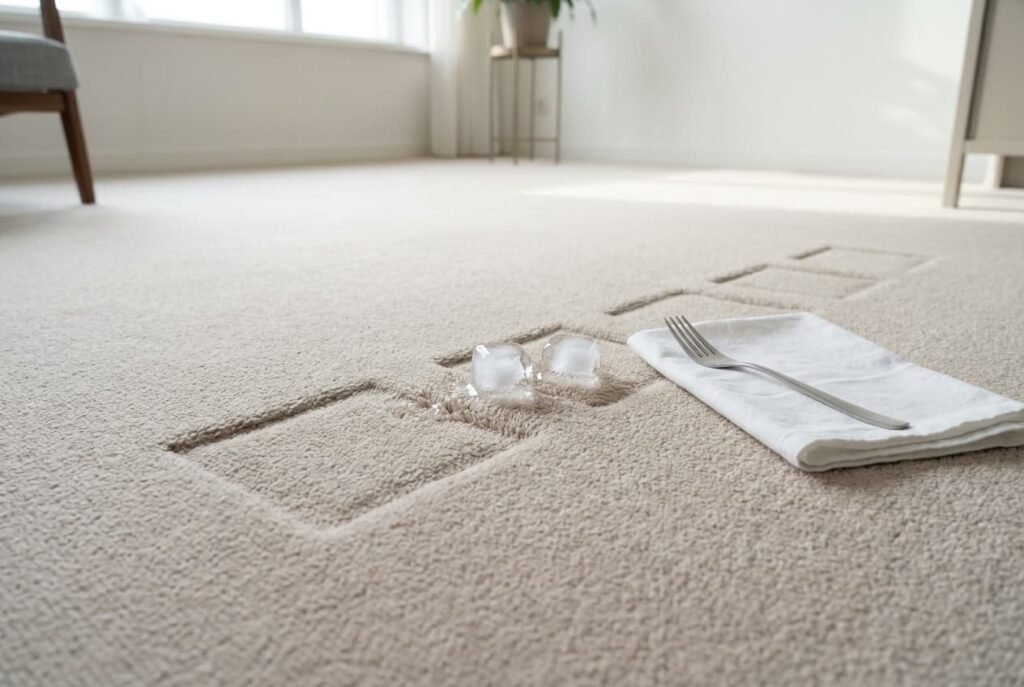
Melt ice on each dent, which addresses a fibre set in its bend. Put two cubes on the dent and leave them until they’ve melted, which takes about an hour in a warm room. Blot the water with a dry cloth, then fluff the pile upright with a fork or your fingers, working from the edge of the dent towards its centre. The ice is free. Water brings its own risk. Try a hidden corner beforehand for dye that runs, and expect a deep dent to need a second round the next day. Keep the furniture off the spot for a full day afterwards. That lets the fibres dry standing upright.
Fit castor cups under every foot, which addresses the concentrated load. A wide cup spreads the weight over three times the area. The pile bends far less than before and keeps its height under the sofa. Choose cups with a flat base wider than the foot and a smooth rim, which stops the cup itself biting into the pile. The cups cost little, and they must go under every foot, because a single bare foot will dent the carpet again within weeks. A cup stops new dents forming but lifts none of the old ones.
Book a hot-water clean from a carpet firm, which addresses many dents at once. Heat and water relax the fibres across the whole floor while suction pulls the moisture back out, with little water left behind. You pay for the visit, and the machine usually finishes a living room in under an hour. Squashed underlay lies out of its reach.
Ask for a patch cut from a hidden spot, which addresses fibre that is worn or crushed beyond lifting. A fitter cuts a plug from under a wardrobe and sets it into the damaged place, gluing it to the backing so the edges sit flush. Ask the fitter to leave the offcut with you in case a second patch is needed later. Expect the highest bill here, and the colour may differ slightly because the original has been walked on. The landlord must agree first.
What This Room Holds Fixed
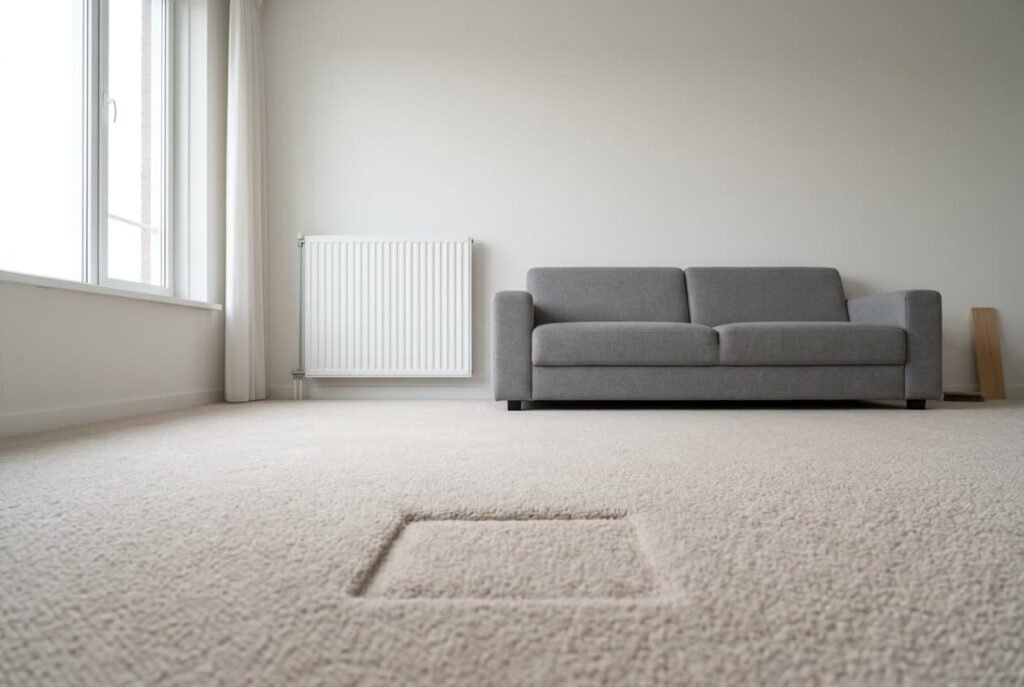
The sofa has to stand against the long wall because the radiator sits opposite and the only socket is behind it. Moving the sofa by 5 cm would only press new dents into fresh pile, and it would drift back to this wall in the end.
The carpet is the landlord’s and is glued at the edges. A tenant can’t lift it to replace the underlay, and the underlay’s thickness is not a choice either. Only the load that reaches it can be changed. That’s why the cups matter in this room, and dents left in a carpet like this one stop forming once they’re fitted.
The south-facing window is the third fixed feature. Sun fades the carpet in a bright band. A patch cut from beside the wardrobe would stay darker than the pile by the glass.

The Fix That Flattens More Than It Lifts
Pressing a hot iron straight onto the dent is the shortcut most people try. The metal flattens the fibres around the dent, and on a synthetic carpet it can melt the tips and leave a glossy mark that never goes. Holding an iron just above a wet cloth is less risky, but it still scorches some carpets.
Soaking the dent with a full cup of water goes wrong in another way. It runs down to the underlay, which then takes days to dry and can stain the floor beneath.
A book left on top to press the pile flat only adds to the problem.
Running a vacuum cleaner over a wet dent is another habit to drop. The brush bar tugs at fibres that are soft with water and pulls out loose tufts, which leaves the dent wider than before. Wait until the spot is completely dry, then vacuum it once.
Use small amounts of water and a gentle lift. A wire brush fails too, since it tears the tips off the fibres and leaves a bald patch. Put the furniture back only once the pile is dry and standing, and check the spot a week later. A dent that stays shallow has been cured, while one that comes back blames the underlay. Fit the cups before the sofa goes back.
Questions Readers Keep Asking
Can every dent be lifted?
Not every one. Crushed pile usually lifts. Worn fibre and squashed underlay don’t. A fresh dent of a few weeks responds best. Begin with the brush test, and if nothing changes, consider a patch instead. Repeating the treatment won’t help.
How much does it cost to lift them?
The ice method costs nothing and castor cups cost little. A hot-water clean is the biggest regular expense, and a patch cut by a fitter is the most costly of all. The free fixes solve the usual case and deserve a try before anyone is paid to visit.
Why do small feet dent the carpet so quickly?
A small foot concentrates the same weight on fewer fibres. In our case a 4 by 4 cm foot loads 1.4 kg onto each square centimetre, while a wide cup loads 0.45 kg. The higher figure bends fibres past the point where they recover. That’s how a dent forms within weeks.