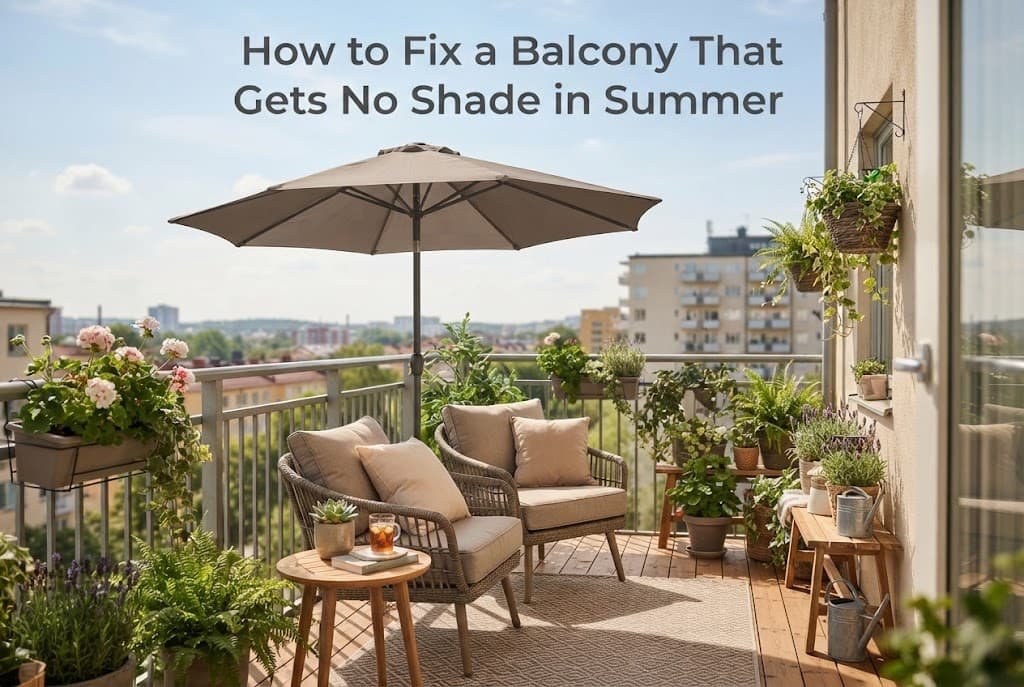
A balcony with genuinely no summer shade usually isn’t unusable by design at all – it’s unusable because specific, genuinely addressable factors are combining to make direct sun exposure considerably worse than the space’s actual orientation alone would ever require. Understanding which factor is actually driving the problem determines whether a simple, low-cost fix solves it, or whether the underlying exposure genuinely needs a more substantial solution.
What is actually happening
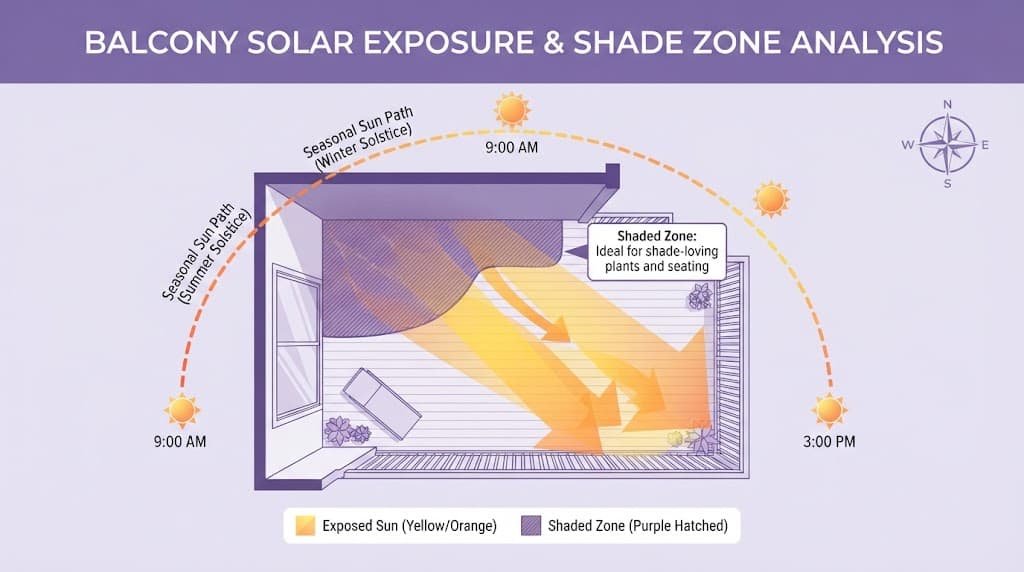
Direct sun exposure on a balcony depends on several combining factors: the balcony’s actual compass orientation, the specific hours it receives direct light, and whether anything currently exists to interrupt that light before it reaches the usable floor area. A balcony facing a direction with genuinely intense afternoon sun, with nothing currently breaking that light path, experiences considerably more heat and glare than a similarly-oriented balcony with even minimal existing interruption.
This matters because “no shade” often gets treated as a fixed, unchangeable property of the balcony’s orientation, when the actual issue is frequently the complete absence of any interruption to that light path specifically, which is a genuinely different and more addressable problem than the orientation itself.
Surface materials genuinely compound this same problem further, since dark flooring and railings absorb and re-radiate heat considerably more than genuinely lighter surfaces do, meaning two balconies with identical direct sun exposure can feel noticeably different in actual temperature depending on exactly what they’re built from. This is genuinely worth confirming before assuming shade alone will fully resolve the overall discomfort, since surface heat retention can remain a genuine factor even once direct sun exposure itself has been properly addressed elsewhere.
Confirm which pattern you have
Check quite specifically which particular hours of the day the balcony genuinely receives direct, intense sun, rather than simply assuming it’s uniformly hot throughout all daylight hours – this important distinction determines whether a fix needs to address the entire day or just a specific, more limited window.
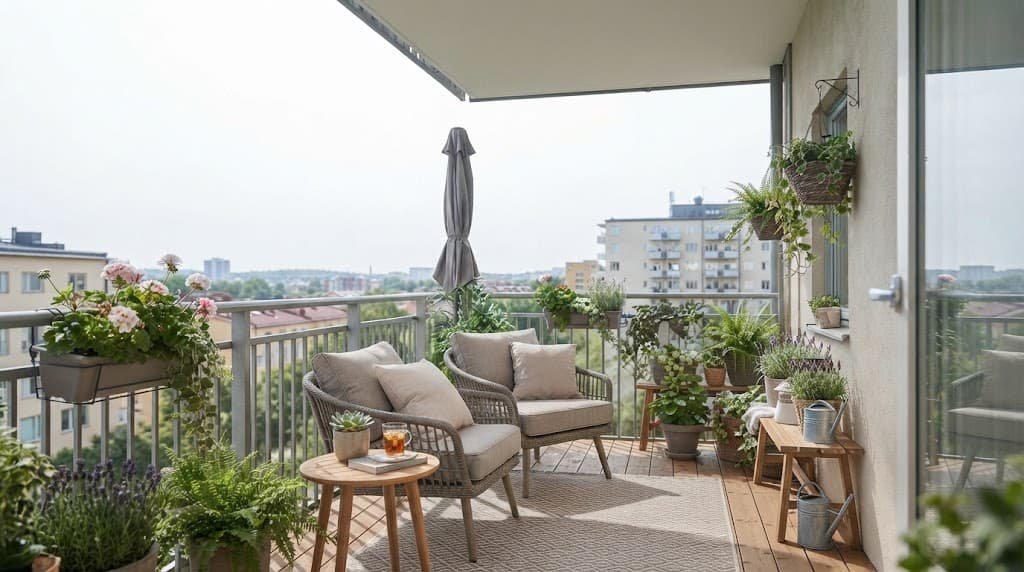
Check carefully whether the balcony currently has any genuine structure at all above or beside the main seating area – a railing, an overhang, anything at all – since a completely open balcony with zero existing interruption responds quite differently to shade additions than one with some existing partial structure to potentially build upon later.
The fixes, in order of cost
1. Reposition the seating area to whatever spot currently receives the least direct sun during your actual peak-use hours. This genuinely costs nothing at all and directly addresses the problem for anyone whose balcony has some natural variation in exposure across its actual floor area, even entirely without any additional structure whatsoever.
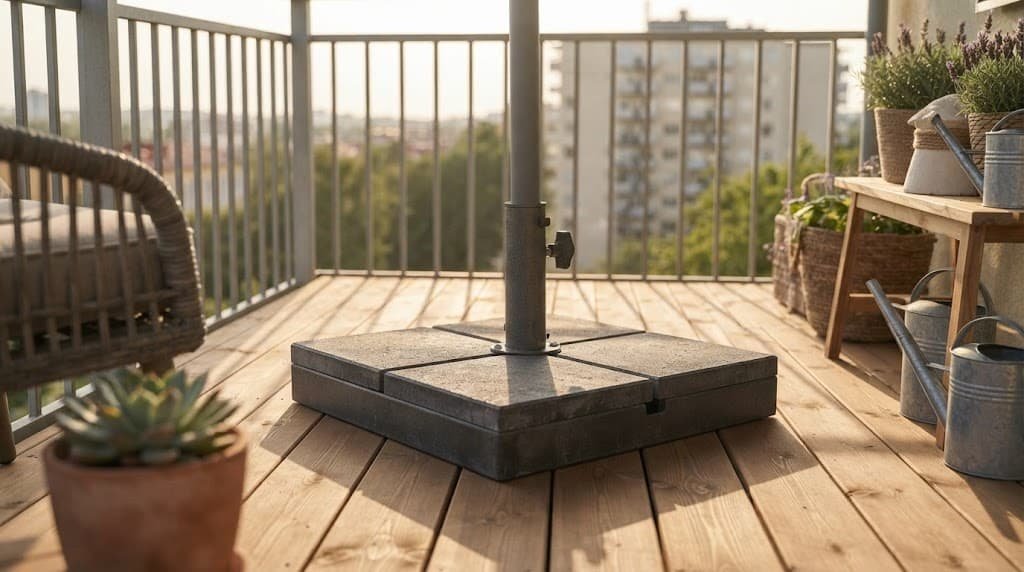
2. Add a large, sturdy umbrella with a genuinely stable base specifically rated for the wind conditions your balcony actually experiences. This is genuinely a modest cost addition that directly blocks direct sun for a meaningfully large portion of the day, though it does require enough available floor space to accommodate both the umbrella’s actual footprint and the seating it’s specifically meant to shade.
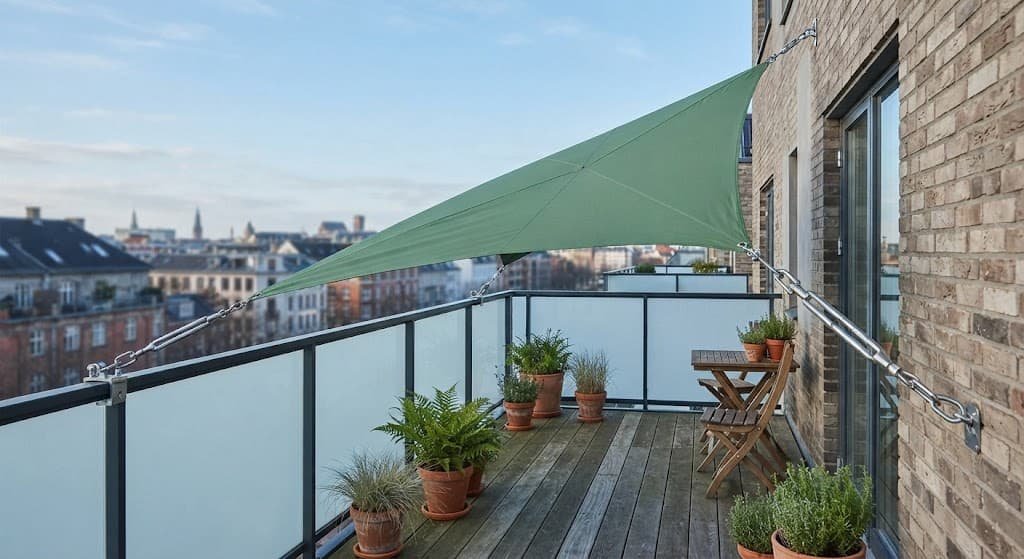
3. Install a retractable or fixed shade sail, if your balcony’s railing or existing structure can support one without modification. This genuinely provides more consistent shade coverage than a single umbrella across a considerably larger area, though it requires genuine, properly rated anchor points that can bear the sail’s ongoing tension, which not every balcony railing was ever originally designed to handle.
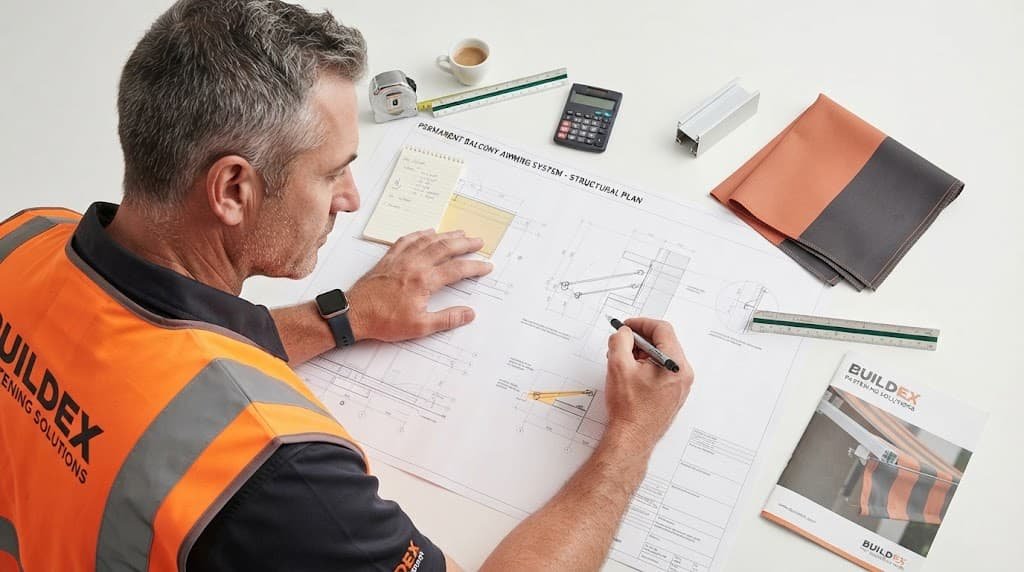
4. For a genuinely severe exposure problem, consult a licensed contractor about a permanent awning or pergola structure, if the fixes above don’t provide sufficient shade for your specific needs. This is genuinely a professional consultation, not a DIY project of any kind – any structure requiring new anchor points into your building’s actual exterior needs proper, thorough assessment of the structure’s genuine capacity before being considered any further.
What isn’t worth doing
Relying entirely on portable, freestanding shade cloth draped loosely over furniture, hoping it provides meaningful protection without any genuine structural support, isn’t worth the ongoing effort it requires.
Loose fabric without proper tensioning or secure anchoring typically provides considerably less actual shade coverage than its overall size suggests, since wind and general movement constantly shift its position away from where shade is actually needed, requiring frequent readjustment that a genuinely secured solution simply doesn’t demand.
Painting the balcony floor or railing a lighter colour purely as a standalone heat-reduction measure, without also genuinely addressing direct sun exposure itself, is similarly not worth prioritising as any kind of primary fix. This genuinely helps with the surface-heat factor covered earlier, but it doesn’t actually block direct sun at all, meaning glare and skin-level heat exposure remain fully and completely present regardless of how much the surface temperature itself genuinely improves in the process.
What changes if your situation is different
If your balcony’s exposure is genuinely severe for only a specific few hours rather than throughout the day, prioritise a simpler, targeted fix – repositioning or a modest umbrella – over a more substantial structure, since the actual problem window may not justify the cost and complexity of a permanent solution.
If you’re renting and structural changes genuinely aren’t available to you, the repositioning and umbrella options become your practical ceiling, and a genuinely sturdy, well-chosen umbrella can address a considerable amount of direct exposure on its own without requiring any modification to the space at all.
If your balcony genuinely experiences strong wind alongside intense sun, prioritise umbrella and shade sail stability specifically over coverage area alone, since a larger shade solution that tips or genuinely fails in wind provides considerably less reliable protection than a smaller, genuinely secure option that actually stays firmly in place through your balcony’s typical everyday conditions.
The one thing to check before you commit
If you’re specifically pursuing the shade sail or permanent structure option, confirm carefully that your balcony railing or building exterior can genuinely bear the required load before purchasing any materials at all, since this determines actual feasibility in ways that simply aren’t obvious from looking at the existing structure yourself.
This particular check matters considerably more for these specific options than for repositioning or an umbrella, since those remaining fixes require no genuine structural commitment at all, while a sail or permanent structure genuinely and directly depends on load-bearing capacity that’s worth confirming clearly before any further planning or purchasing genuinely proceeds.
Questions readers keep asking
Is repositioning furniture really enough to meaningfully fix a hot, sunny balcony?
For many balconies, genuinely yes, at least partially so – even balconies with generally strong overall sun exposure often have some meaningful variation across the floor area, and identifying the specific spot with the least direct exposure during your actual peak-use hours can meaningfully improve comfort without requiring any additional purchase at all.
Do all balcony umbrellas need a heavy base to be genuinely effective?
Yes, quite particularly on a genuinely elevated balcony specifically, where wind exposure is often considerably stronger than it typically is at ground level, and an inadequately weighted umbrella genuinely becomes both ineffective and a real safety hazard if it tips or blows over in those specific elevated conditions, potentially falling directly onto people or property down below.
When is it worth considering a permanent structure instead of simpler shade options?
If you’ve genuinely tried repositioning and a sturdy umbrella and still don’t achieve adequate shade for your specific needs, that’s the point worth consulting a professional about a more permanent structure, rather than starting there before trying the simpler, lower-cost fixes first.
Does the colour of shade fabric actually affect how much heat it blocks?
Yes, quite meaningfully – lighter-coloured shade fabric generally reflects considerably more heat than dark fabric genuinely absorbs, which can noticeably affect the actual temperature underneath even when both colours technically block an equivalent amount of direct visible light. This is genuinely worth considering carefully alongside overall coverage area when actually choosing between umbrella or shade sail fabric options available to you.