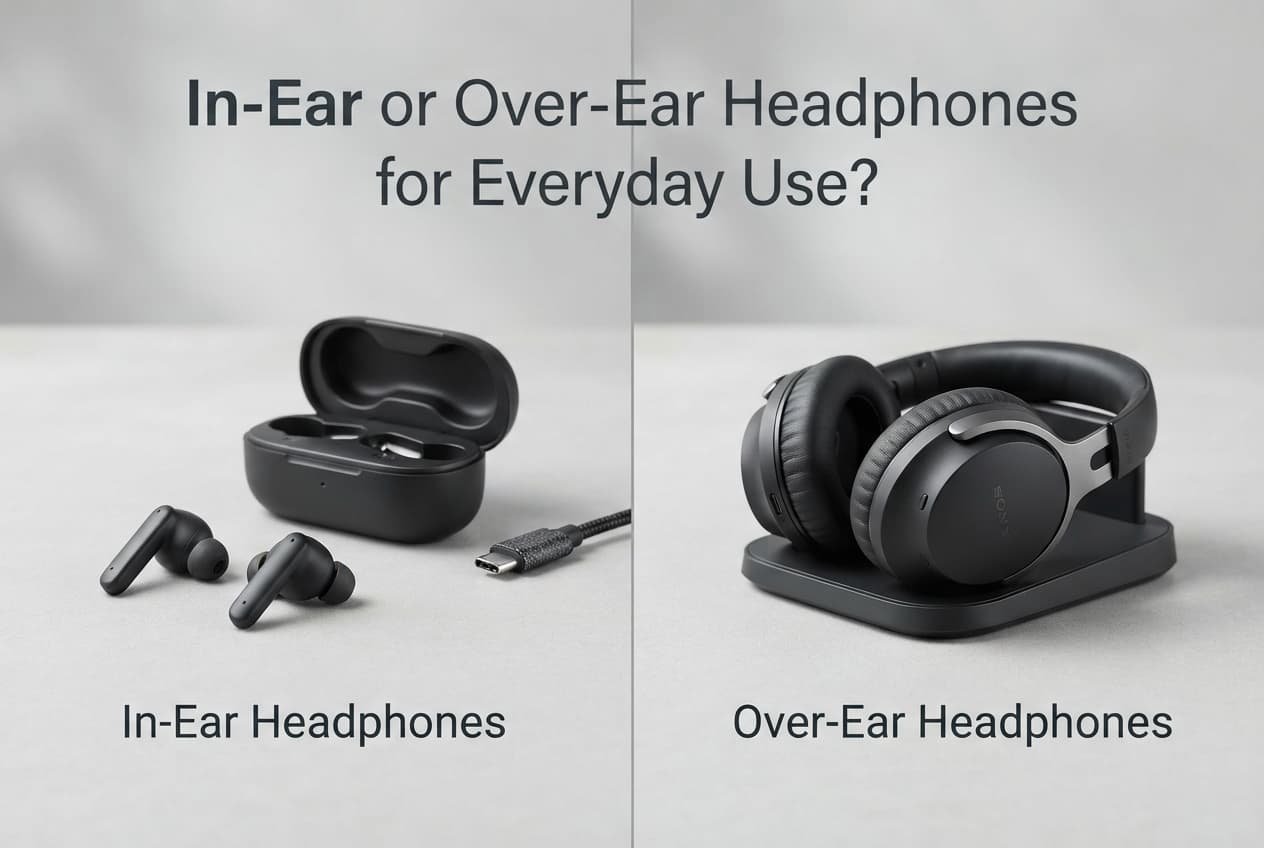
The right format isn’t decided by which one looks more premium or technically impressive – it’s decided by how each one actually fits your specific daily activities and physical comfort preferences once you’re wearing it for extended periods. In-ear and over-ear headphones solve genuinely different practical needs, and choosing based on trend alone misses what actually determines whether either one works well for your genuine everyday use.
The one property that decides it
The deciding factor is how much your daily activities genuinely involve movement and portability versus extended stationary listening, not simply which format is currently more popular. In-ear headphones directly serve activities involving genuine movement – exercise, commuting, errands – while over-ear headphones prioritise sustained comfort and typically fuller sound for more stationary listening sessions.
This genuinely matters because your actual daily pattern of movement versus stationary listening determines which format’s specific strengths genuinely align with your own real use, rather than either format being universally superior regardless of how you actually use headphones day to day and week to week.
Head to head
| In-Ear | Over-Ear | |
|---|---|---|
| Easy to carry | Higher | Lower |
| Suited to movement | Yes | Less naturally |
| Typical comfort for long sessions | Varies by fit | Often higher |
| How they seal the ear | Direct seal | Surrounds the ear |
| Heat buildup during use | Lower | Can be higher |
| Typical case size | Compact | Bulkier |
The row that surprises people most is comfort for long sessions specifically. Many assume in-ear headphones are automatically more comfortable since they’re smaller, but a poorly fitting in-ear can become genuinely uncomfortable during extended wear, while a well-fitted over-ear design often distributes pressure more evenly across a larger area for sustained comfort during long listening sessions.

Where in-ear wins
Anyone whose daily activities genuinely involve movement – exercise, commuting, walking – benefits from in-ear headphones’ compact, secure format, since this directly addresses the practical need for headphones that stay in place and remain portable during genuine physical activity in a way bulkier over-ear headphones structurally can’t match as well. The unglamorous reason: in-ear headphones also tend to generate less heat buildup during use, which matters more than it might initially seem during warmer weather or more physically active use specifically.
Anyone genuinely needing headphones that stay securely in place during vigorous movement also benefits from this same secure format in a related way, since many in-ear designs include ear hooks or specific stabilising features that over-ear headphones simply don’t need, given how differently the two formats physically interact with movement.
Where over-ear wins
Anyone genuinely prioritising sustained comfort during long, primarily stationary listening sessions – working from home, extended relaxation – benefits from over-ear headphones’ typically more even pressure distribution and often fuller sound reproduction, since this directly addresses comfort and audio quality priorities that matter more for this specific use pattern than portability does. The unglamorous reason: over-ear headphones also don’t require finding a genuinely correct ear tip fit the way in-ear headphones do, removing a potential source of discomfort or fit-related frustration entirely for some listeners.
Anyone genuinely sensitive to having something inserted directly into their ear canal also benefits from this same avoidance in a related way, since over-ear headphones rest around rather than within the ear, which some people find meaningfully more comfortable regardless of how well an in-ear option might otherwise technically fit.

When neither is right
Defaulting to whichever format seems more currently fashionable, without genuinely considering your own actual daily activity pattern, is worth ruling out regardless of which format you’d otherwise lean toward.
A genuinely well-suited choice depends specifically on your own daily movement pattern and listening session length, not on a general trend toward one format over the other, meaning reviewing your own actual typical daily use against each format’s genuine strengths matters more than following current popularity alone.
How to decide in thirty seconds
If your daily activities genuinely involve regular movement, choose in-ear headphones. Their compact, secure format directly addresses a practical need over-ear headphones structurally can’t match as well during genuine physical activity.
If you genuinely prioritise sustained comfort during long, primarily stationary sessions, choose over-ear headphones. Their typically more even pressure distribution directly addresses extended comfort in a way in-ear headphones’ seal-dependent fit doesn’t always match as consistently.
What changes the answer later
Taking up a genuinely more active daily routine than previously – starting regular exercise, a more physically active job – is worth reconsidering the choice at, since your actual movement pattern shifting meaningfully changes which format’s strengths align better with your new daily reality.
Experiencing genuine discomfort with your current format during its typical use – ear fatigue from in-ear use, overheating from over-ear use – is also worth reconsidering the choice at, since persistent discomfort suggests the format itself may not suit your specific physical response, regardless of how well it suits your general activity pattern.

What people get wrong when choosing between them
The most common mistake is assuming one format is universally “better” overall, when in practice each format is genuinely optimised for different priorities, and the actual right choice depends entirely on which specific priorities – portability, sustained comfort, sound isolation style – matter most for your own genuine daily use pattern.
A second common mistake is choosing in-ear headphones purely for their compact portability without genuinely testing fit comfort first, given how much comfort varies by individual ear shape for this specific format. An in-ear design that fits one person comfortably can genuinely feel quite different for another, making a fit test more important for this format than portability alone might suggest.
What changes if you have specific ear comfort sensitivities
If you’ve genuinely experienced discomfort with both formats previously – ear canal irritation from in-ear designs, pressure discomfort from over-ear designs – trying several different specific products within each category is worth doing before concluding either format is simply unsuitable, since comfort varies considerably by individual product design, not only by the broader in-ear versus over-ear category alone.
Questions readers keep asking
Does one format genuinely sound better than the other overall?
Not universally – sound quality depends more on the specific product’s own engineering than on the in-ear versus over-ear category alone, though over-ear designs do have more physical space for larger drivers, which can support fuller bass response in some specific models.
Is it worth owning both formats for different situations?
For many people, yes – using in-ear headphones for movement-heavy activities and over-ear headphones for stationary listening lets you genuinely match the format to each specific situation, rather than compromising with one format for every use case.
Do in-ear headphones require more frequent cleaning than over-ear ones?
Generally yes, meaningfully – since in-ear designs sit directly within the ear canal, they tend to accumulate earwax and require more regular cleaning attention than over-ear headphones, which rest around rather than within the ear and consequently need less frequent direct cleaning of this specific kind.
Do over-ear headphones genuinely cause more heat buildup than in-ear ones in every situation?
Generally yes, particularly during warmer weather or more active use, since over-ear designs surround and cover more of the ear itself, though the specific degree varies by product design and individual physical response.