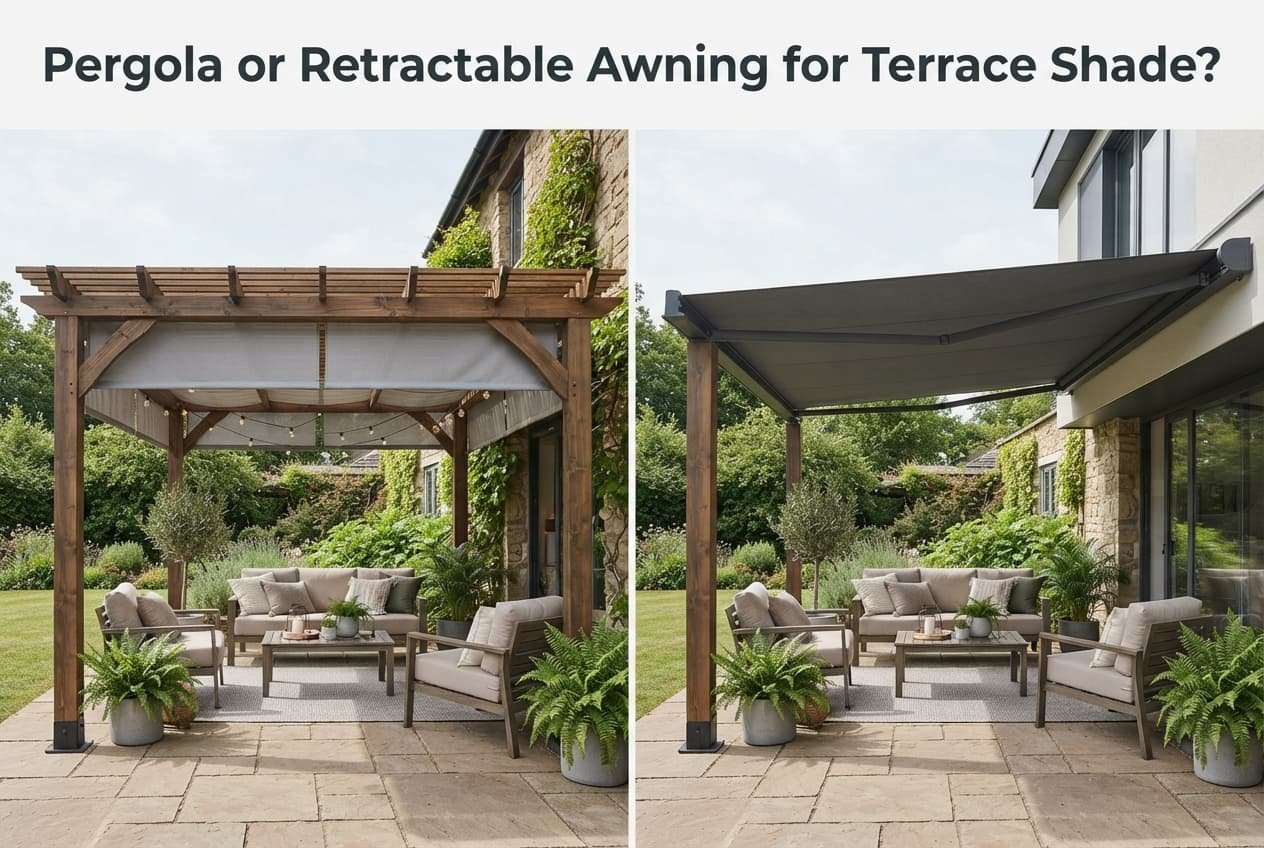
The right choice for genuine terrace shade isn’t decided by which one looks more impressive in a design magazine specifically – it’s decided by how much genuine flexibility your actual use pattern needs and how your own specific terrace’s structure accommodates each particular option. A pergola and a retractable awning solve genuinely different practical needs, and choosing based on trend alone misses what actually determines whether either one works well for your specific space.
The one property that decides it
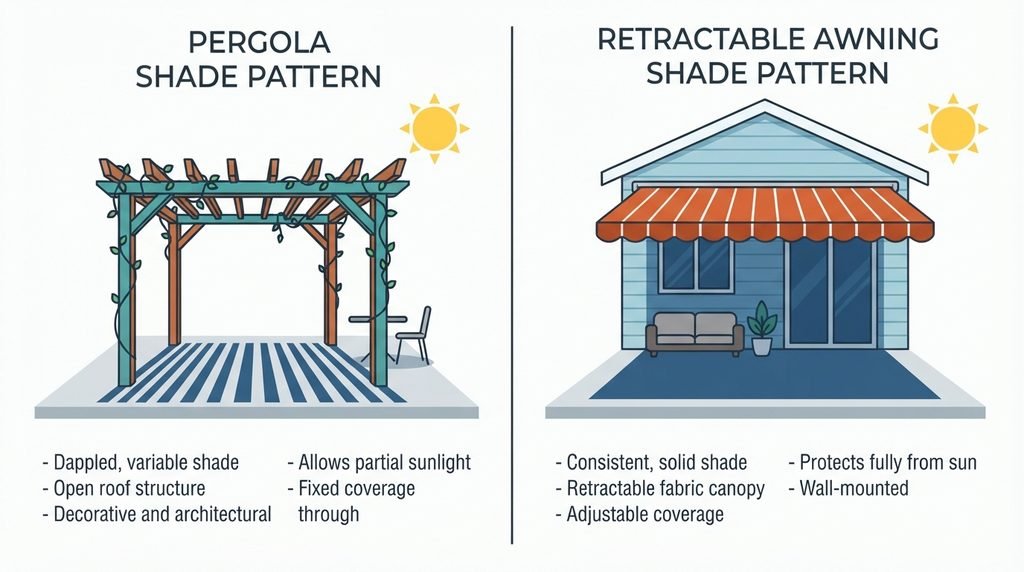
The deciding factor is how much genuine flexibility you need to adjust shade throughout the day and across seasons, not simply which structure looks more architecturally impressive. A pergola provides a fixed, permanent shade structure with a consistent character, while a retractable awning offers genuine on-demand flexibility, extending or retracting based on actual current sun conditions and your immediate preference.
This matters because your actual pattern of terrace use – consistent versus highly variable throughout the day – determines which structure’s core characteristic genuinely serves you better, rather than either being universally superior regardless of how you actually use the space.
Head to head
| Pergola | Retractable Awning | |
|---|---|---|
| Easy to adjust | Fixed, consistent | Adjustable on demand |
| How fixed it is | Higher | Often more removable |
| Typical upfront cost | Often higher | Often lower |
| Suits climbing plants | Yes, naturally | Not typically |
| Handles weather | Generally higher | Varies by mechanism |
| Visual presence | Higher | Often more subtle |
The single row that surprises most people is weather resistance quite specifically. Many assume a retractable awning, being more modern-seeming, handles weather just as well as a permanent pergola structure, but the retracting mechanism itself can be more vulnerable to wind and heavy weather than a pergola’s genuinely fixed, structurally robust design.
Where a pergola wins
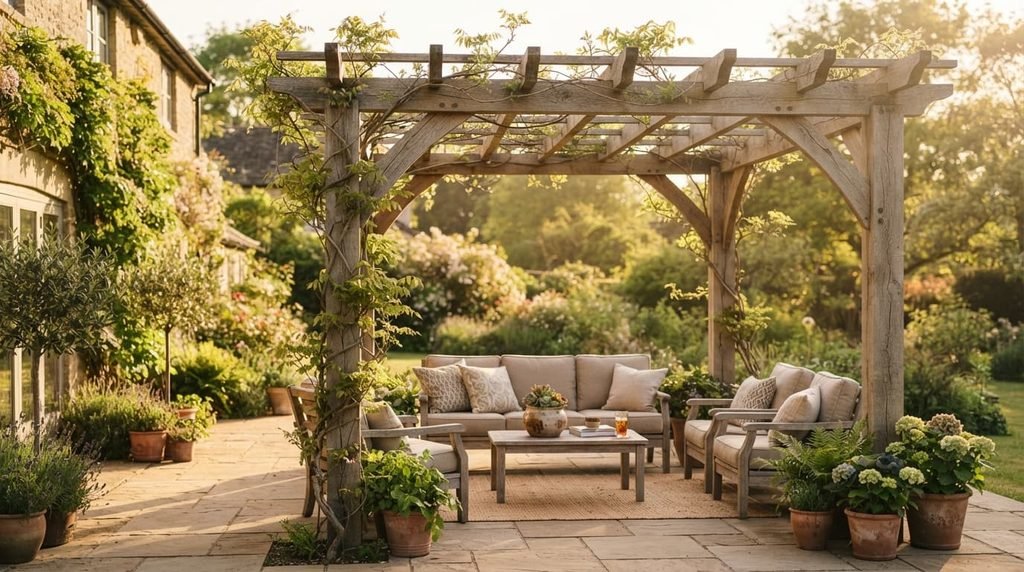
Anyone who genuinely values a consistent, permanent architectural feature benefits from a pergola’s fixed presence, since this directly addresses the desire for the terrace to have a genuine defined structure and character regardless of daily weather variation. The unglamorous reason: a pergola also naturally supports climbing plants over time, which matters more than it might initially seem for households wanting the terrace to develop a genuinely established, mature garden character that a retractable awning’s mechanism simply can’t accommodate.
Anyone genuinely prioritising minimal ongoing operation also benefits from a pergola’s set-and-forget nature in a related way, since there’s no mechanism to extend, retract, or maintain functionally, simply a fixed structure providing consistent shade without requiring any ongoing decision or adjustment each day.
Where a retractable awning wins
Anyone whose terrace use genuinely varies considerably throughout the day – wanting full sun at certain times, full shade at others – benefits from an awning’s on-demand adjustability, since this directly addresses that variable pattern in a way a pergola’s fixed shade structurally can’t match regardless of how well-designed the pergola is. The unglamorous reason: a retractable awning also typically requires a lower upfront investment, which matters more than it might initially seem for households wanting genuine shade flexibility without committing to a pergola’s larger structural cost and installation.
Anyone with a terrace genuinely unsuited to a pergola’s structural footprint also benefits from an awning’s typically more compact, wall-mounted installation in a related way, since this format doesn’t require the same freestanding structural support a pergola generally needs, suiting terraces with genuine space or structural constraints more comfortably.
When neither is right
Choosing based purely on which option is currently more fashionable, without genuinely considering your own actual daily use pattern and terrace structure, is worth ruling out regardless of which option you’d otherwise prefer.
A pergola installed purely for its architectural impressiveness, in a household that would genuinely benefit more from flexible shade control, sacrifices practical daily function for aesthetic presence, while a retractable awning chosen in a household genuinely wanting a permanent, established garden feature misses the specific benefit a pergola’s climbing-plant compatibility would have comfortably provided.
How to decide in thirty seconds
If you genuinely want a consistent, permanent architectural feature, choose a pergola. Its fixed structure directly addresses this desire in a way a retractable awning’s inherently temporary, adjustable nature doesn’t match as fully.
If your daily shade needs genuinely vary considerably, choose a retractable awning. Its on-demand flexibility directly addresses this variable pattern in a way a pergola’s fixed shade structurally can’t accommodate.
What changes the answer later
Your terrace’s actual daily use pattern genuinely shifting – hosting considerably more varied-timing gatherings than previously, for instance – is worth reconsidering the choice at, since a shift toward more variable use may favour an awning’s flexibility over a pergola’s fixed consistency.
Wanting to genuinely establish climbing plants or a more permanent garden character over time is also worth reconsidering the choice at, since this specific goal favours a pergola’s natural compatibility in a way a retractable awning structurally doesn’t support.
What people get wrong when making this choice
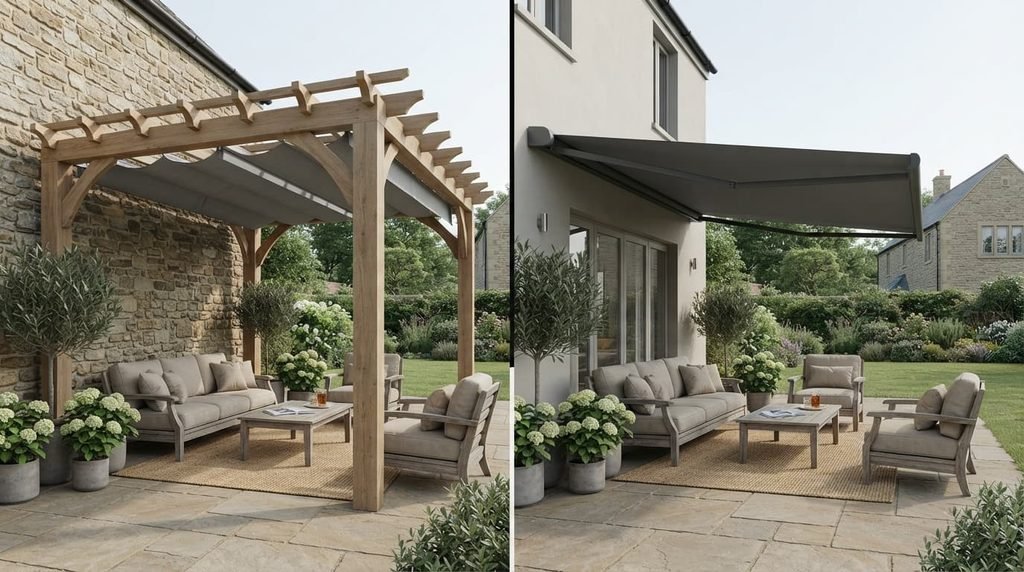
The most common mistake is assuming one option is universally the more “modern” or “premium” choice, treating this as a purely aesthetic ranking rather than a genuine functional trade-off. A retractable awning isn’t inherently more sophisticated than a pergola, nor is a pergola inherently more timeless than an awning – each simply serves genuinely different priorities that matter more or less depending on your own actual use pattern.
What changes if you’re genuinely working with a rented property
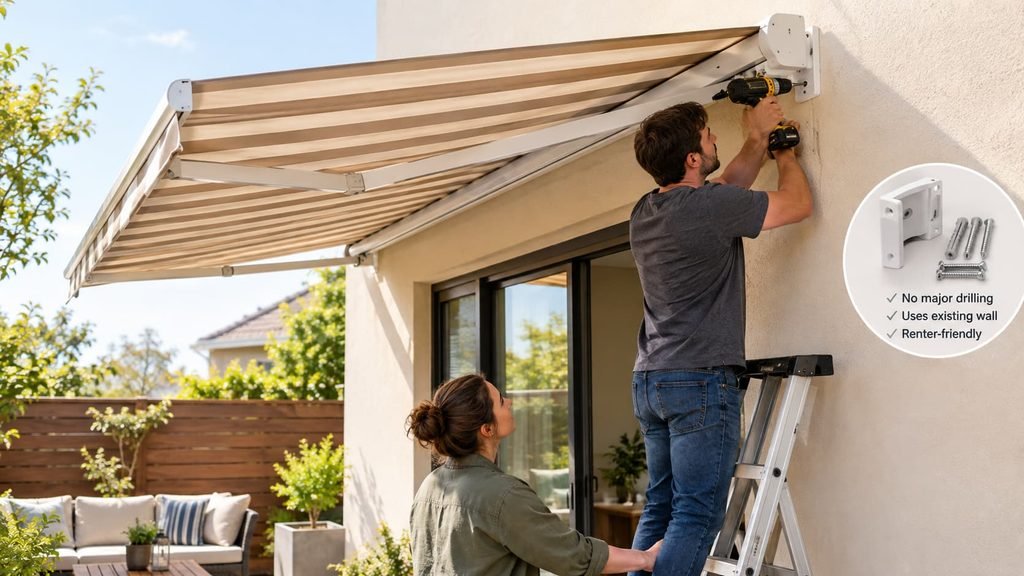
If you’re renting your space specifically, prioritise the option requiring less structural modification and genuine permission complexity – a retractable awning typically involves less invasive installation than a pergola’s freestanding or wall-mounted structural footprint, making it a more practical choice for many rental situations where landlord approval and reversibility genuinely matter.
Confirm your own specific lease terms regarding any structural additions before genuinely committing to either option, since even a retractable awning’s wall-mounted installation may require genuine landlord permission depending on your specific rental agreement’s actual terms regarding modifications to the property’s exterior structure.
Questions readers keep asking
Can a retractable awning genuinely withstand strong wind conditions?
Many modern awnings genuinely include wind sensors that automatically retract the structure during strong wind conditions specifically, though checking a specific model’s actual wind rating and this protective feature is genuinely worth confirming directly if your location experiences frequent strong wind conditions regularly.
Is it possible to combine both a pergola and a retractable shade element within one structure?
Yes, some pergola designs incorporate retractable canopy or louvre systems specifically, combining a pergola’s permanent structural presence with genuine adjustable shade flexibility, though this hybrid approach typically costs more than either option alone.
Does climate genuinely affect which option makes more practical sense?
Yes, meaningfully – a climate with genuinely consistent, predictable sun exposure patterns suits a pergola’s fixed shade well, while a climate with more variable, unpredictable daily conditions tends to benefit more from an awning’s genuine on-demand adjustability, making your specific climate pattern worth weighing alongside your personal preference.
Does a pergola genuinely require more ongoing maintenance than a retractable awning?
This varies by material and design specifically – a pergola’s structural components generally need less frequent attention than an awning’s moving mechanism, though climbing plants on a pergola do introduce their own separate, ongoing maintenance consideration worth factoring in.