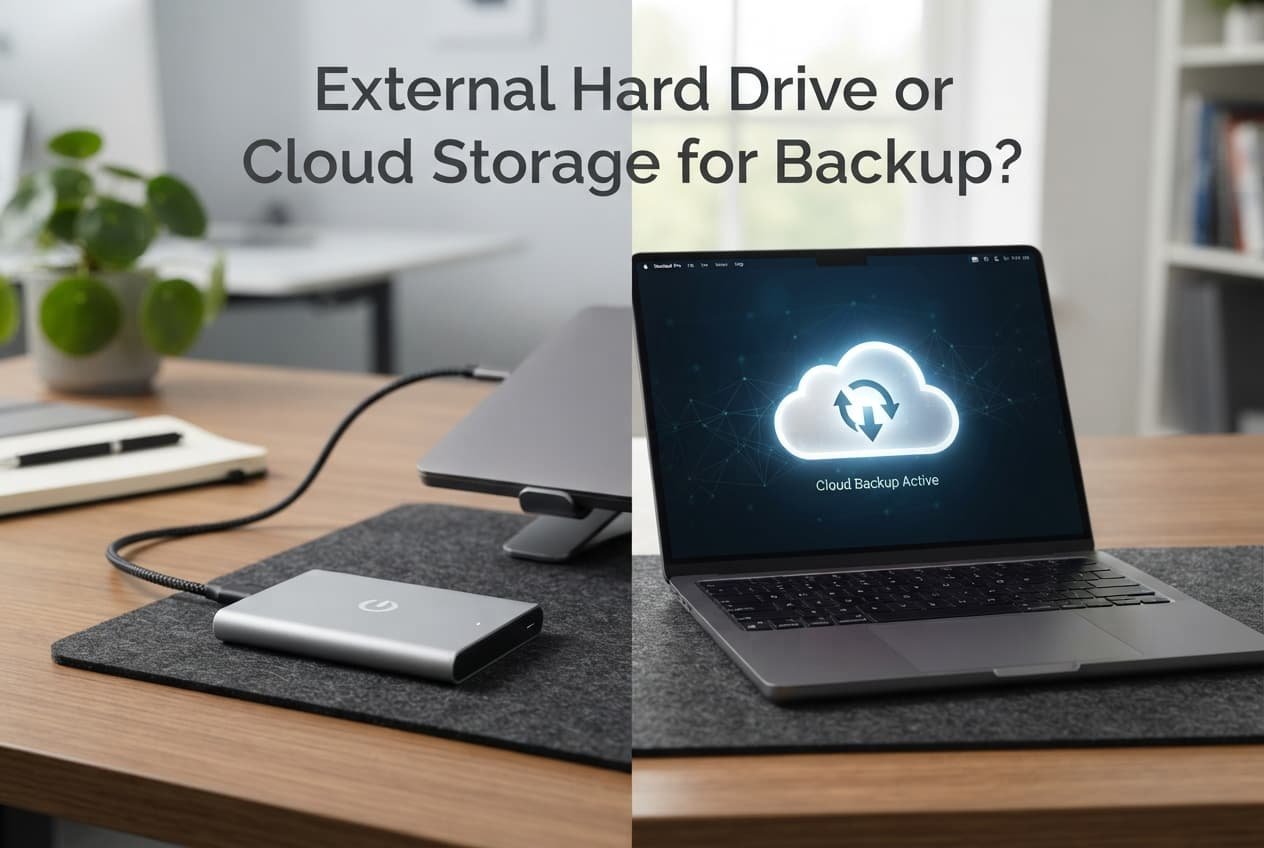
The right choice genuinely isn’t decided by which one sounds more modern or technically advanced – it’s decided by your own genuine access needs, your actual data volume, and how much you genuinely trust an internet-dependent versus a physically-held solution. An external hard drive and cloud storage solve genuinely different priorities, and defaulting to whichever seems more current misses what actually determines which one serves your particular backup needs better.
The one property that decides it
The deciding factor is whether you genuinely prioritise physical control and one-time cost, or ongoing accessibility from anywhere without needing the physical device present, not simply which technology sounds more contemporary. An external hard drive gives you direct physical possession and typically a one-time purchase cost, while cloud storage prioritises genuine accessibility from any internet-connected device, without requiring you to have a specific physical item with you.
This matters because your actual priorities – physical control versus flexible access, one-time versus ongoing cost – determine which solution’s core characteristic genuinely serves you better, rather than either being universally superior regardless of your specific situation.
Head to head
| External Hard Drive | Cloud Storage | |
|---|---|---|
| Access without internet | Yes | No |
| Access from any device | No, needs the drive | Yes, typically |
| Typical cost structure | One-time purchase | Often ongoing subscription |
| Physical damage risk | Genuine risk | Provider handles this |
| Genuine control over data | Higher | Depends on provider |
| Ease of setup | Simple, immediate | Varies by service |
The row that surprises people most is physical damage risk specifically. Many assume cloud storage is automatically the more reliable choice since it avoids this risk entirely, but a hard drive kept in a genuinely secure, separate location can actually provide meaningful protection an internet-dependent cloud service doesn’t structurally guarantee if that specific provider experiences its own issues.
Where external hard drive wins
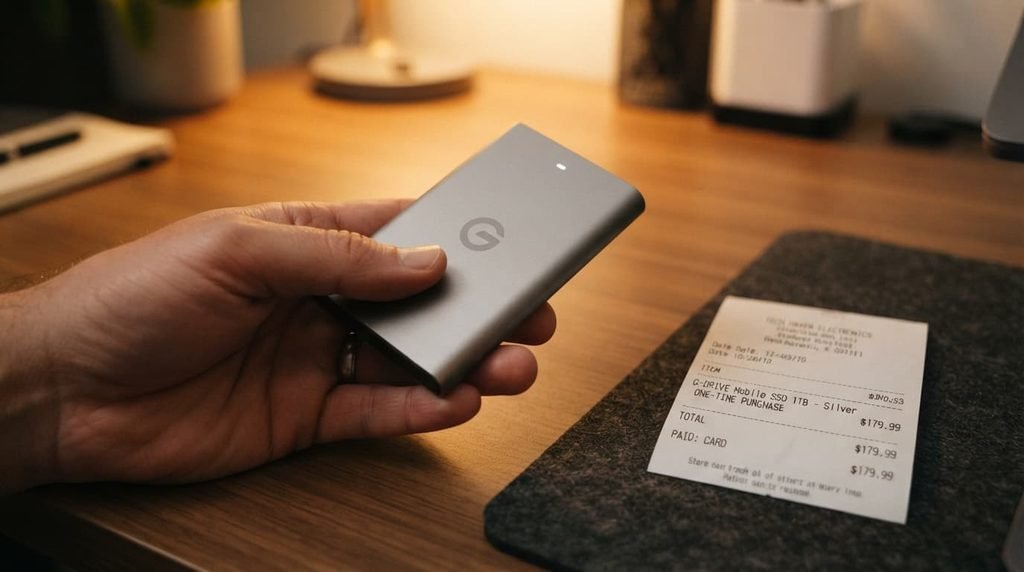
Anyone who genuinely prioritises direct physical control over their backed-up data benefits from an external drive’s tangible possession, since this directly addresses a preference for not depending on a third-party provider’s ongoing existence and policies for accessing your own genuinely important data. The unglamorous reason: an external drive also typically involves a one-time purchase cost rather than an ongoing subscription, which matters more than it might initially seem for households wanting to avoid recurring expenses specifically for backup storage.
Anyone genuinely concerned about long-term data sovereignty also benefits from an external drive’s independence from any provider’s future business decisions or policy changes, since your own physical drive remains entirely under your control regardless of what any specific service provider might choose to do with their platform in the future.
Where cloud storage wins
Anyone who genuinely needs access to their backed-up files from multiple different devices or locations benefits from cloud storage’s inherent accessibility, since this directly addresses a need physical media structurally can’t match without carrying that specific device everywhere you might need access. The unglamorous reason: cloud storage also typically handles the physical damage and loss risk on your behalf, which matters more than it might initially seem for households genuinely concerned about their own physical storage media being damaged, lost, or stolen.
Anyone genuinely wanting automatic, ongoing backup without manually remembering to connect a physical device also benefits from cloud storage’s typically automated syncing in a related way, since many cloud services continuously back up designated files without requiring the same manual connection step a physical drive genuinely requires each time.
When neither is right
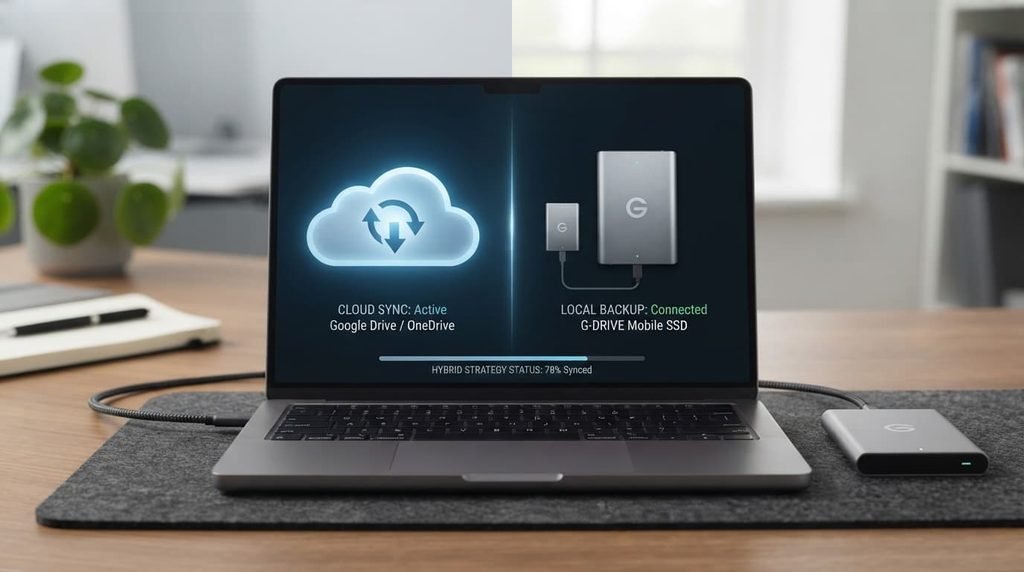
Choosing exclusively one option, without genuinely considering the redundancy benefit of combining both approaches, is worth ruling out regardless of which single option you’d otherwise prefer.
Relying entirely on one backup method – whichever you personally prefer – misses the genuine additional protection combining both physical and cloud-based backup specifically provides, since each addresses risks the other doesn’t fully cover on its own.
How to decide in thirty seconds
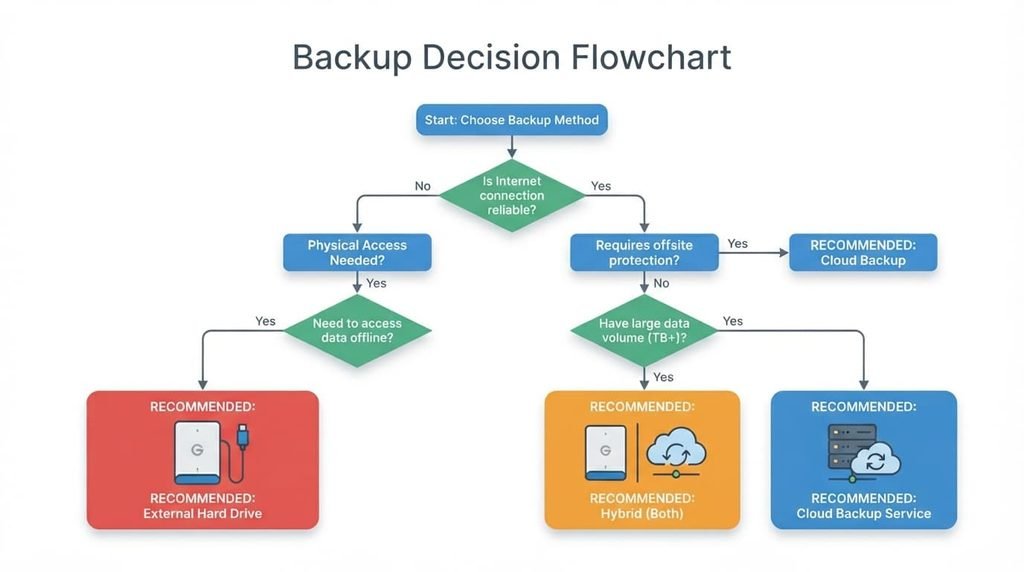
If you genuinely prioritise physical control and a one-time cost, choose an external hard drive as your primary method. Its tangible possession directly addresses this priority in a way cloud storage’s ongoing, provider-dependent model doesn’t match.
If you genuinely need flexible access from multiple devices, choose cloud storage as your primary method. Its inherent accessibility directly addresses this need in a way a physical drive structurally can’t provide without being physically present.
What changes the answer later
Your actual need for multi-device access genuinely increasing – working across considerably more devices than previously, for instance – is worth reconsidering the choice at, since this specific shift favours cloud storage’s accessibility more than your previous situation may have required.
Your genuine comfort with ongoing subscription costs changing – wanting to reduce recurring expenses, for instance – is also worth reconsidering the choice at, since this shift favours an external drive’s one-time cost structure over cloud storage’s typically ongoing expense.
What people get wrong when choosing between them
The most common mistake is treating this as an either-or decision when the genuinely optimal approach for important data combines both, using each method’s specific strengths to cover what the other doesn’t fully address on its own. Framing this purely as a single choice misses the redundancy benefit that specifically comes from combining rather than choosing exclusively.
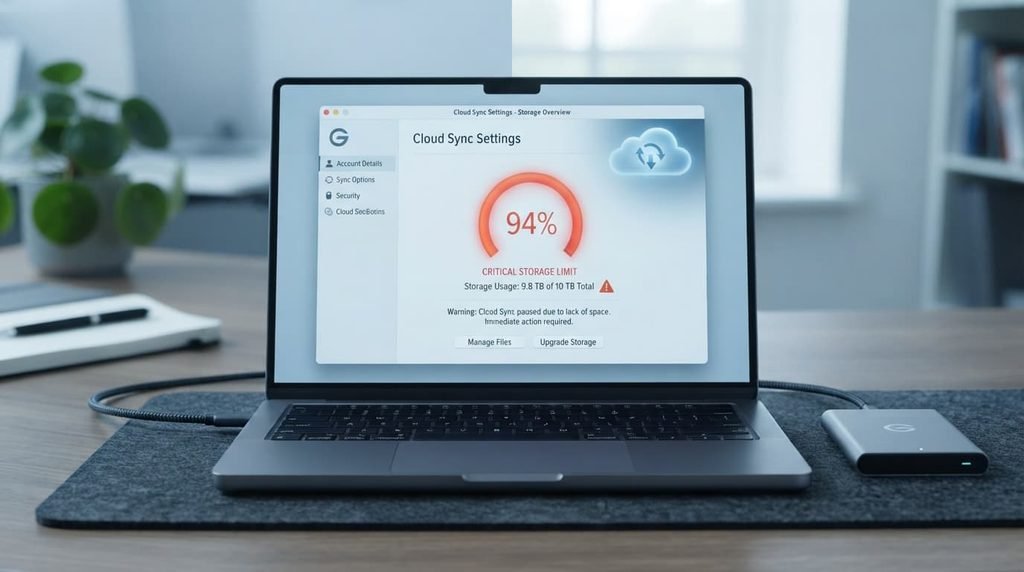
A second common mistake is assuming cloud storage’s convenience means it requires no genuine attention once set up, when actually confirming your specific sync settings and storage limits periodically remains worthwhile, since an unexpectedly full storage allocation or a sync error can silently undermine the backup protection you assumed was genuinely happening automatically.
What changes if you’re managing data for a small household versus alone
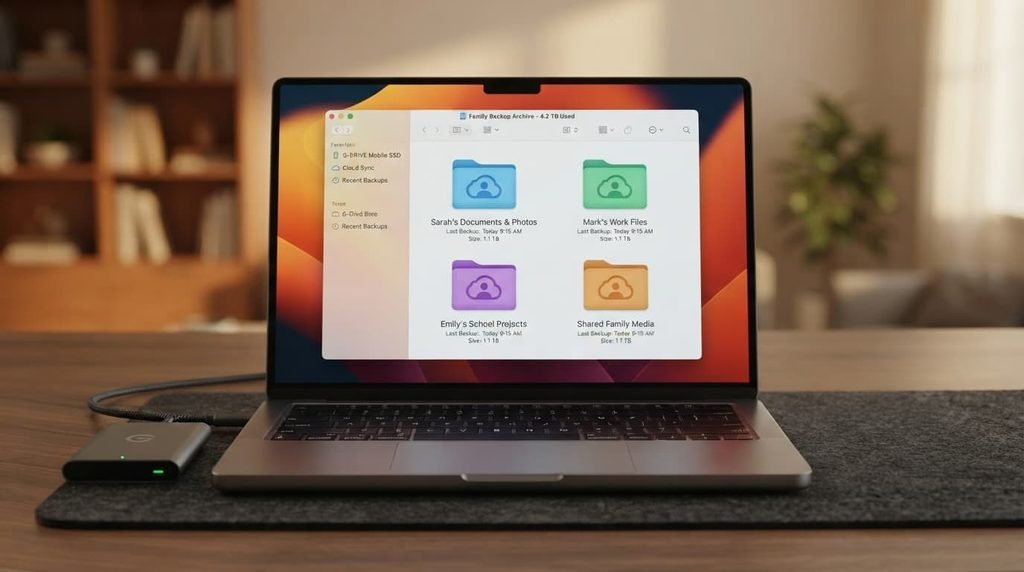
If you’re genuinely managing backup for a shared household with multiple people’s important files, prioritise a solution that supports genuinely straightforward shared access or clear individual allocation, since a household’s combined data needs and access patterns differ meaningfully from a single individual’s simpler, more centralised backup situation.
Questions readers keep asking
Is combining both an external drive and cloud storage genuinely worth the extra effort and cost?
For genuinely important data specifically, yes, often – this combination provides meaningful redundancy each single method alone doesn’t offer, making the extra effort and modest additional cost a reasonable trade-off for data you genuinely can’t afford to lose.
Does cloud storage genuinely guarantee my data is safe if the provider experiences problems?
Reputable providers typically have their own redundancy measures, though no provider offers absolute guarantees, making it worth understanding your specific provider’s actual policies and reputation rather than assuming universal, unconditional reliability regardless of provider.
Does the specific type of file I’m backing up affect which option makes more sense?
To some degree, yes – genuinely large files specifically, such as extensive video collections, can make cloud storage’s ongoing subscription cost accumulate more noticeably than a one-time external drive purchase would for the equivalent capacity, making file volume worth factoring into your specific cost comparison.
Is an external hard drive genuinely more vulnerable to failure than cloud storage over time?
Physical drives do have a genuine mechanical failure risk over time, though cloud storage isn’t immune to its own provider-side issues, meaning neither option is inherently risk-free, which is part of why combining both approaches provides more genuine comprehensive protection than relying on either alone.