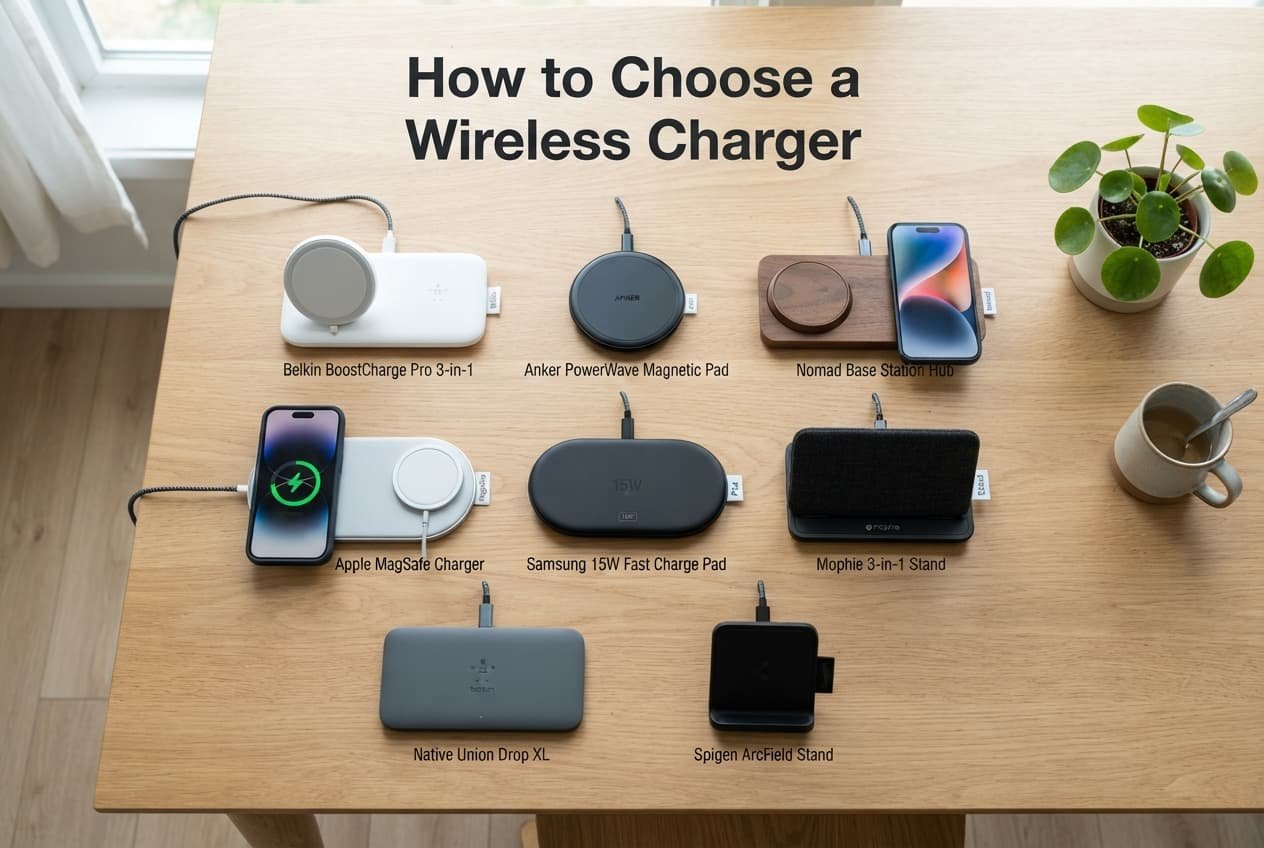
Choosing a wireless charger you genuinely won’t regret buying comes down to a handful of specific criteria you can evaluate on any model sitting in front of you, not simply which one has the fastest advertised charging speed or the lowest possible price. A charger chosen purely for headline speed claims often disappoints once genuine reliability and actual daily usability reveal what that speed figure alone didn’t communicate.
What actually decides this
The deciding factor is how well a charger’s actual build quality and genuine positioning design match your specific phone and use pattern, not simply how fast its advertised maximum charging speed sounds. A charger genuinely needs reliable, consistent alignment with your particular phone’s coil position, since a charger technically capable of fast charging provides little practical value if positioning inconsistency prevents you from actually achieving that speed regularly.
This matters because most charger marketing emphasises maximum speed figures prominently, while your actual daily experience – genuine positioning reliability, build quality, compatibility with your specific phone – behaves meaningfully differently from what a speed specification alone reveals.
The criteria that actually matter, in order
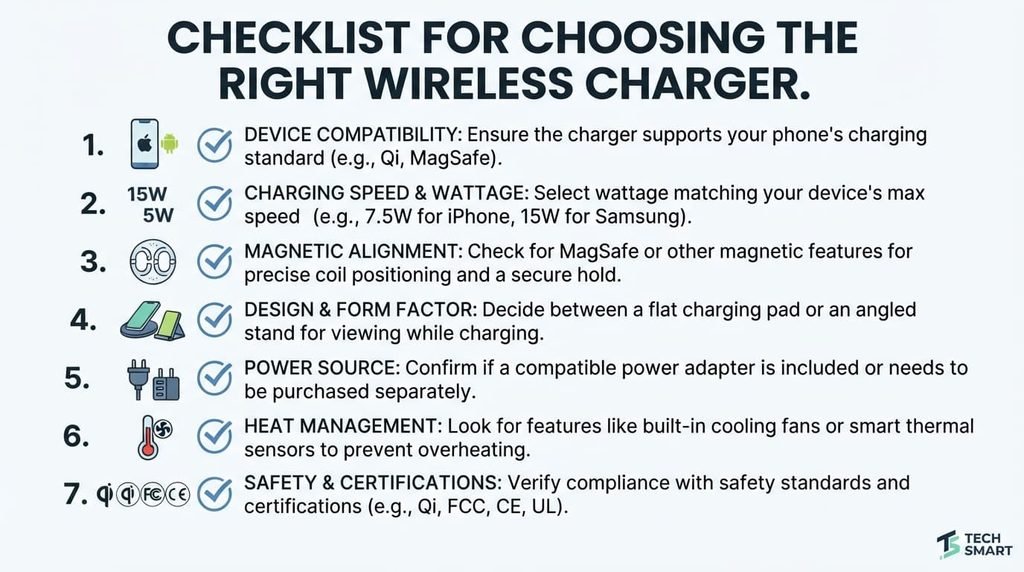
1. Genuine positioning reliability and coil alignment design. Look specifically for a charger with a design that genuinely guides consistent positioning – a slight indent, a raised edge – since this directly determines whether you’ll actually achieve reliable charging in daily use, mattering more than any speed specification.
2. Genuine compatibility with your specific phone’s charging capabilities. A charger’s maximum speed only matters if your particular phone can actually utilise that speed, making it worth confirming your phone’s own genuine charging capability rather than assuming a charger’s advertised maximum automatically applies to your situation.
3. Build quality and genuine durability for your actual use pattern. A charger’s construction quality affects both its longevity and its consistent performance over time, mattering more for long-term satisfaction than headline speed figures you might rarely actually achieve.
4. Genuine size and portability suited to your actual intended use. A charger’s physical dimensions matter for daily convenience, particularly if you intend to travel with it regularly or need it to fit a specific desk space.
5. Safety certifications and genuine manufacturer reputation. Confirming a charger meets relevant safety standards protects both your phone and your home, making this worth checking directly rather than assuming all available chargers meet the same safety threshold.
What doesn’t matter as much as it’s made out to
The single highest advertised maximum charging speed is oversold for typical everyday use specifically, and it’s the specification most prominently marketed. For many people, achieving this maximum speed requires genuinely precise conditions – exact phone compatibility, perfect alignment – that don’t reflect typical, casual daily placement, making genuine reliability considerably more valuable than a maximum speed figure rarely actually achieved.
Elaborate additional features – built-in cooling fans, extensive customisation options – get more attention in marketing than they deserve relative to the core reliability criteria above for typical use. These features matter less day to day than whether the charger reliably and consistently charges your phone without frustrating inconsistency.
Matching the choice to your situation
If you’re genuinely charging overnight or during extended periods, prioritise positioning reliability more heavily, since even modest charging speed matters less than consistent, dependable connection over these longer charging windows.
If you’re genuinely charging during brief periods and want to maximise speed within that limited time, prioritise genuine compatibility with your specific phone’s fast-charging capability more heavily, since this factor matters more for your particular pattern than it would for someone with more flexible charging time.

What to walk away from
Any charger whose reviews consistently mention inconsistent charging or positioning frustration during typical everyday use, should end your interest regardless of how appealing its advertised speed or price otherwise appears.
A specification sheet doesn’t reveal genuine daily reliability the way consistent reviewer and user experience does, and a charger with a known, unaddressed positioning issue will likely create recurring frustration regardless of how attractively priced or fast it initially seemed.

The check before you commit
Before finalising any wireless charger purchase, research the specific model’s actual genuine reliability and positioning experience directly, rather than relying solely on the maximum speed figure prominently displayed in-store or online.
This single check reveals genuine daily usability far more reliably than a speed specification alone does, since a charger’s actual dependability often depends more heavily on positioning design and build quality than on the maximum speed figures that marketing tends to emphasise most prominently.
Does the charger’s own certification or safety rating genuinely matter as much as reliability and speed?
Yes, genuinely – a charger’s safety certification protects both your device and your home from genuine electrical risk, making this a non-negotiable baseline consideration alongside, not instead of, the reliability and speed factors covered above.
What people get wrong about choosing a wireless charger
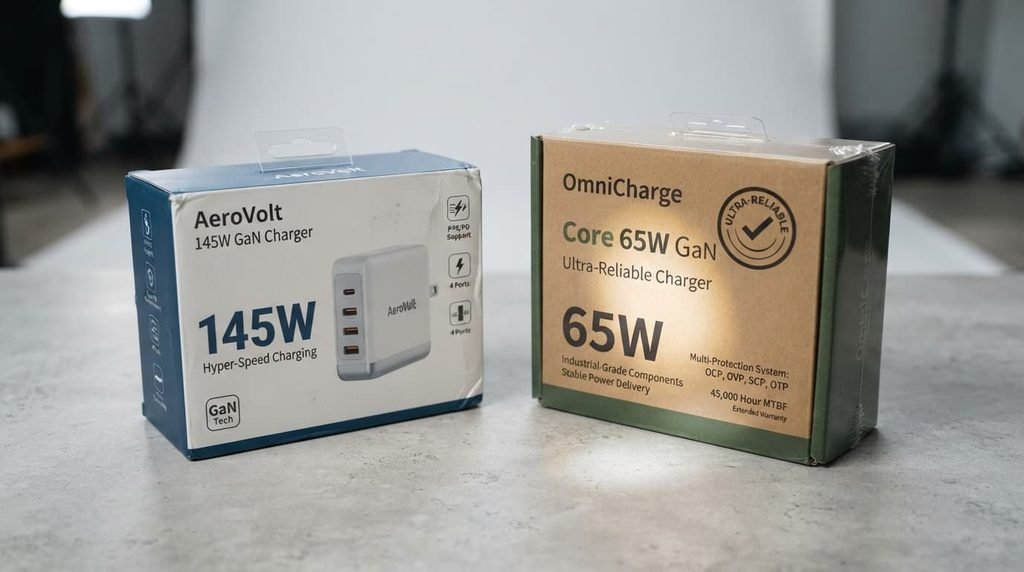
The most common mistake is comparing chargers purely by their advertised maximum speed figure, without researching genuine positioning reliability that often matters more for actual daily satisfaction than a rarely-achieved maximum speed ever does. This speed-figure focus is exactly what makes some models appear more impressive than their genuine daily usability actually justifies.
A second common mistake is assuming a charger compatible with “most phones” will work equally well with your own specific device, when actual positioning and speed compatibility can vary meaningfully even among phones the charger technically supports, making it worth confirming your particular phone’s actual experience rather than assuming broad compatibility claims apply equally to every situation.
What changes if you’re choosing a charger for a shared household space
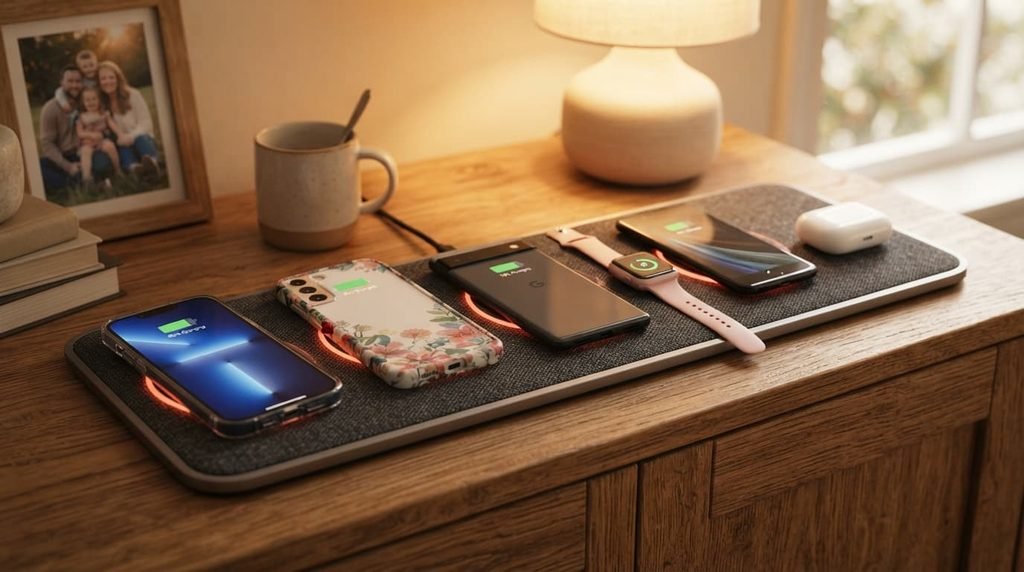
If you’re genuinely choosing a charger multiple household members will actually use with different phone models, prioritise genuinely broad, forgiving positioning tolerance over optimisation for one specific phone’s exact coil position, since a household charger serving varied devices benefits more from this flexibility than a single-user charger optimised precisely for one particular phone model.
Questions readers keep asking
Does a more expensive wireless charger always charge meaningfully faster?
Not necessarily in every case – price correlates broadly with build quality, but actual charging speed depends considerably on both the charger and your specific phone’s compatibility, meaning researching your particular combination matters more than assuming price alone predicts speed reliably.
Is it worth buying a wireless charger specifically designed for your phone’s exact model?
For genuinely optimised positioning and compatibility specifically, yes, often – a charger designed with your particular phone’s coil position in mind can provide more consistent alignment than a generic option not specifically considering your exact model.
Is it worth waiting for a sale or discount rather than buying at full price immediately?
If your genuine need isn’t urgent, waiting for a reasonable discount can provide meaningful savings on the upfront price specifically, though this doesn’t change the reliability and compatibility research that matters more for total satisfaction, so confirming these factors remains worthwhile regardless of when you actually purchase.
How can I tell if a wireless charger’s positioning design will genuinely work well before purchasing?
Reading reviews that specifically describe the actual positioning experience, rather than relying purely on specifications, helps approximate this before purchase, though genuinely testing the charger yourself remains the most reliable way to confirm this specific factor.