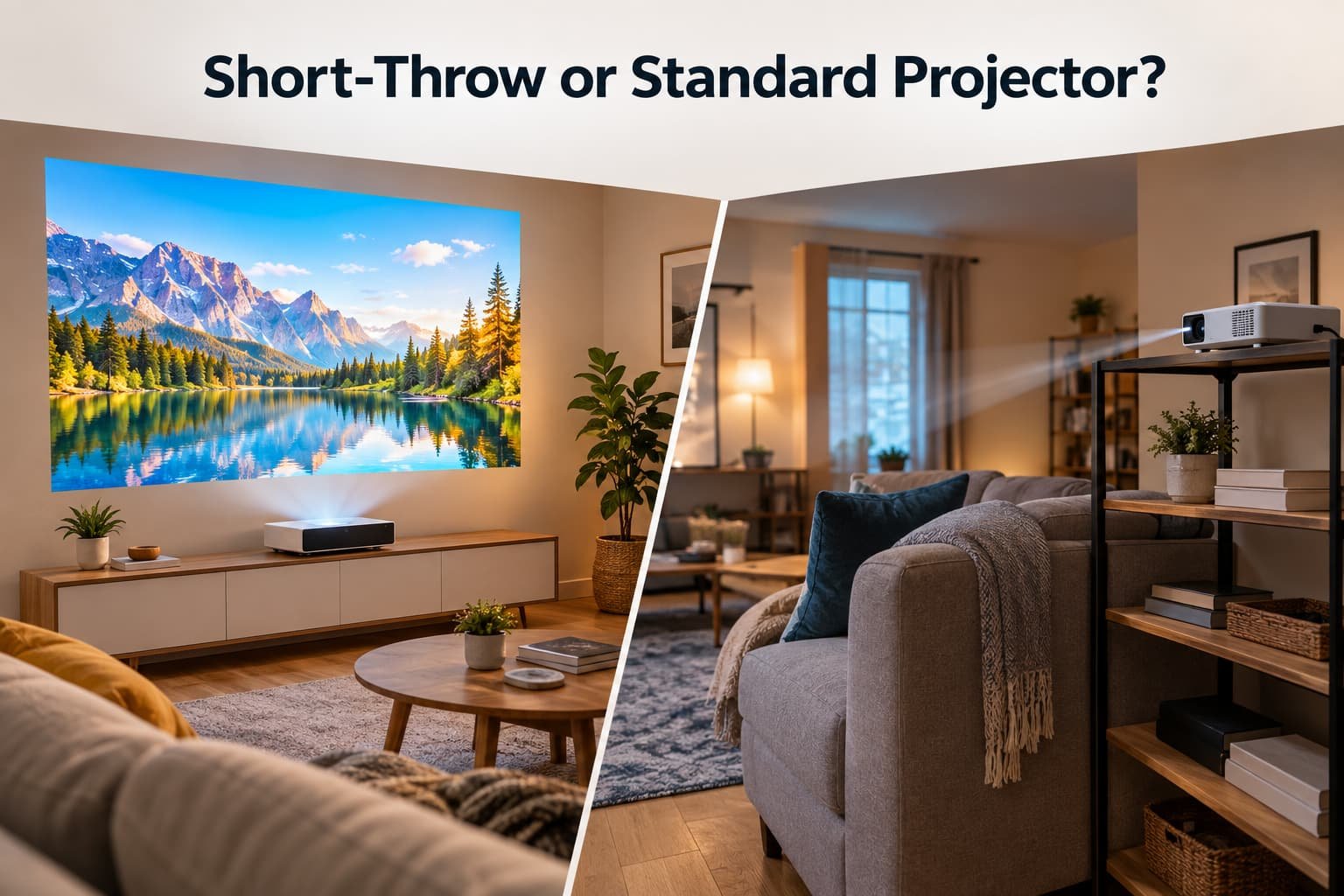
The first thing a small living room teaches you about projectors is arithmetic. A big picture needs distance, and you do not have much of it. A short-throw projector solves that by sitting close to the wall, while a standard projector does not, but it has strengths of its own. The choice is less about quality than about where in your room the projector can actually live and who walks through its beam.
The one property that decides it
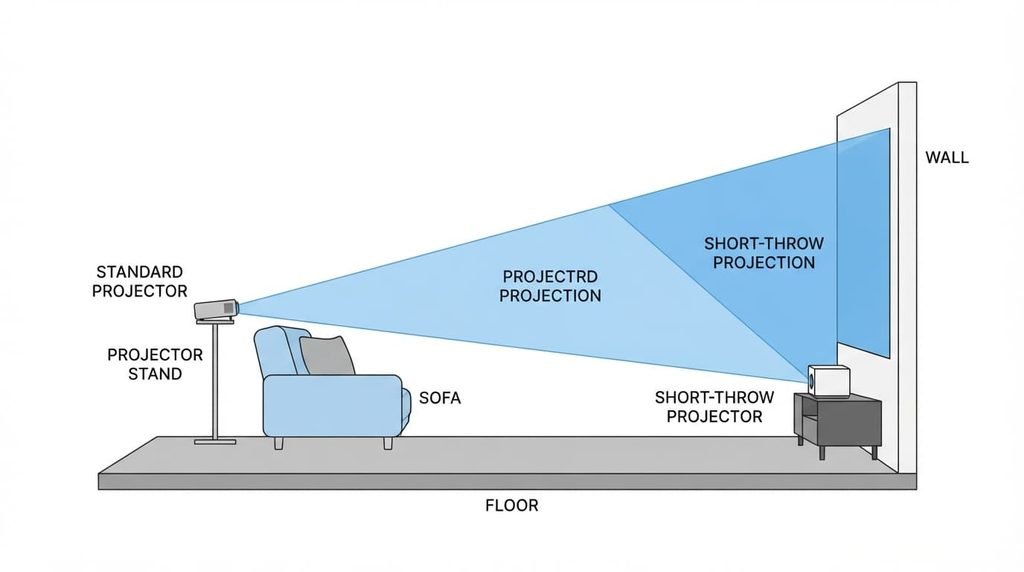
The deciding property is throw distance, meaning how far the projector must sit from the wall to fill a given picture size. A short-throw projector uses a wide-angle lens to make a large image from a short distance, so it can sit on a low cabinet just below the picture. A standard projector needs more distance, which usually means a shelf behind the seating or a ceiling mount.
That turns the decision into a question about your room: where can the projector physically sit, and what crosses the beam between it and the wall?
Head to head
| Short-Throw | Standard | |
|---|---|---|
| Where it sits | Near the wall | Back of the room |
| Shadows from people | Rare | Possible |
| Cable runs | Often short | Often long |
| Picture size in a small room | Large is easy | Limited by depth |
| Wall flatness needed | High | Moderate |
| Choice of models | Usually narrower | Usually wider |
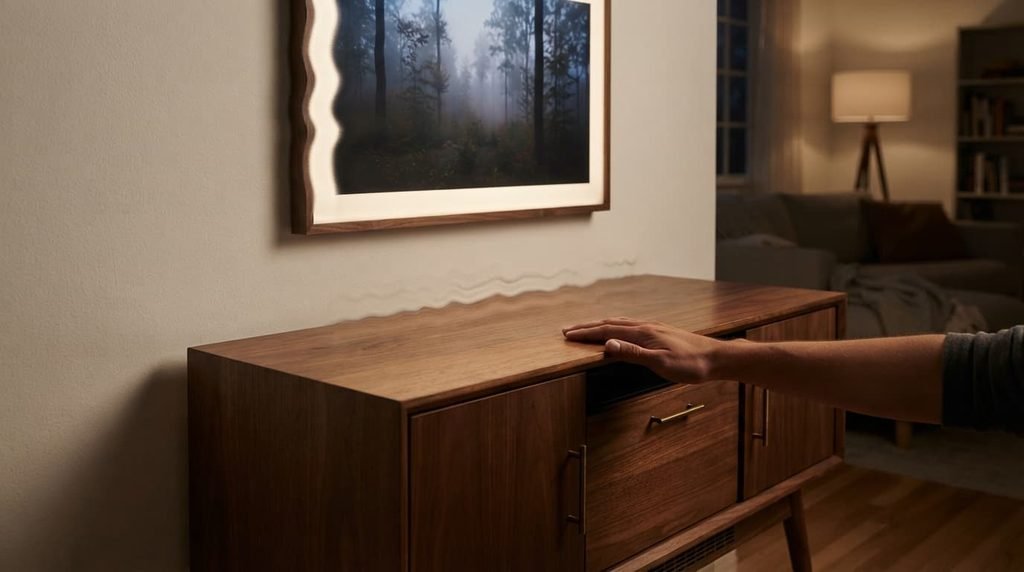
The row that surprises people most is wall flatness. A short-throw lens throws light at a steep angle, so small bumps, seams and curves in the wall show up as visible waves in the picture. A standard projector, firing from farther away at a shallower angle, forgives the same wall far more easily.
Where short-throw wins
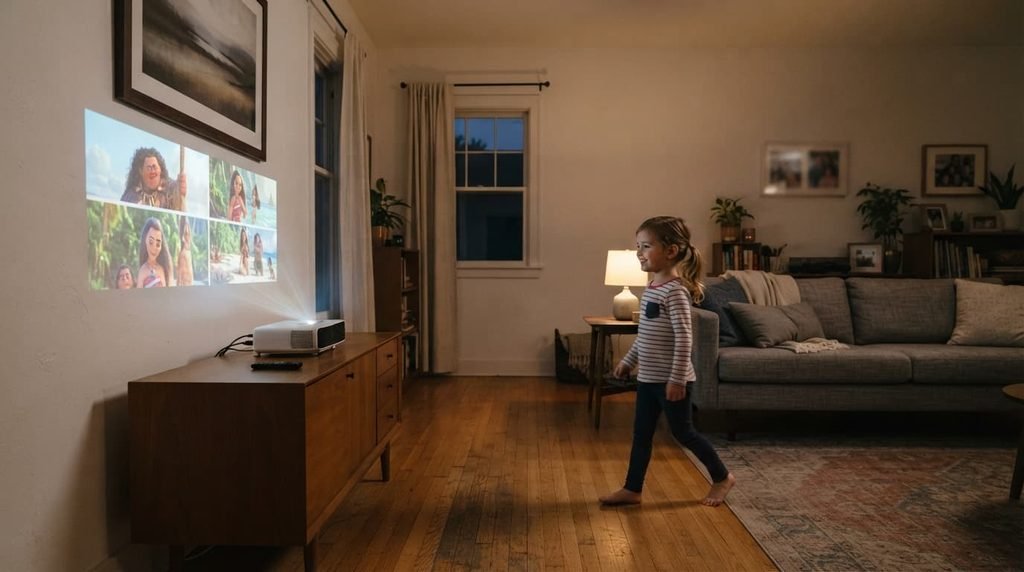
Anyone with a shallow room benefits from short-throw, because a sofa pushed against the back wall leaves no spot behind the seating for a standard projector at the distance it needs. Short-throw also means nobody stands up and casts a shadow on the picture, and a child or a pet walking across the room does not cross the beam. The unglamorous reason is tidiness: the projector, the console and the speakers all sit at one end of the room, so only one spot needs power and cables, and nothing hangs from the ceiling or trails across the floor.
Households where people move around during a film benefit twice. The picture stays intact, and nobody ends up looking straight into a lens at the back of the room.
Where standard wins
Anyone who can place a projector behind the seating or on the ceiling benefits from a standard model. There are usually more models to choose from, which makes it easier to match your budget and your brightness needs. The unglamorous reason is tolerance: with the projector farther away, a small shift in position changes the picture less, and a wall with minor imperfections still produces a clean image. A short-throw setup is touchier. A few millimetres of movement can change the shape of the picture, and the unit needs to sit precisely level and square to the wall.
The sound of the fan also changes. With a standard projector it sits behind you, while with short-throw it sits in front of you, near the screen. Whichever you find less distracting is a legitimate reason to choose.
When neither is right
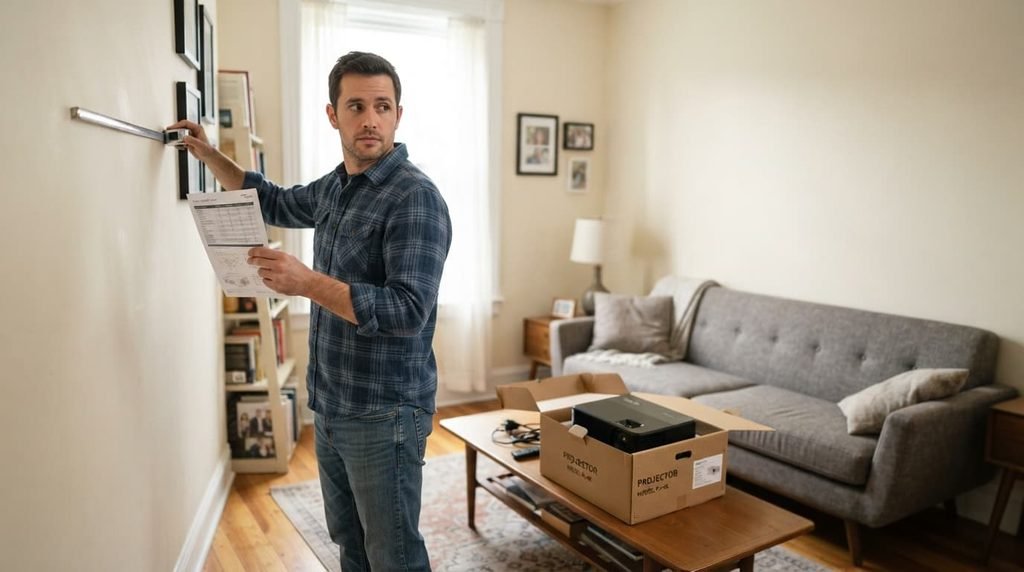
Choosing by the biggest advertised picture size, without first measuring where the projector can actually sit in your room, is worth ruling out whichever type you lean toward.
Every model publishes the distance range it needs for a given picture size. A short-throw model bought for a deep room wastes its main advantage, and a standard model bought for a shallow room cannot reach the picture size you saw in the advertisement. Measure first, then read the specification.
A tape test before you buy
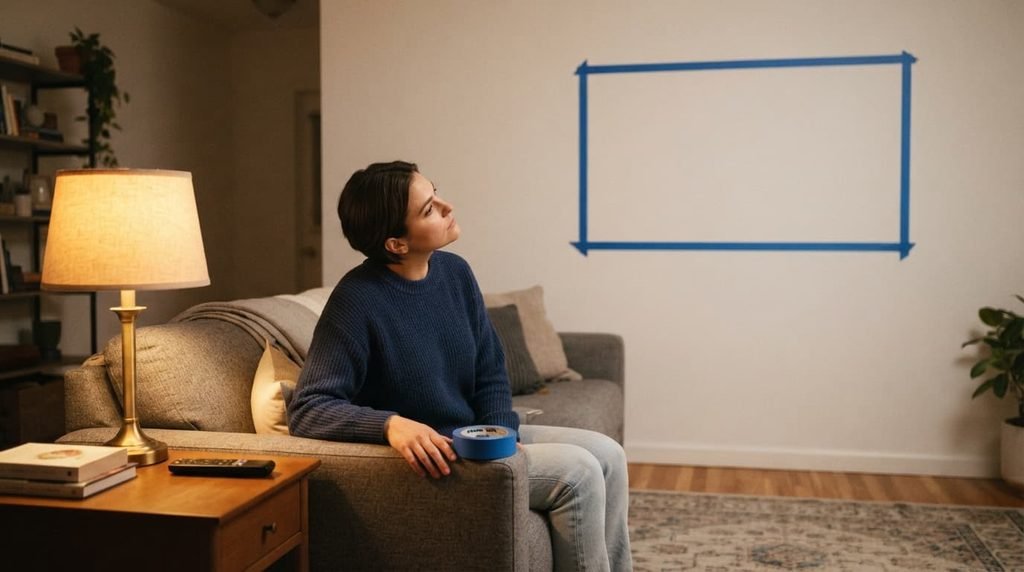
Measure the distance from the wall to the spot where the projector would sit, then compare it with the distance range the model publishes for the picture size you want. Next, mark the outline of that picture on the wall with painter’s tape and sit where you will actually sit. This takes ten minutes and answers two questions at once: whether the projector fits, and whether the picture is the right size.
Size the picture to the seats, not to the wall. A picture that fills an entire wall can be uncomfortable from a sofa a few steps away, because you have to keep turning your head to follow the action. In a small room the smaller picture is often the better one, and it widens the choice of projectors that fit.
How to decide in thirty seconds
If your room is shallow, or people move through it during viewing, choose short-throw. It keeps the beam clear and the cables in one place.
If you can place the projector behind the seating or on the ceiling, and your wall is not perfectly flat, choose standard. It gives you more models to choose from and more forgiveness.
What changes the answer later
Moving to a deeper room favours a standard projector, because the distance it needs becomes available. Replacing a wall that is uneven with a smooth, flat surface makes short-throw far easier to live with. Adding a ceiling mount for other reasons opens up the standard option.
If a screen designed for steep-angle light becomes part of your plan, short-throw becomes easier to use in a bright room, and that is worth pricing before deciding. None of these changes needs to happen at once, so choose for the room you have today rather than the one you might have later.
What people get wrong
The most common mistake is assuming short-throw means no setup. It is the more position-sensitive of the two, so it rewards patience during the first evening.
The second is trusting the advertised picture size without checking that your room can deliver the required distance, which is why measuring comes first.
The third is ignoring the surface. Short-throw magnifies every bump and seam, so a wall that looked perfectly flat can look wavy once the light skims across it at a steep angle.
The fourth is placing the projector inside a closed cabinet. Every projector needs clear space around its vents, and a short-throw unit on a low cabinet is especially tempting to tuck away. Leave room for air to move, or the unit will run hot and shorten its own life.
Questions readers keep asking
Can a short-throw projector use a wall instead of a screen?
Yes, if the wall is smooth and flat. Seams, textured paint and curves will show as distortion because of the steep angle of the light.
Does a short-throw projector cost more?
Often it does for comparable brightness, but prices vary widely. Compare specific models against the distance and brightness your room needs, and do not assume the type alone sets the price.
Can a standard projector work in a small room?
Yes, as long as the room is deep enough for the distance your chosen picture size requires. Otherwise choose a smaller picture size or a different type.
Do I need a special screen for short-throw?
Not always. Some short-throw setups benefit from a screen designed for light arriving at a steep angle, especially in a bright room.