A smartwatch listing can name sixty features, and most of them describe what the watch can do, not what you will do with it. If you have already decided on a smartwatch rather than a simpler band, the useful question is which handful of features change your days and which are there to fill a specification sheet. Here they are, in order.
Features worth paying for
1. A battery that fits your routine. The figure that matters is how long the watch lasts with the settings you will really use, such as an always-on display, workouts and notifications. A watch that needs a charger every evening will spend part of every day off your wrist, and a tracker that is off the wrist records nothing.
2. Comfort and a fit that suits your wrist. Weight, case thickness, strap material and available sizes decide whether you will wear it for twenty hours a day. Check that straps can be changed, and that the watch is comfortable to sleep in if you want sleep tracking.
3. Compatibility with your phone. Some watches work fully only with certain phones, and with others they lose features such as replying to messages or contactless payments. Confirm that every feature you care about works with the phone you own, not just the phone the maker prefers.
4. A screen you can read outdoors. A bright display matters in daylight, when you are running or cycling, and an always-on option is useful if you want to check the time at a glance without raising your wrist.
5. A water rating that matches how you will use it. A water rating states what the watch was tested for, such as splashes or swimming in a pool. It is not the same as “waterproof”, so check what the rating covers and compare it with your own habits.
6. A clear commitment to software updates. Updates bring security fixes and new features, so check how long the maker says it will support the model. A watch that stops receiving updates becomes a less useful and less secure device.
7. Built-in location, only if you will leave the phone at home. If you run without your phone, a watch with its own location receiver is worth having. If you always carry the phone, you are paying for something you will not use.
Features to ignore
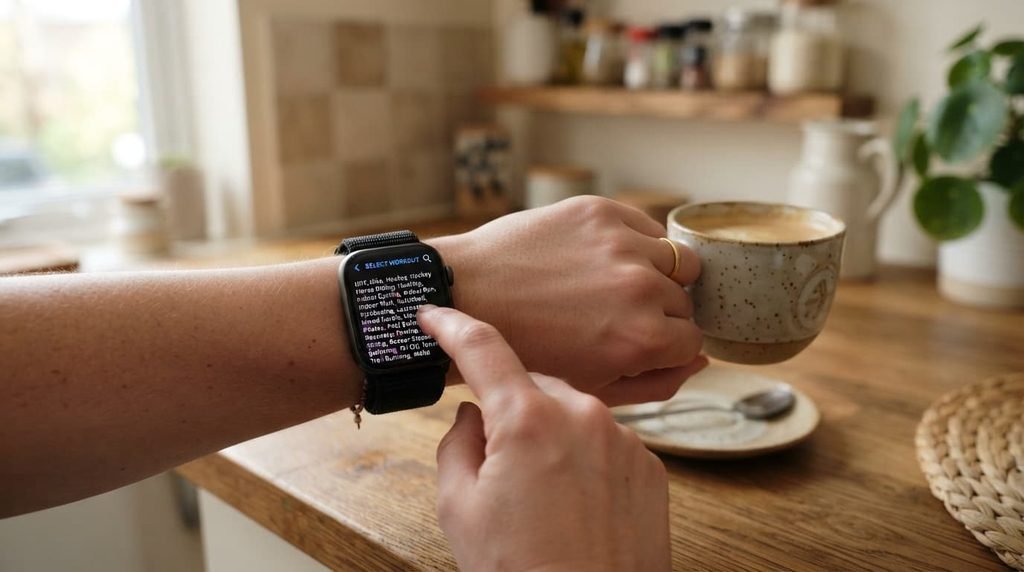
Dozens of workout modes. Most people use three or four, and the list of sixty is there for the listing. Check that the activities you do are covered well, and ignore the rest.
Mobile connectivity, unless you often leave the phone behind. It adds cost, a monthly plan and battery drain. If your phone is nearly always with you, it is a feature for someone else.
Premium case materials, unless you need them. A scratch-resistant glass is useful if you wear the watch through rough use. For a desk, a commute and the gym, a standard one is enough.
An app store with thousands of apps. Most people use a handful, and the watch is better at a few jobs than at everything.
Health sensors you will not act on. Extra sensors, such as blood oxygen or an electrical heart trace, give estimates. Check what each is approved for in your region, and pay for them only if you or your doctor will use the results, not for the badge.
Three kinds of wearer
Your priorities depend on what you want from the watch.
The everyday-health wearer wants steps, sleep and a calm wrist. Put battery, comfort and phone compatibility first, and ignore workout modes, mobile connectivity and premium materials.
The runner or cyclist wants reliable location, a screen that reads in sunlight and a strap that stays put when sweaty. Put the location receiver, display brightness and the strap system first, and check the battery under workout conditions rather than at rest.
The busy professional wants notifications, a calendar and contactless payments without taking out the phone in every meeting. Put phone compatibility, a readable always-on display and update support first, and treat health sensors as secondary.
What to walk away from
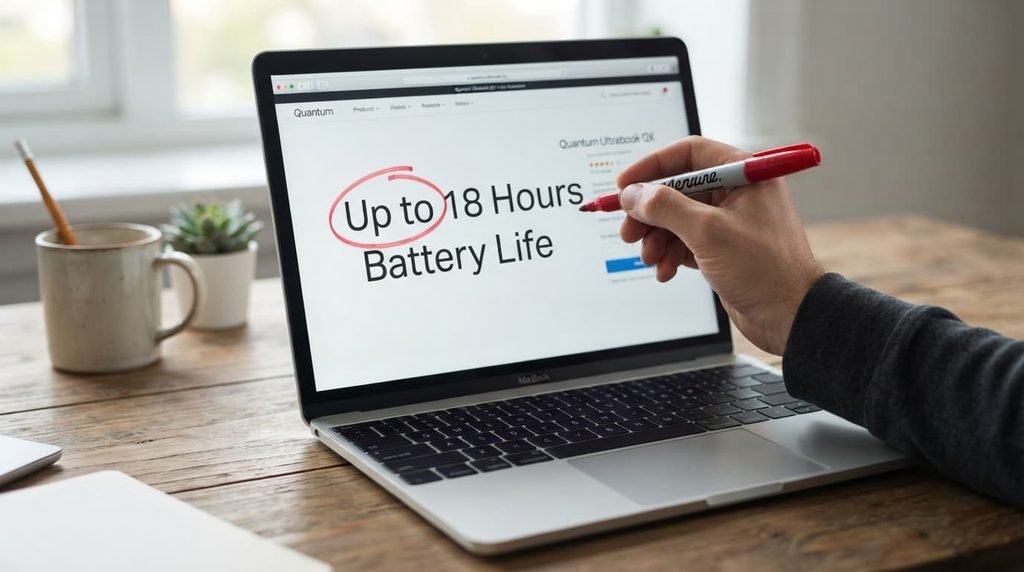
A listing that quotes a battery figure without saying what was running when it was measured, or that gives a water rating without saying what it covers, should end your interest.
Those two omissions are the easiest ways for a listing to flatter a mediocre watch. A maker proud of its battery and its sealing tells you the conditions. If the page does not, assume the headline figures were measured under the kindest settings.
Three phrases that deserve a question
“Up to” a number of days: ask which features were running when it was measured. “Water resistant”: ask for the rating and what it covers. “Supports health monitoring”: ask what the sensor is approved for in your region, and remember it gives an estimate.

Before you commit
Try the watch on your wrist if you can, or buy where returns are easy, and wear it for a full day and night. Notice whether it irritates your skin, whether the screen is readable in daylight and whether you can sleep in it. Then list the features you used in that day. If fewer than five of the things you paid for were used, you have probably bought the wrong watch.
Also add up the running costs: spare straps, a spare charger and any mobile plan. These can add noticeably to the price you saw on the page.
Where buyers go astray
Paying for the longest list is the commonest error: every feature you never touch still adds to the price, takes a share of the battery and clutters the menus.
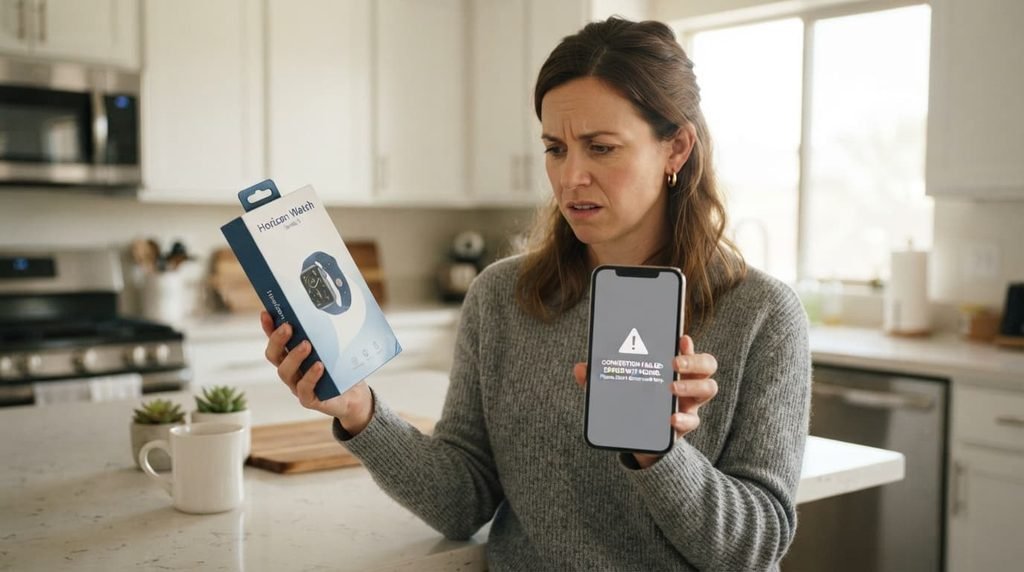
Another is leaving phone compatibility until after the purchase, then finding that the feature you wanted does not work with the phone in your pocket.
A third is choosing for a single occasion. A holiday or a race is a poor reason to pick a watch, because you will live with its battery and bulk long after the event.
Questions readers keep asking
Do I need a watch with mobile connectivity?
Only if you want to make calls, stream music or use messaging without your phone. For most people the phone is nearby, and the extra cost and battery drain are not worth it.
Is a scratch-resistant glass worth the price?
Worth considering if you work with your hands or climb or swim. For office use and ordinary exercise, a standard glass with a screen protector is often enough.
How long will a smartwatch be supported?
It varies by maker and model. Check the maker’s stated support period before you buy, because it determines how long the watch stays secure and useful.
Is last year’s model a good buy?
Often it is, because the differences are small and the price is lower. Check that it still receives updates and that its battery is no longer a weak point.
Does a bigger case mean better battery life?
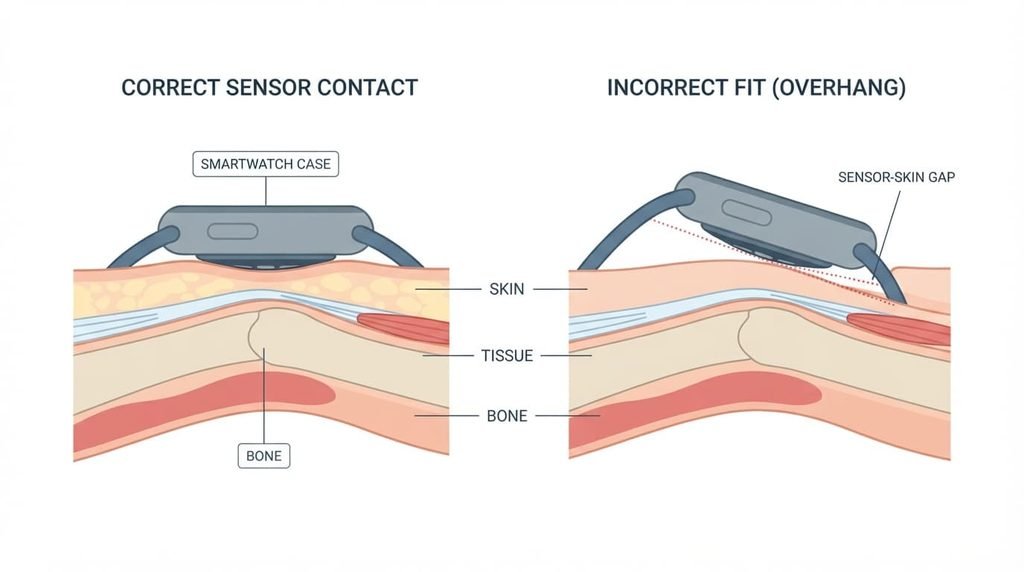
Often a larger case has room for a bigger battery, but comfort should come first. Choose the size at which the sensor sits flat against your wrist and the case does not overhang the edge, because a watch that slides loses contact and gives poorer readings.