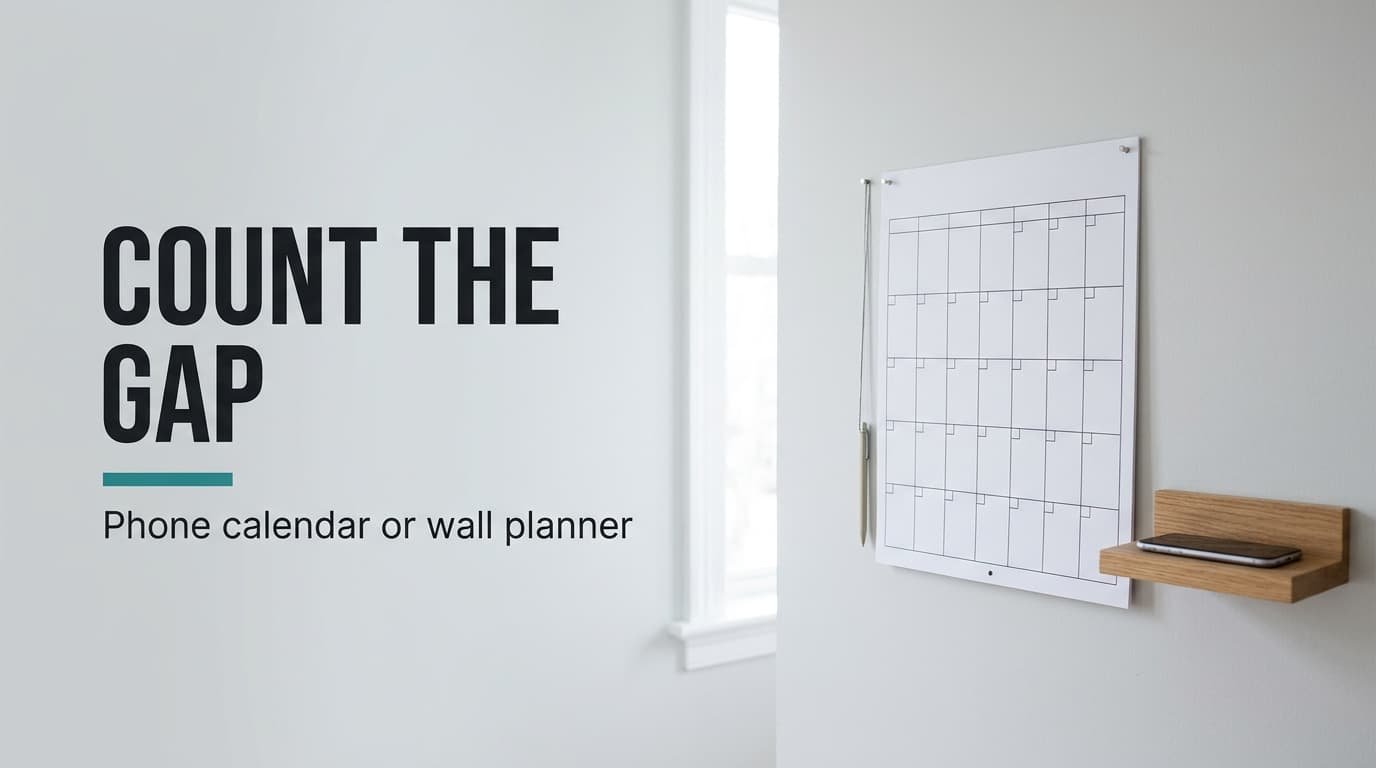
Who in your house actually reads the plan for the week? With a phone calendar or a paper wall planner, that answer settles the whole choice. Take the phone calendar if most entries are made while you’re out, and take the planner if a reader has no phone. The deciding property is where your gap sits: entries created away from home, or entries meant for someone without a handset. The example family lives in the UK. It has two parents. The children are 12 and 9. Every figure is an assumed placeholder, so count your own week. Neither a brand nor a price is named.
The one test that settles a phone calendar or a paper wall planner
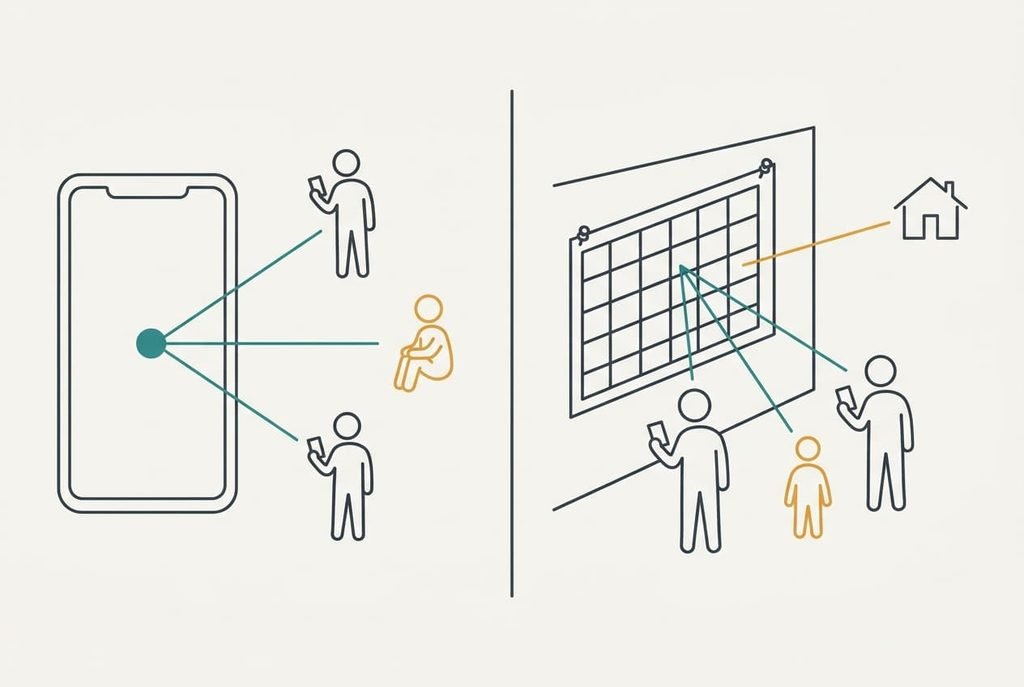
Count one ordinary week of entries, then sort each one twice, once for where it started and once for who reads it. The first sort asks where the entry was born. It’s either beside the planner at home, or somewhere else, like a school gate. The second asks who needs to read it: someone with a phone, or someone without one.
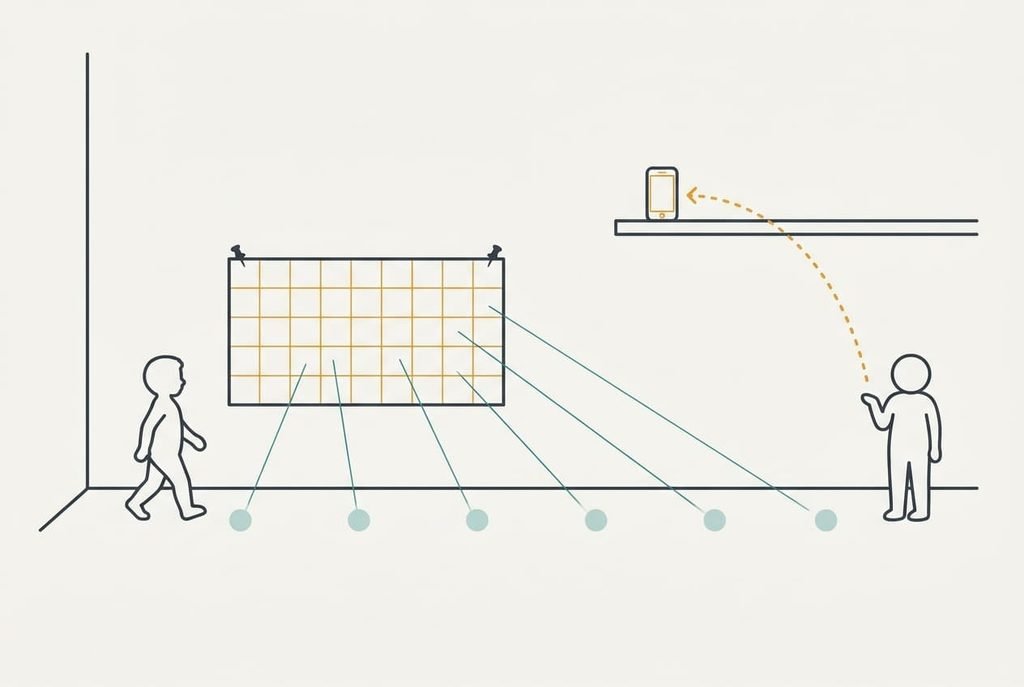
Our family logs 23 entries a week. Nine of them (39%) are born away from home, and eight (35%) matter to the nine-year-old, who has no phone. A planner can’t receive an entry that’s born away from home, so each of those nine has to be remembered until someone reaches the hallway. If one in six goes missing on the way, that’s 1.5 entries a week, or 78 a year. A phone calendar fails the other way. It reaches nobody without a handset. The eight child entries depend on someone relaying them, and a one-in-five slip rate costs 1.6 a week, or 83 a year.
Those two losses sit five entries apart over a year. That’s why a phone calendar or a paper wall planner can’t be ranked in general, and your own two counts have to decide it. Put the two numbers side by side before anything else.
Side by side: what each one does in a family week
Both tools can hold the same 23 entries. They differ in who can reach an entry and where it can be added. The rows below compare only what happens in an ordinary week.
| Question | Phone calendar | Paper wall planner |
|---|---|---|
| Who sees an entry without lifting a finger | Only people holding a phone | Anyone walking past the wall |
| Where a new entry can be added | Anywhere with a signal | Only at the wall |
| How a clash shows | Overlapping bars on one screen | Two scribbles in one cell |
| What a flat battery or a lost pen does | Hides every entry until charged | Stops new entries until a pen turns up |
| How a grandparent joins | Needs an invite and a login | Reads it standing in the hall |
| What happens to last month | Stays searchable on the phone | Leaves with the sheet you tear off |
| What a day can hold | As much as you type | About 17 characters a line in an 8.5 cm cell |
The grandparent row surprises most families. A babysitter needs an invite and a login to read the calendar, plus a signal, yet only needs a pair of eyes for the planner. Any household that plans to hand the week to a relative should weigh that row first. It’s the one most people forget to count.
Where a phone calendar wins
The phone wins once the away-from-home share climbs. Push the nine entries to 14 of 23 (61%). The planner’s one-in-six loss then grows to 2.3 a week, or 121 a year, more than the calendar’s 83. Shift changes arrive on the phone first. So do dentist calls, and a club that moves its start time. Typing each one in takes seconds while you’re still standing there.
Distance matters too. An adult on a 40-minute commute sees the wall only in the evening, so a Tuesday change made at noon reaches them six hours late.
It also wins when two households share one plan. A grandparent who collects the children on Wednesdays sees a change the moment it’s made.
Nobody has to ring ahead.
An entry can carry a reminder 30 minutes early, which a wall can’t do. Few families weighing a phone calendar or a paper wall planner count the away-from-home share, yet it’s the number that favours the screen.
Where a paper wall planner wins
The planner wins when more entries are meant for someone without a phone. Lift the eight child entries to 12 of 23 (52%). The calendar’s one-in-five loss then rises to 2.4 a week, or 125 a year, well above the planner’s 78. A nine-year-old passes a hallway wall about six times a day, which gives every entry six free chances to be read.
It also wins on plain mechanics. Writing an entry takes about 20 seconds against 40 for typing one, and a pen has no login to forget. Nothing syncs, so nothing falls out of step. A sheet 59 cm wide gives each day a cell 8.5 cm across. A child who can reach a pen can also add their own entry, such as a friend’s party, without borrowing a handset. The cost is a clear 59 × 42 cm patch of wall and a pen kept on a string. A pen that wanders off turns the sheet into a read-only board.
When neither is worth keeping
A ten-minute Sunday run-through with one short paper list suits a week with fewer than seven entries, because neither tool earns its upkeep. At five entries and a one-in-six slip rate, you lose 0.8 a week, about 43 a year. Saying the five aloud at the table means everyone hears them. Households weighing a phone calendar or a paper wall planner at that size are usually solving a problem they don’t have.
Seven entries can clash in only 21 pairs, which one person can hold in their head. Our 23 entries make 253 pairs. That’s where a screen or a wall starts to earn its keep. Write the list on half a sheet of A5, five lines long. Pin it near the kettle. Strike through changes and add new lines underneath. Review it again if a second child starts a club, since each regular club adds an entry a week.
Over seven entries, count again.
How to choose between a phone calendar and a paper wall planner
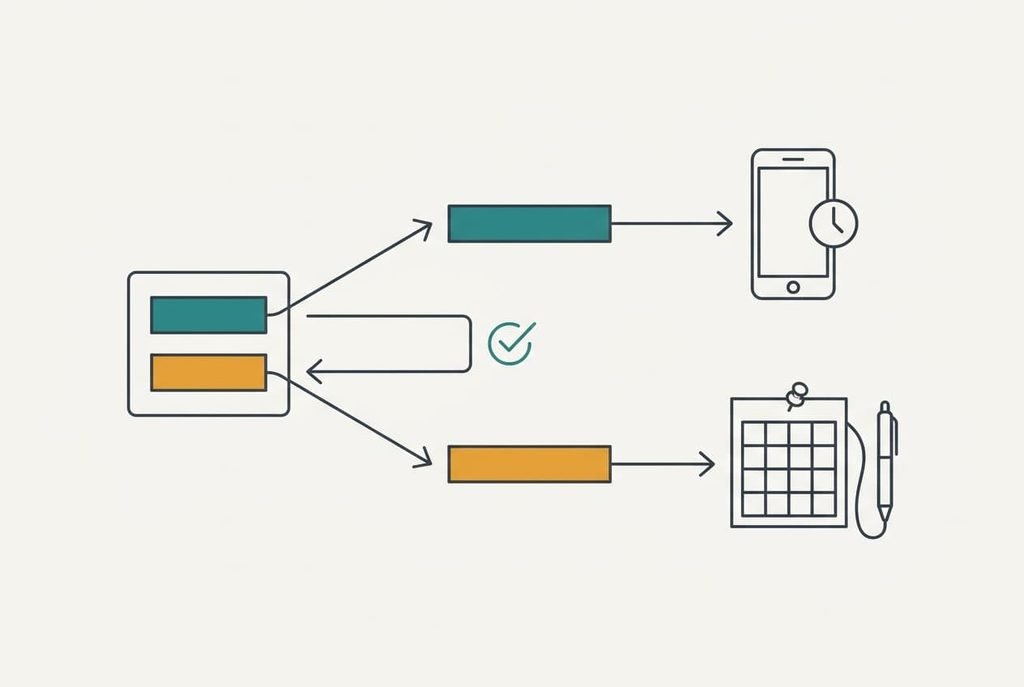
Write two counts on a card: entries born away from home, and entries meant for a reader without a phone. Take both from the same week.
If the first count is larger, take the phone calendar, put it on every adult’s phone, and add the child’s entries to an evening reminder. If the second count is larger, take the planner, hang it by the door at child height, and keep a pen on a string beside it. When the counts are within two entries, choose the one you’ll actually keep up. Some people type happily, and others would rather write. Then set a review for two weeks out. Add it as an entry, so the choice gets tested early.
Count a full week before you spend an evening setting anything up. A tool that loses 78 entries a year and one that loses 83 are close cousins. The winner is whichever gap you can close. Close it cheaply with one habit: a glance at the wall on the way out, or a spoken check at the table. A habit costs nothing and works with either tool.
Questions readers keep asking
How much effort does each take every week?
Roughly 15 minutes on the phone against 8 on the planner, using 23 entries at 40 and 20 seconds each. The planner is quicker per entry, though the nine entries born away from home need copying later. Time your own typing for one week before you compare, since a slow thumb changes the sum.
What goes wrong most often with each?
The calendar’s weak point is a reader without a handset, which cost 83 entries a year in our model. The planner’s is the entry born away from home, which cost 78. Neither failure is dramatic. Each is a single missed event now and then, and one short habit usually closes the gap.
Which suits a family with a young child better?
The planner, usually, when the child has no phone, since it reaches them without anyone relaying it. The calendar suits families where every reader carries a handset and most changes arrive while you’re out. Count your two numbers first, because eight child entries in 23 favoured the planner only mildly in our example.