A group chat for planning a trip starts as a convenience and ends as a pile. Dates and costs sink under photos and jokes, and by month three nobody can say what was agreed. Twelve people from three households make it worse, since each of them remembers a different version. This page looks at three ways to move the plan out of the chat. It compares them on money and effort first, then on what you give up, and it ends with the order of the move and the export that keeps the plan safe.
What a Group Chat for Planning a Trip Has to Carry
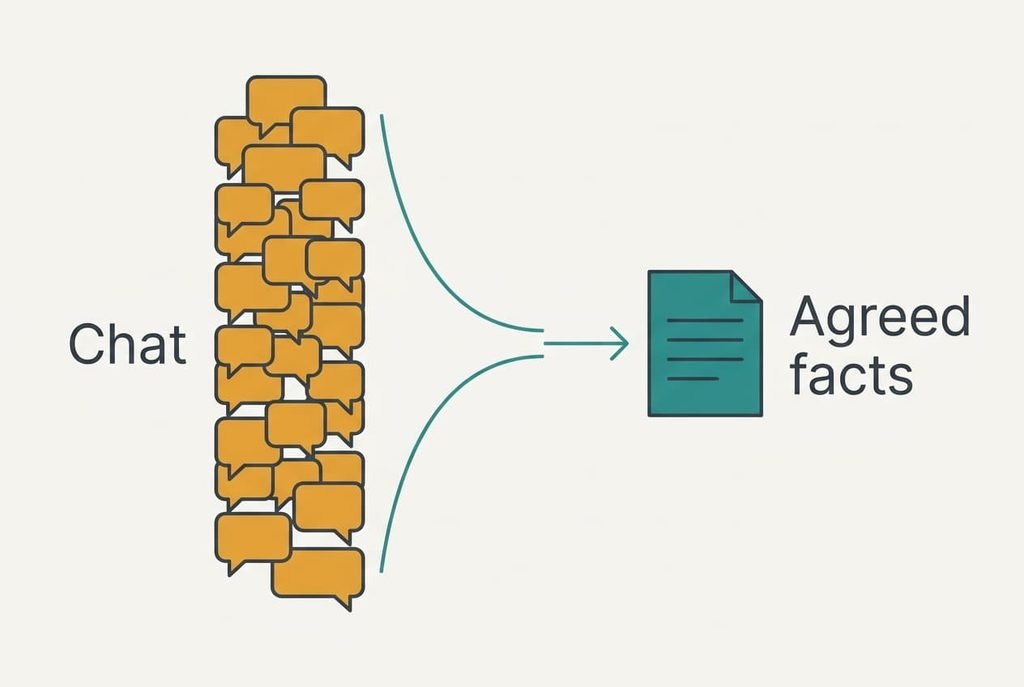
The chat holds a great deal of talk, yet only one thing in it needs protecting. What has to survive any move rests on a short list of agreed facts, because everything else is conversation. A fact earns a place on the list only when two people agree on it. Anything still under discussion stays in the chat until it’s settled. That list holds the dates and the amount each household owes, plus every booking reference. Plain text carries all of it, so it can go anywhere.
What won’t survive is the feel of the thing. Reactions, replies to a single message and voice notes stay in the old chat. Only the agreed facts travel with you, and that is the right amount to carry.
Everything else can safely stay behind.
Try the sums. Suppose the chat runs at 40 messages a day for 120 days, which makes 4,800 messages. Perhaps 25 of those are real decisions. Finding one booking reference costs about 4 minutes of scrolling, and six lookups a week come to 24 minutes. A single page of 25 facts replaces nearly all of that scrolling, and every household reads the same version.
Three Ways to Move the Plan Out of the Chat
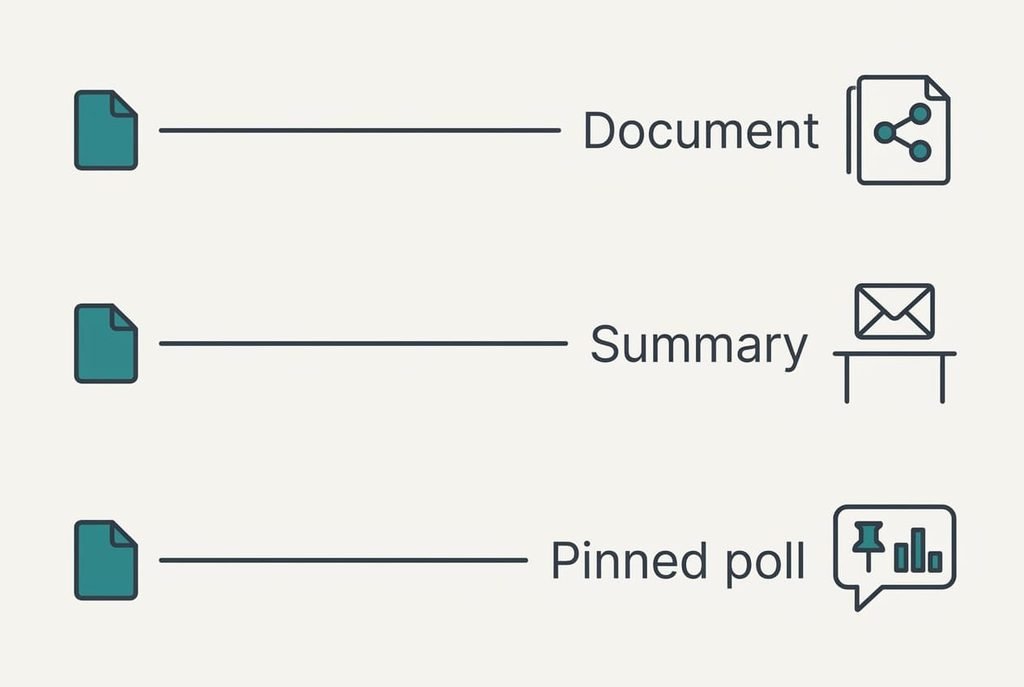
1. Money: a single shared document. This suits the organiser who wants every fact in one place and doesn’t want to pay for anything. You lose the nudge, since nobody is alerted when something changes, and by week three people stop opening it. The facts land as short headings, and each heading carries a single line about a date or a booking. Keep it to one page so nobody has to scroll, and print a copy for the relatives who rarely check a phone. It breaks when two people edit at once and overwrite each other, so one person should own the top of the page.
2. Effort: one organiser and a weekly summary. This suits a family where a single person already does the arranging. Everyone else reads one short message a week and replies only to the questions that need an answer. The price is the organiser’s evenings, because the work shifts to them. The facts land as a recap written out of the document. A recap read in two minutes beats a chat read in twenty. Send it on the same day each week so it becomes a habit. It breaks when the organiser tires or goes away, and the whole plan then waits on one person.
3. Feature loss: an announcements-only chat with polls. The old chat stays. Only the organiser may post there, and every open question becomes a poll. Free chatter is the loss, and some relatives will miss it badly. The facts land as pinned messages and closed polls. Pinned messages stay at the top, so a late joiner finds the dates first, and a vote of seven out of twelve settles a date without argument. It breaks when a poll gets no answers, and a decision then hangs open for days.
A group chat for planning a trip works well enough until the group grows past about six people. Beyond that point, one of these three options is worth the small setup time.
Month Three: What Planning a Trip Without the Group Chat Costs
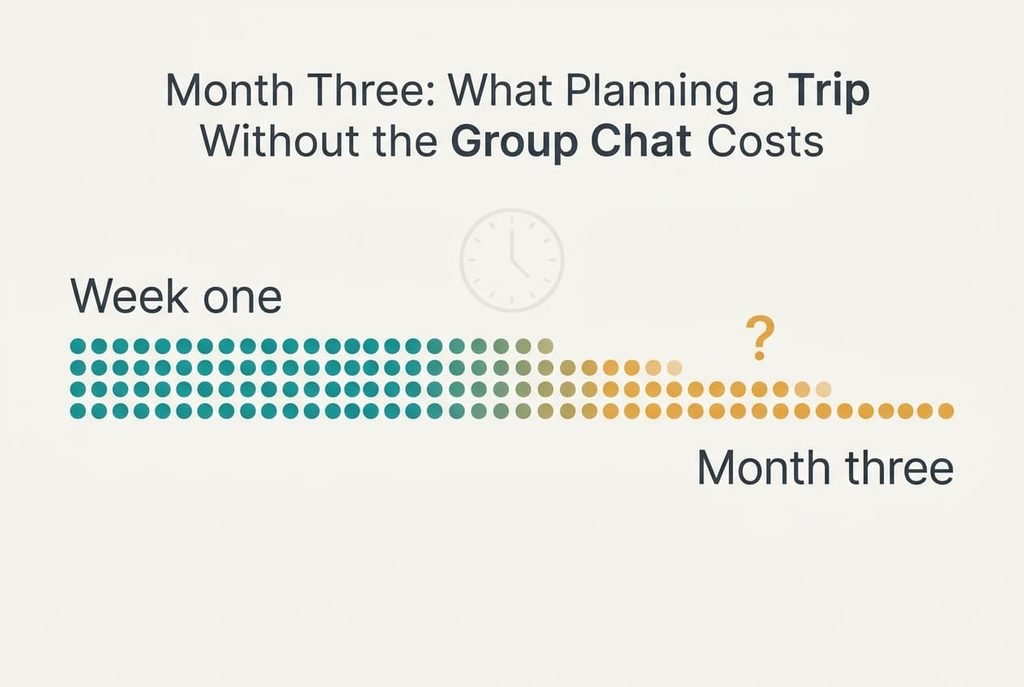
The move feels tidy in week one and awkward by month three. You get a quieter plan, because people who enjoyed the old thread drift away from it. Silence isn’t agreement, and the organiser has to ask for replies on purpose. Plan a check-in at month three: put one direct question to each household and count the answers. A short reminder before each payment date keeps the thread alive.
With the document, the cost is attention. Two households stop reading it, and the organiser spends evenings chasing them. With the weekly summary, the cost is time: perhaps 30 minutes a week for 8 months, which is about 16 hours in total. With the announcements-only chat, the cost is mood. Relatives who joked in the old chat now have nowhere to do it, so a small separate chat for banter can stay open without harming the plan.
The Order of the Move, Week by Week
Start with a quiet week and write the list of agreed facts out of the old chat. Search it for dates and amounts first. Put the list into its new place before anything else, then ask two people to check it against what they remember. Only after that should you tell everyone where the plan lives. Post the link once in the old chat and pin it there.
For the next fortnight, answer any plan question in the old chat with a pointer to the new place. People test a new habit before they trust it, and the pointer saves them the test. After two weeks the old chat can go quiet on plan questions. It stays open for pictures and jokes, which is what it was always good at.
When to Stay in the Chat
Sometimes the right answer is to do nothing. If the group is under six people and the trip is under a month away, stay where you are, since moving costs more attention than the pile ever will. A short chat has little to lose, and a pinned message with the dates is all the structure it needs.
A group chat for planning a trip also holds up when everyone replies within the hour and the decisions are small. The deciding test is lookup time. Count how long a newcomer needs to find the dates. Under a minute means the chat is doing its job, and past three minutes the pile has won and a move is overdue. If you can find the last three facts in under a minute, the old way still works. Leaving a working habit carries a price of its own.
Saving the Chat’s Contents Before You Leave
Before you move, export the chat history to a file and keep it somewhere you can search. Most chat apps offer an export option in the chat’s settings, so check yours before you need it. The file is a safety net for the one fact you forgot to copy. A computer is the better place for the export, because a long history exports more reliably there than on a phone.
Label the file with the trip and the date, so that it turns up easily in a later search.
Keep the file private to you, because it holds everyone’s messages. You don’t need to share it. Search it once for booking words, then check that each reference appears in the new list.
Whether a group chat for planning a trip stays or goes, the plan itself should live on one page. Write the facts down once, and share the page instead of the scrollback. Send the link to every household in a single message and pin it where the first question usually appears.
Questions Readers Keep Asking
Will the old messages transfer to the new place?
Not automatically. Most apps let you export the chat to a file, but a different tool can’t read the thread. Copy the agreed facts across by hand, which takes about 20 minutes for 25 facts, and keep the export as a backup.
How much does it cost in relative terms?
The document costs nothing but attention. A weekly summary costs the organiser a few hours over the whole planning period. An announcements-only chat costs a little goodwill. None of the three needs a purchase, so what you actually pay is effort.
Is it worth the disruption?
For a large group on a long lead time, yes, because lookups cost about 24 minutes a week. For a small group with a short lead time, the disruption is larger than the benefit, and staying put is the sensible call.