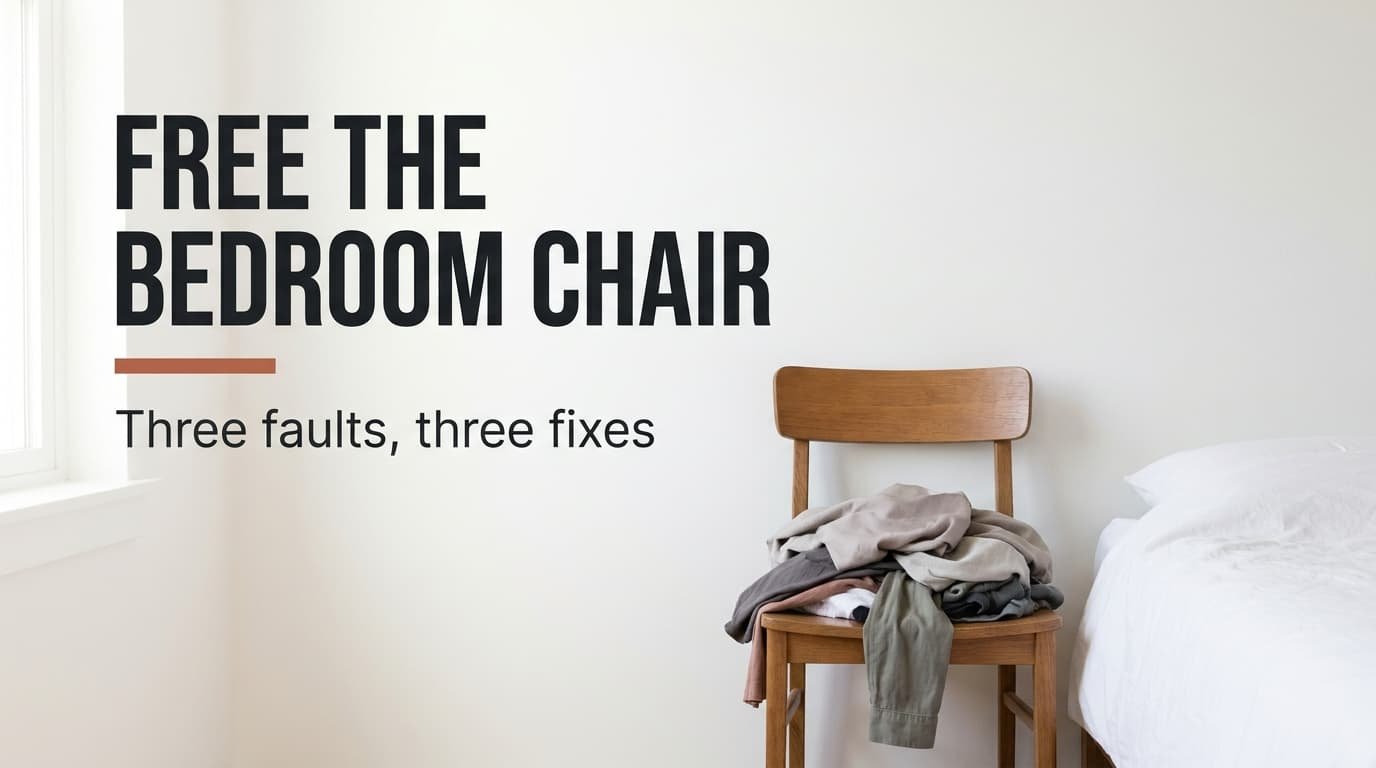
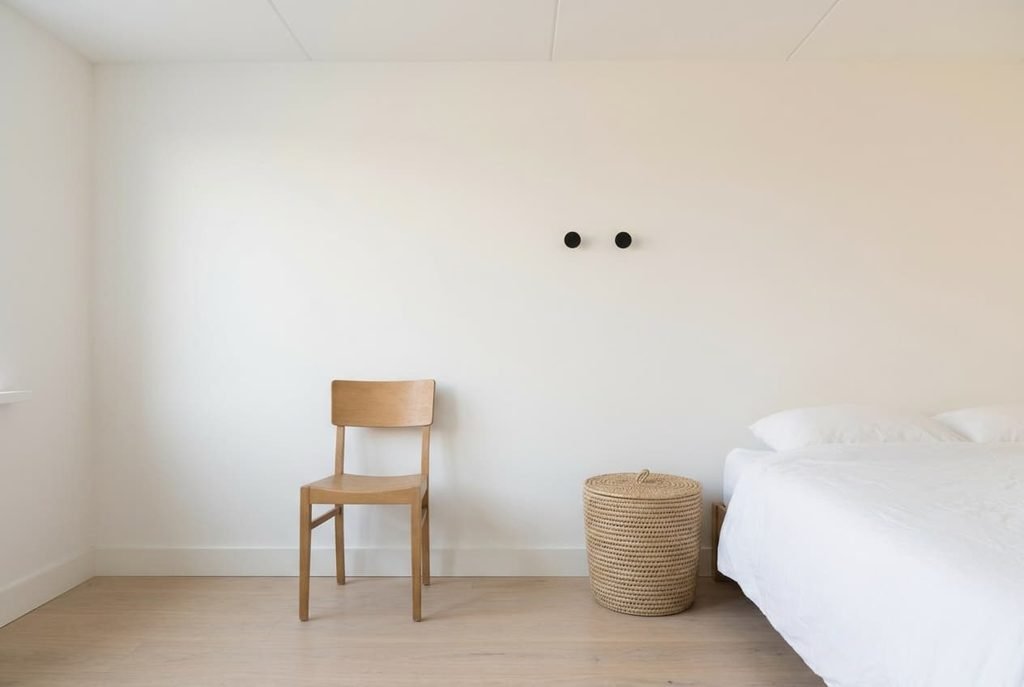
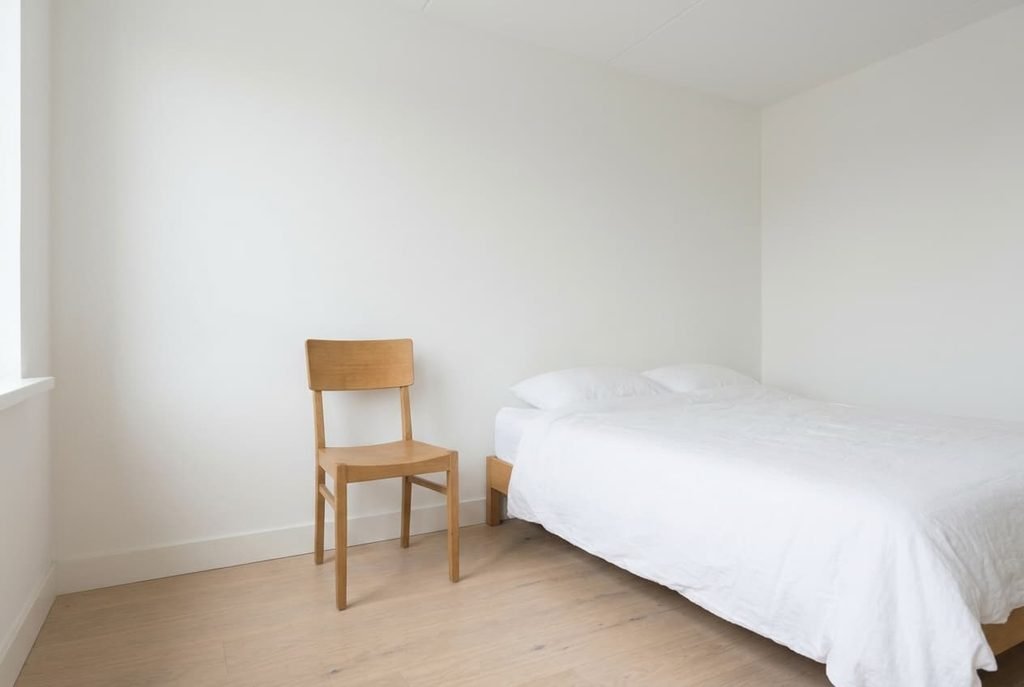
The chair beside the bed in this Utrecht flat has a 45 cm square seat and a backrest that tops out at 85 cm. About eight garments are all it will carry before the top ones slide off. Three worn-once items land on it each evening and one leaves each morning, which means that by the fourth evening it will turn into a clothes pile. The layout of the room produces that heap, and a few cheap changes remove it. Treat every number here as an assumed round value, and put your own measurement in its place.
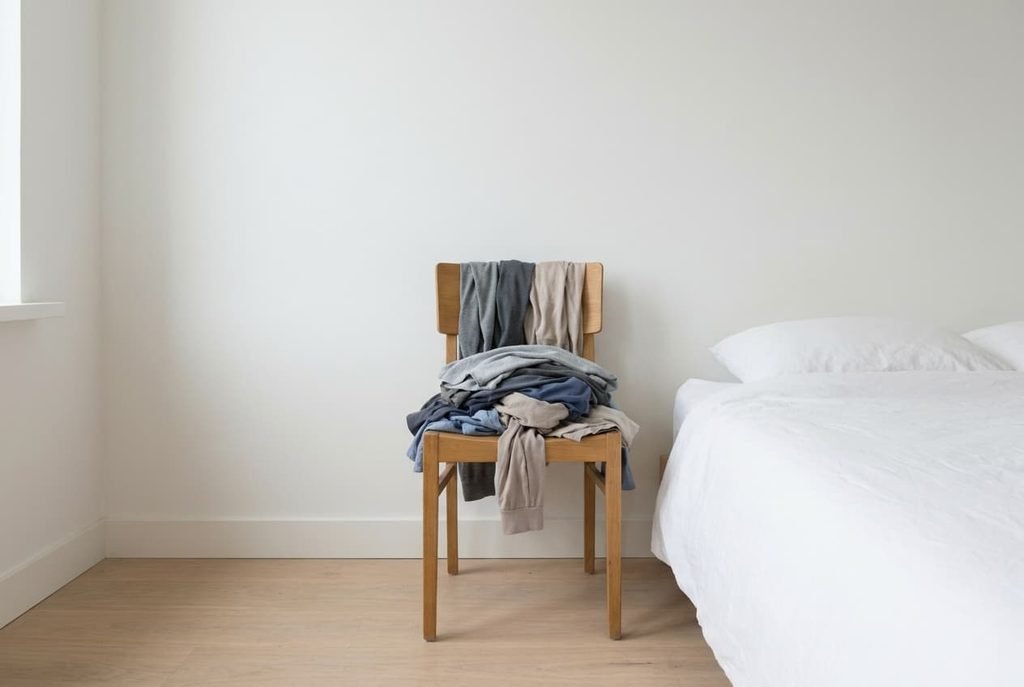
What Makes a Bedroom Chair Turn Into a Clothes Pile
Clothes fall into three kinds, yet a bedroom usually has places for only two of them. The rail takes fresh clothes and the basket takes dirty ones. A jumper worn once and due for another outing fits neither.
The chair fills the gap because it’s the cheapest surface in the room to use. Dropping a jumper on the seat takes about 4 seconds from the bedside. Hanging the same jumper in the wardrobe takes about 25 seconds, because the door has to open and a hanger has to be found. That’s more than six times as long. At three items an evening it comes to 75 seconds against 12, and a tired person tends to pick the 12.
Each draped garment adds about 3 cm, and eight of them reach 24 cm above the 45 cm seat. Past that point the top ones slide, and from the door the chair reads as clutter.
Many people reach for the label untidy, yet the room itself offers two places for three kinds of clothes. Clearing the chair each Sunday treats only the symptom, since the gap refills it within four evenings.
A Five-Minute Count Before You Move Anything
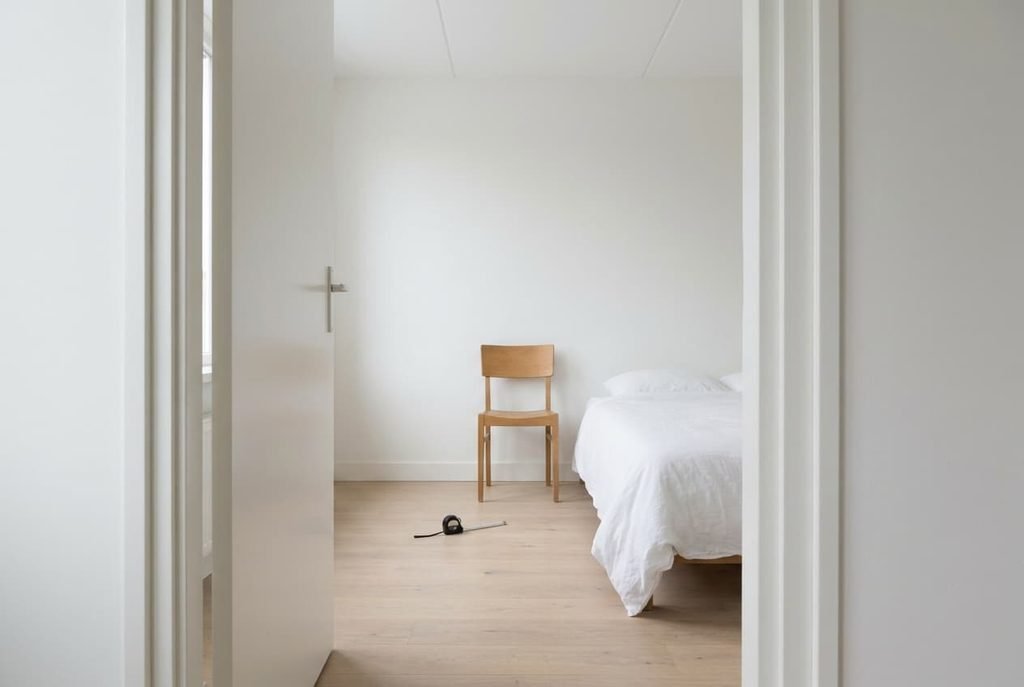
Photograph the chair from the door on the fifth evening. Count the garments in the picture. With the numbers above, a chair that nobody clears holds 11 by then, three more than the seat can carry. Look at it at that moment, once it has started to turn into a clothes pile, since a tidy morning hides the evidence.
Lift everything onto the bed and sort it. In this example 5 pieces are due another wear, 4 are ready for the basket and 2 belong on the rail. Only the first group has a reason to stay in view.
Next, measure the walk from the bedside to the wardrobe with a tape. Here it’s 2.4 m, against 40 cm to the chair. Then stand by the bed and look at the heap as a visitor would. Dark and pale pieces mixed together read as noise, even when every item is clean.
Last, note where the chair stands. Anything standing beside the bed’s end or facing the door is the first thing a visitor sees.
Three Faults Behind Clothes That Turn Into a Pile
More comes onto the chair than leaves it. Three garments arrive each evening and one leaves each morning; after evening n the count stands at 2n + 1. That puts 9 on the chair by the fourth evening, one above its limit of 8. Beyond that limit the top garments slide, and each one picked up and draped again adds seconds. Raising the exit rate changes the sum. If two garments are pulled back each morning, the heap grows by one a day and not two. It stands at 7 on the fifth evening, which is under the limit. One sort that evening resets it. This costs no money and about 10 seconds each morning, which makes it the first fix to try.
The chair is closer than the wardrobe. From the bedside the chair is 40 cm away and the wardrobe 2.4 m, which explains 4 seconds against 25. Carry the chair to the window wall, roughly 2.5 m from the bed, and the walk to it matches the walk to the wardrobe. The chair loses its head start on distance, though it keeps an edge in effort because no door has to open. Moving it is ten minutes of rearranging and no purchase. Test the new position for a week. If the count on the fifth evening has dropped below the earlier 11, the distance was doing part of the damage.
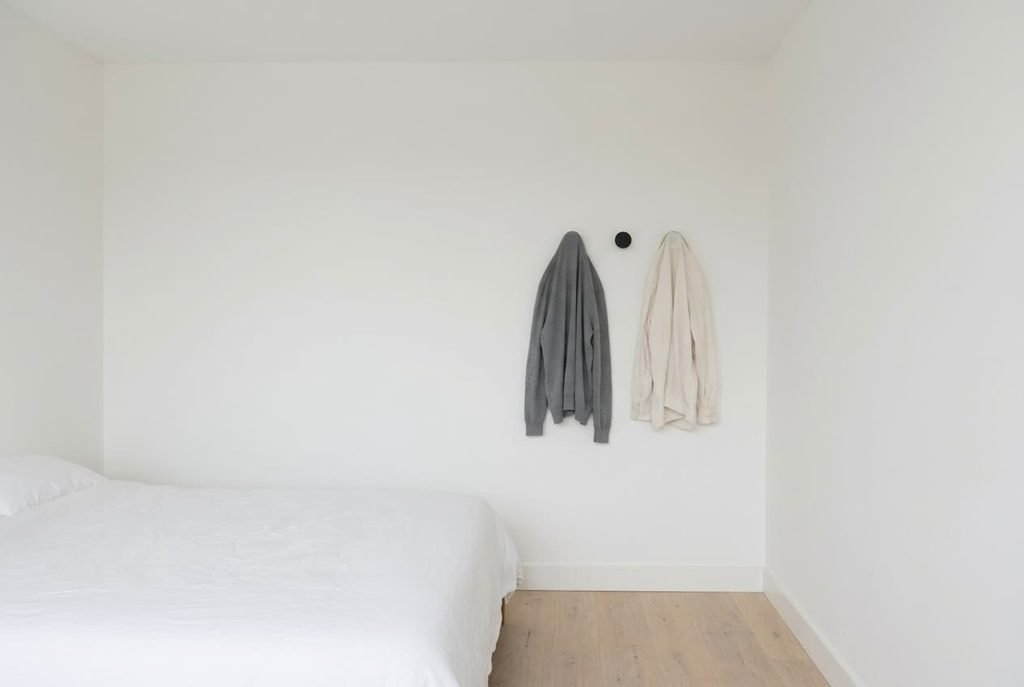
The heap reads as noise. Dark and pale pieces lie at different angles on a pale seat, and a heap 24 cm high stands in front of an otherwise calm wall. The eye usually registers the contrast before it registers any single garment. Mount two hooks beside the bed at about 150 cm, and garments hang in a single vertical line. Each hook takes two pieces, which gives four places. In the earlier sort only 5 of 11 pieces were due another wear, roughly one a day. Four places are ample. A row of hooked garments also shows at a glance what’s still wearable, which a heap never does. Hooks are the only item in this list that needs a purchase. Where drilling isn’t allowed, a freestanding rail serves equally well and leaves the wall untouched.
Keeping the Seat Clear Week After Week
Make the fifth evening a sort evening. With the morning rule in place, 7 pieces sit on the chair or the hooks by then, and sorting them takes under two minutes at about 15 seconds a piece. What’s ready for the basket goes in at once, and what belongs on the rail goes back. Photograph the chair before and after the first sort, so the change is visible.
Keep the basket an arm’s length from the bed.
A chair that used to turn into a clothes pile stays a chair once every kind of clothes has a home within reach. After a month, take one new photograph from the door. If the heap has returned, measure the distances again first. The basket or the hooks have probably drifted further from the bedside than the chair.
Clearing the Chair Only Moves the Pile
Removing the chair altogether looks like the decisive answer, since no seat means no heap. It leaves the cause untouched. The same three garments still arrive each evening and land wherever is nearest to the bedside, which is almost always closer than the wardrobe. A cover thrown over the chair hides the heap from visitors, yet it adds three garments every evening, and by the fourth the cover bulges. Each of these workarounds treats the heap as the fault, but the heap is only the visible end of a missing home.
Taking the chair away only changes where the heap lands.
A bigger wardrobe has the same weakness, since extra rail space does nothing about the walk to it. Even a well-sorted room slips back the moment a chair is allowed to turn into a clothes pile again, because the 4 seconds against 25 are still there.
The chair has simply been the cheapest option available: it’s the one flat surface in the room that costs almost nothing to use, in a room where every proper home for a worn-once garment costs six times as much. Open with the free changes: count the heap and pull two garments each morning. Then move the seat. Add hooks only if the heap returns. A fresh photograph from the door within a week will show whether the layout has stopped working against you, and the numbers in this article give you something to compare it with. The fifth evening is the natural checkpoint, because that’s when the count reaches its peak under the morning rule.
Questions Readers Keep Asking
What actually causes a chair to fill with clothes?
The room has no place for clothes worn once. They’re too fresh for the basket and too used for the rail. The chair is the nearest surface that asks for no effort, and at about 4 seconds against 25 for the wardrobe it wins each evening.
What’s the quickest fix?
Pull two garments off the chair each morning instead of one. With three arriving every evening, the heap then grows by one a day and stays under eight for five days. Add one tidy-up on the fifth evening, and the seat stays usable without a purchase.
Can it be fixed without renovation?
Yes. The free steps are the morning rule and moving the chair to the far wall, which needs ten minutes. Hooks help most, yet where drilling isn’t allowed a freestanding rail does the same job without touching the walls. Nothing here needs building work.