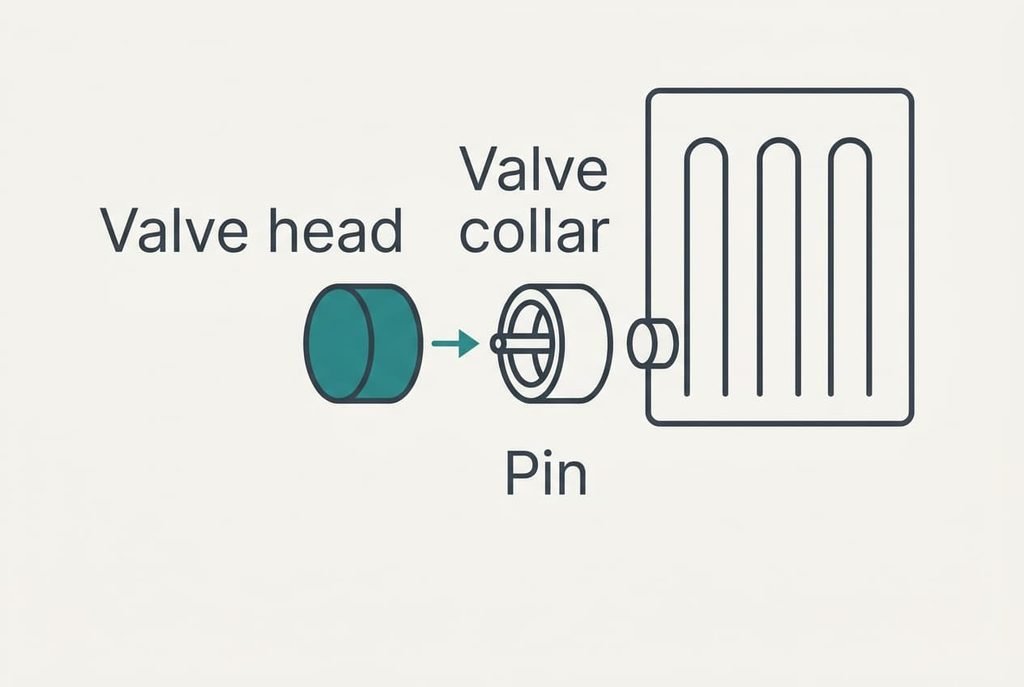
A radiator valve is a small brass collar with a plastic head on top, and the head is the only part a tenant may change. The first question when you choose smart heating valves is whether the new head fits the collar already there. The situation is a flat with five radiators and one boiler, owned by a landlord who expects every fitting to come off again. Everything below assumes that flat. Its battery counts and timings are assumptions, so use figures from your own flat instead. No product names or prices are given, as both date quickly.
What Decides How to Choose Smart Heating Valves
Buyers compare apps and battery months first, yet a head that doesn’t fit the valve already on the radiator is useless however clever it is. Fit comes before every other feature because nothing else works until the head seats properly and presses the pin inside the collar.
Think about what the head does. It senses the air around it and moves a small pin that opens or closes the water flow. It never heats anything itself. So the whole value of a smart head is control, and control rests on the pin being moved the right distance.
The brass collar stays put, and only the plastic head moves.
A tenant adds a second condition: the change must be reversible. The original head goes in a drawer, then the smart head goes on. When the tenancy ends, the original goes back. Any product that needs a new valve body fails that test, because fitting one means draining the system.
Measure the stakes with a small sum. Five radiators at two manual turns a day, 15 seconds each, cost 150 seconds a day. That is about 15 hours a year of walking and turning, and it is the real saving on offer.
Smart Valves for Heating: The Four Criteria in Order
The order below puts the cheapest mistake last. Each item says what it is and what it changes daily. It then says how to judge it and what a mistake costs.
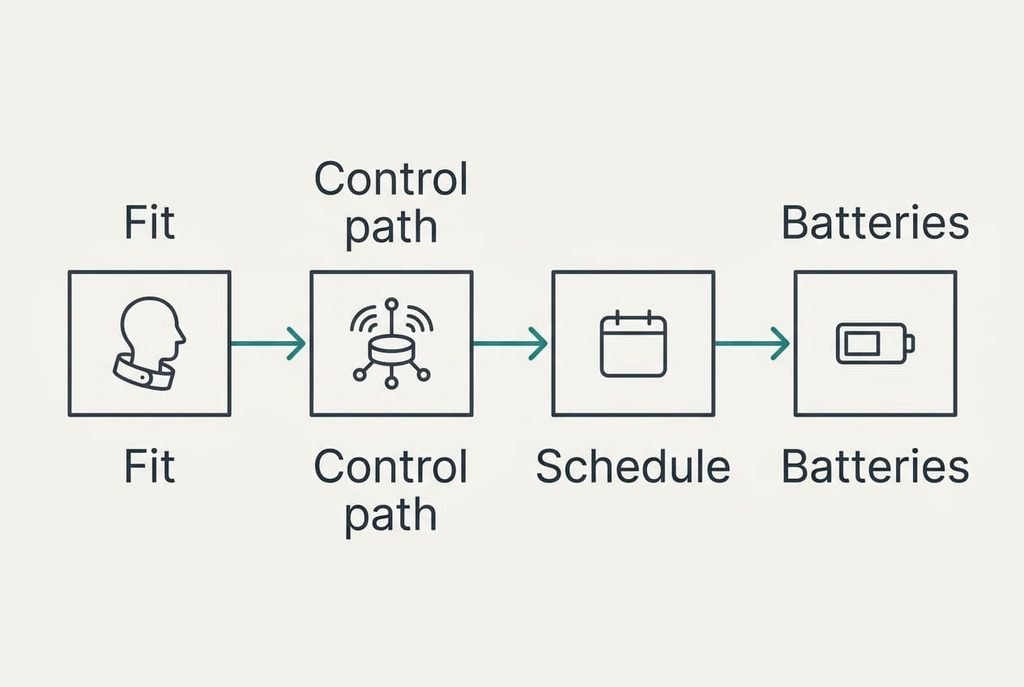
1. Fit and reversibility come first. A matching head seats flat on the collar with no gap and comes off again without tools. Judge it by photographing your existing valve, then set the photograph beside the maker’s published list of supported valve types and supplied adapters. A wrong choice leaves the head loose and the pin unpressed, so the radiator can’t be shut off. A second visit to the shop wastes an evening.
2. The control path comes second. Some valves talk to a hub plugged into the router, and others talk to the phone directly. A hub adds one socket and one cable but reaches all five radiators reliably. Judge it by the distance from the hub spot to the furthest radiator. A wrong choice shows up as a valve that drops out of range and keeps its last setting until you walk over and reset it.
3. Where the schedule lives comes third, and it’s the check that most buyers skip. A valve that stores its own schedule keeps heating on time when the internet or the hub fails. One that takes orders from the cloud may stop following the plan. Judge it by finding a plain statement of where the schedule is kept. A wrong choice means a router outage in January leaves the flat cold or hot for hours. Most boxes never mention the point, so ask the seller directly if the manual is silent.
4. Batteries come last. Assume each valve takes two cells and a set lasts a year, so five valves need 10 cells a change. Judge by whether the cells are ordinary ones you can buy anywhere and whether the app warns you in advance. A wrong choice shows only when the cells die: the valve may stay open or shut and a room misbehaves.

Features That Sound Better Than They Are
The loudest claim is a learning mode that promises to write your schedule for you. It is promoted because it makes a good demonstration: the valves seem to think. A household on a regular routine gets very little from it. Before you choose smart heating valves for that feature, price the work it replaces.
The sum is short. A schedule of four blocks per room (two for weekdays, two for weekends) comes to 5 rooms × 4 blocks = 20 entries. At 30 seconds each that is 600 seconds, or 10 minutes, once. A learning mode saves those 10 minutes and then spends weeks guessing wrong on the nights your routine changes.
Open-window detection works the same way. It reacts to a quick drop in temperature, so a draught from a door can trigger it, and the room goes cold without anyone opening a window.
Treat both features as pleasant extras, never as reasons to pay more.
Which Criteria Move for Which Reader
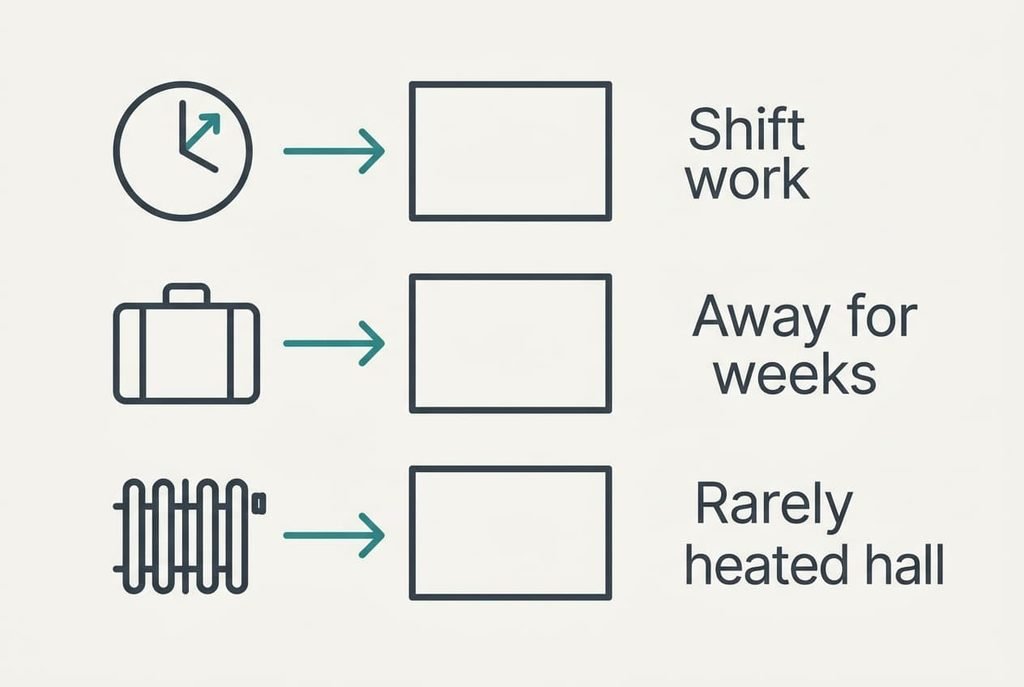
The ranking above holds for most flats, but a few readers should shift it. Someone who works shifts needs the control path first, because a changing rota means adjusting from a phone at odd hours. When you choose smart heating valves for that life, a hub with remote access outranks even battery life.
Someone who travels for weeks should put the schedule’s home first. A valve that holds its own timetable and has a low-temperature setting holds a low background temperature without help from a router.
If the hall is rarely heated, skip features there entirely. Spend in proportion to hours of use: the living room radiator runs about six hours a day, the hall about half an hour, so only the first deserves the best valve.
When to Walk Away
Walk away from any valve that needs the heating system drained to fit. Draining involves opening the system, and a mistake can flood a floor or leave a radiator airlocked. It is also a change a landlord must approve in writing, which removes the point of a reversible upgrade. A tenant who drains a system without consent may be asked to pay for the repair. Written consent from the landlord protects your deposit.
Also decline a product that gives you no adapter for your valve and no clear answer about whether your radiators accept it. To choose smart heating valves safely you need a fit you can confirm before you pay. A shop that can’t state compatibility in plain words is telling you something.
If only one radiator has a manual valve with no thermostatic head, leave that one alone. Fit heads to the other four.
A Two-Minute Check Before You Order
Start with the existing valve and photograph the head you already have, then set it beside the maker’s compatibility list. That’s a job of roughly one minute. Keep the answers on one line so you can compare two products at a glance. Count your radiators and note which ones have a plain manual valve. Then look for two plain statements: whether a hub is needed, and where the schedule is stored.
If the photograph matches and both statements are clear, the order is safe to place. If any one is missing, the product has failed a criterion you can’t afford to guess.
Fit is the whole decision in one word. A valve that seats properly will serve a tenant for years. It comes off again and keeps its own schedule, while no feature on the box can rescue any valve that fails the first test. Check it before you pay, and the order will almost never come back.
Questions Readers Keep Asking
What specification matters most?
Compatibility with the valve already on the radiator. Check the maker’s list of supported valve types and whether adapters are supplied, then compare both with a photograph of your own valve. Battery months and app features come after that, because none of them matter if the head can’t seat properly.
How much should I spend in relative terms?
Spend in proportion to use. The room you heat for six hours a day deserves the best valve, while a hall used for half an hour can have the plainest. If a hub is sold separately, treat it as a shared cost spread over all five radiators.
Will I regret it in a year?
Rarely, provided you checked the fit and the stored schedule first. Regret usually comes from a head that needed a hub the owner didn’t want, or from a schedule that stopped when the internet did. Both show up in the two-minute check, which costs nothing.