Fitted carpet is back in bedrooms. This guide measures what that means in one room, from the height it adds to the noise it removes. Next come the reasons and the costs. An overdone version and a trial with an offcut close the guide. The verdict is split by room, because carpet earns its place in some rooms and fails in others. The sample is a Groningen flat with a 300 × 380 cm bedroom, where a bare floor leaves a 12 mm gap under the door. Measure your own room, and if you rent, speak to the landlord before anything else.
Why Fitted Carpet Is Back in Bedrooms: the Short Version
A fitted carpet is one piece of pile cut to fit the room’s outline and stretched over an underlay. Wooden strips studded with short pins, called gripper rods, are nailed round the edge to hold it taut. Each sits a small gap from the wall, leaving room for the carpet edge to tuck behind the skirting. A fitter stretches the pile onto the pins before trimming. No glue is involved. A rug lies loose with bare floor showing at its edges, while a fitted piece runs right to the skirting.
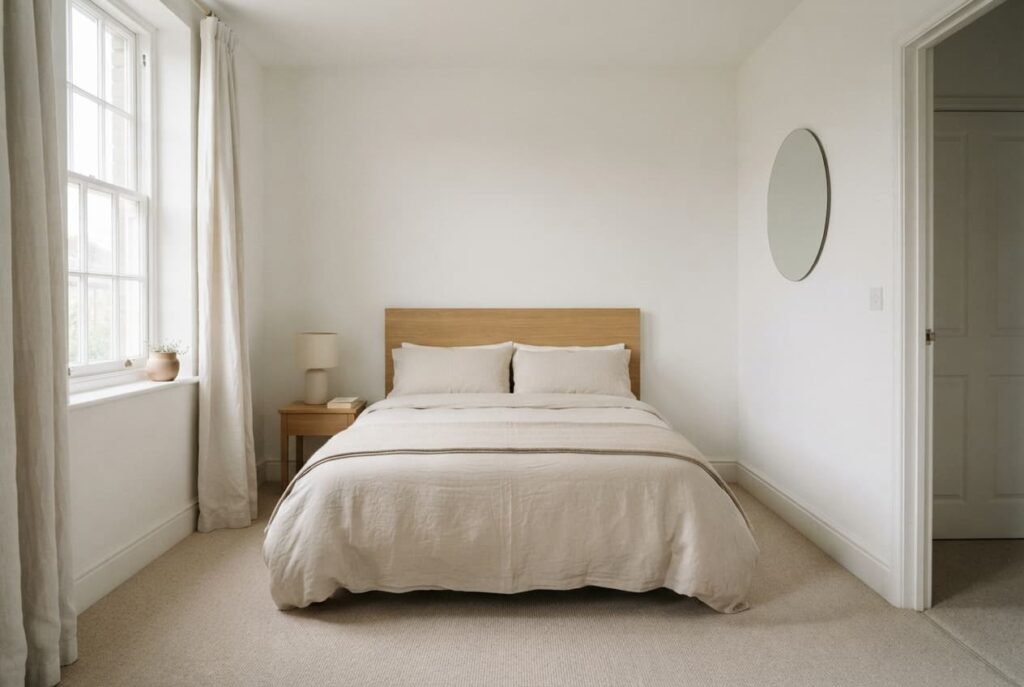
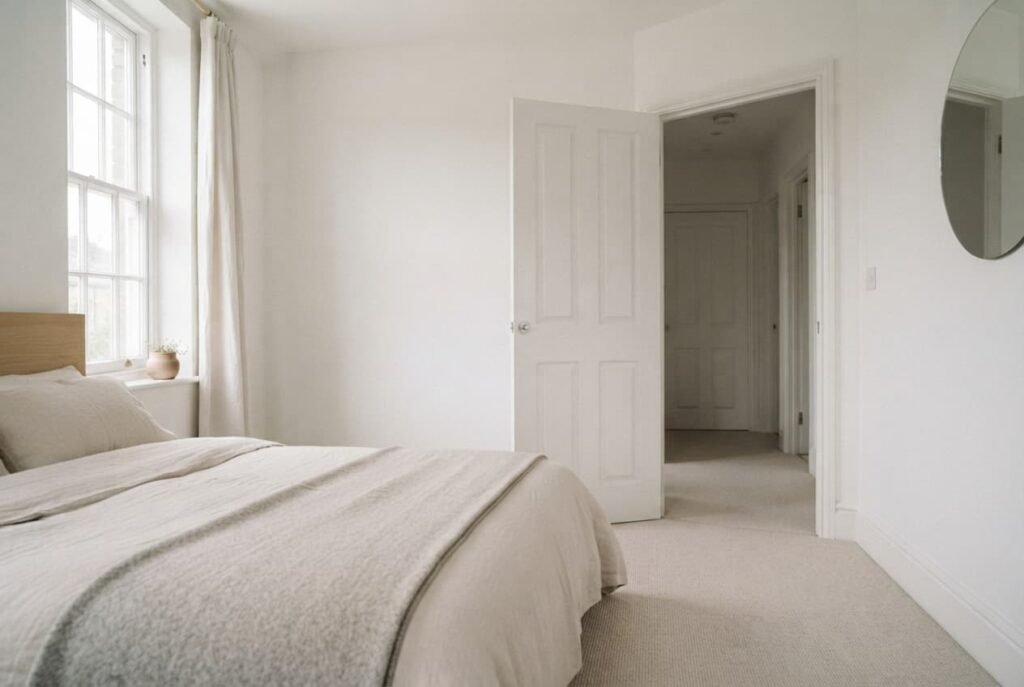
In the sample bedroom the pile is 7 mm deep and the underlay is 8 mm, which together raise the floor by 15 mm. The laminate it replaces doesn’t add anything. Seen from the doorway, either room is tidy, although each reacts in its own way to a footstep and to a vacuum nozzle.
The word trend here means a change in what people choose, and no sales figure backs it. Everything measured below belongs to one bedroom. Your own room may differ and needs its own test it before drawing any conclusion.
How the Numbers Change When Fitted Carpet Is Back in a Bedroom
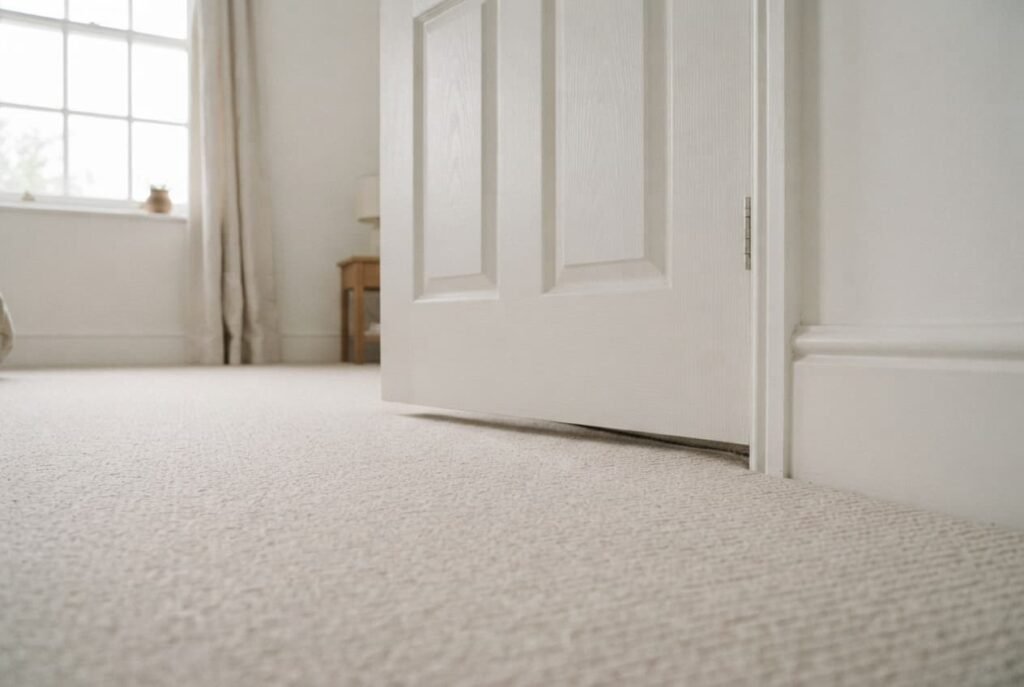
Height comes first. Carpet and underlay lift the floor by 15 mm. The door cleared the laminate by only 12 mm, which leaves 12 − 15 = −3 mm. The door would drag across the pile. To restore a 5 mm gap, 3 + 5 = 8 mm must be planed off its bottom edge.
Next comes the roll. Broadloom is commonly sold in 4 m widths and the room measures 3.8 m across; a single piece therefore covers it without a seam. Laid along the 300 cm side with 10 cm spare, the piece measures 4.0 × 3.1 = 12.4 m². The room’s floor area is 11.4 m². The waste is 1.0 m², about 8%. Gripper rods follow the walls for 2 × (300 + 380) = 1,360 cm, less the 80 cm doorway, which leaves 12.8 m.
Sound changes most. Stand in the empty room and clap once, then count how long the noise lingers. On bare laminate the sample ring lasts about 0.7 seconds, and under carpet it falls to about 0.4 seconds. Measured by clap, ring time drops from 0.7 to 0.4 seconds, a cut of 43%.
Both figures are assumptions, and you’ll want to check them in your own bedroom.
Cleaning moves the other way. A weekly pass takes about 4 minutes on laminate and about 7 on carpet, an extra 3 minutes. Over 52 weeks that adds up to 156 minutes, or 2.6 hours.
Why Households Choose Fitted Carpet Again
Noise leads the list. A hard floor carries footsteps and chair scrapes down to the flat below, and thin floors in older Dutch blocks pass them easily. Pile and underlay soak up part of that energy before it reaches the structure, and the same layer calms the room itself. You’ll hear the gain most clearly when your floor is somebody else’s ceiling. Fitted carpet is back in bedrooms partly because people living above a neighbour on a hard floor notice the difference first.
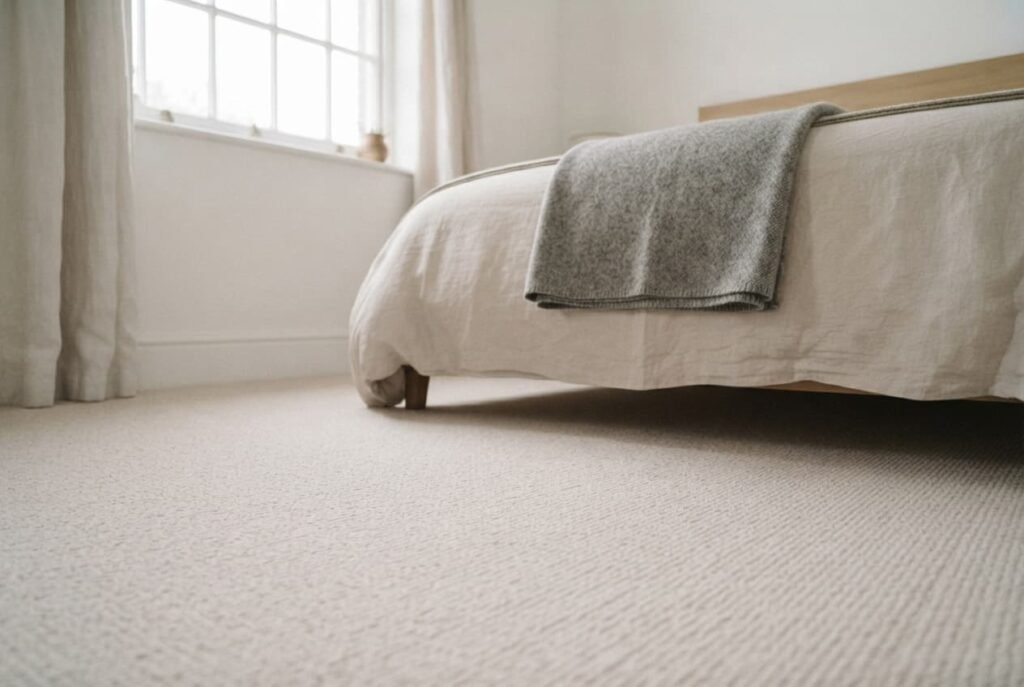
Warmth underfoot comes second. Carpet conducts heat poorly, and a bare foot loses warmth to it slowly. Laminate feels colder at the same air temperature because it draws heat from skin faster. Underfloor heating calls for a carpet and underlay rated for it, since thick layers hold the warmth back.
Softness is third. A bedroom is where people stand barefoot and sit on the floor, and pile suits that.
Cover is the fourth reason. Underlay doesn’t remove a bad floor. It does even out small ridges of a few millimetres across an old one, and a carpet hides the joins and scuffs that worn laminate shows.
Dust is the last. Little outdoor dirt reaches a bedroom when shoes stay by the entrance. A hall collects far more, which is why a bedroom carpet stays cleaner than a hallway one.
What You Give Up
Cleaning comes first. Those extra 156 minutes a year buy a vacuum that must reach the whole pile, because fine dust sits deeper in carpet than on laminate.
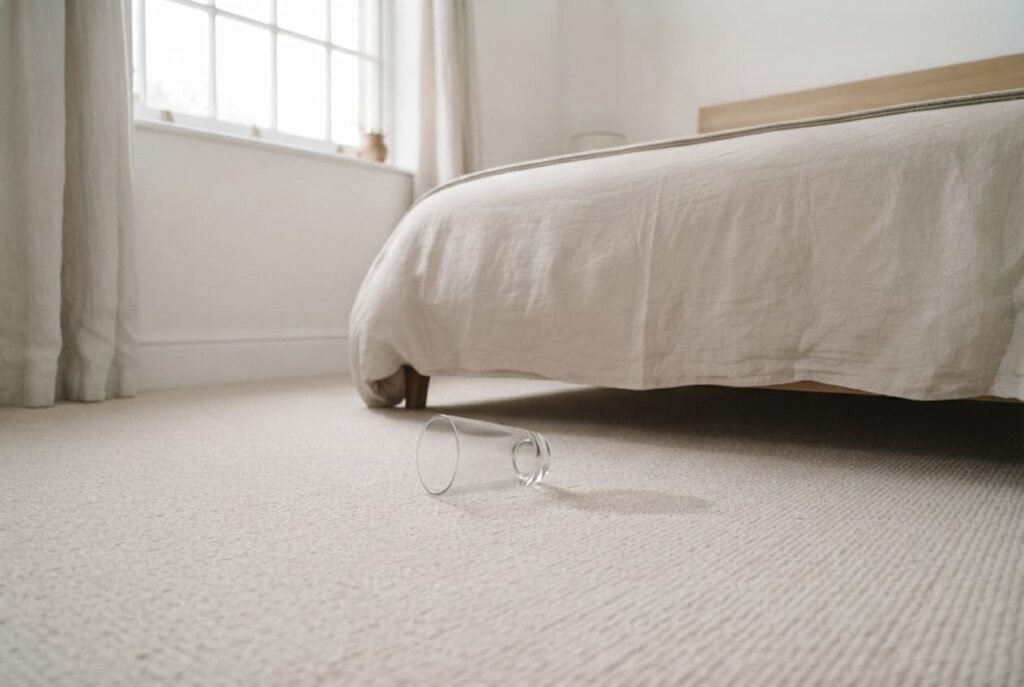
Spills come second. Water on bare laminate doesn’t linger, and it wipes away in seconds. On carpet it soaks in and needs blotting, then time to dry. Coffee or wine leaves a mark that blotting often fades but doesn’t always remove. Hair and fluff gather along the walls.
Doors and thresholds need work. The 8 mm planed off the bedroom door is permanent, and the 15 mm step at the doorway needs a ramped strip.
Moving out is the last cost, because a fitted carpet is cut to one room and rarely fits the next. The 12.8 m of rod also leaves a row of pin holes through the floor beneath.
The Extreme Version
Take the idea further and carpet covers every floor in the flat, bathroom included. A 52 m² flat then needs 52 ÷ 11.4 ≈ 4.6 times the bedroom’s carpet. The weekly clean grows from about 18 minutes on hard floor to about 32 on carpet. A deep shag of 30 mm, more than four times the pile used here, lifts the floor by 38 mm with its underlay.
The kitchen and bathroom decide it. Spills and splashes land there daily, and wet carpet dries far slower than tile. A waterproof backing only moves the trouble to the edge, where water runs underneath.
The front door adds another cost, because grit carried in grinds the pile down along the path inside the front door. Heavily walked rooms show wear lines early. Fitted carpet is back in bedrooms for good reasons, and those reasons stop at the bedroom door.
A bedroom carpet with a wipeable hall and kitchen gives the gains without these costs.
Who It Suits
Fitted carpet is back in bedrooms that match three conditions: a dry room, a hard floor that carries noise downstairs, and a household that leaves shoes at the entrance. Tenants need written consent, because the rods are fixed through the floor covering. It suits less well a room with underfloor heating and thick layers, or a floor due for sanding within a few years.
Try a loose offcut for seven days before choosing a floor. Ask for a 1 m² sample, lay it beside the bed and stand on it each morning. Clap before and after, and count the seconds each time.
Keep the idea if the difference still registers after seven days, and drop it if you barely notice. Write the pile and underlay depth on a note. Check your door gap before ordering, because 15 mm of extra height is plenty to ask of a door. Measure the gap under every door in the room, not just one, because planing is easier to plan than to undo.
Questions and Answers
Should I keep my laminate floor or fit carpet?
Keep the laminate when the room already sounds quiet and you like how easily it cleans. Choose carpet when noise reaches the neighbours or the floor feels cold at night. Lay an offcut by the bed for a week and clap before and after, then judge from your own seconds.
Who does fitted carpet suit?
A dry bedroom with a hard, noisy floor suits it best, especially in a household that leaves shoes at the entrance. Skip it in kitchens and bathrooms, or anywhere traffic is heavy. Tenants should ask the landlord for written agreement before fitting, since gripper rods are fixed through the floor covering.
How long will a fitted carpet last?
A bedroom carpet ages slowly because few people cross it, and the first wear shows on the path between doorway and bed. Judge it by how the room feels today. Lifespan varies with the pile and the underlay, and no forecast is given here.