Wireless charging genuinely is less energy-efficient than a direct cable connection, and that inherent inefficiency shows up as extra heat generated during charging – which is exactly the underlying mechanism that accelerates long-term battery wear over time. If you’ve noticed faster degradation and suspect your charging habit, the realistic path forward isn’t necessarily abandoning convenience entirely, but understanding what each alternative actually preserves and what it costs you.
What wireless charging is actually doing
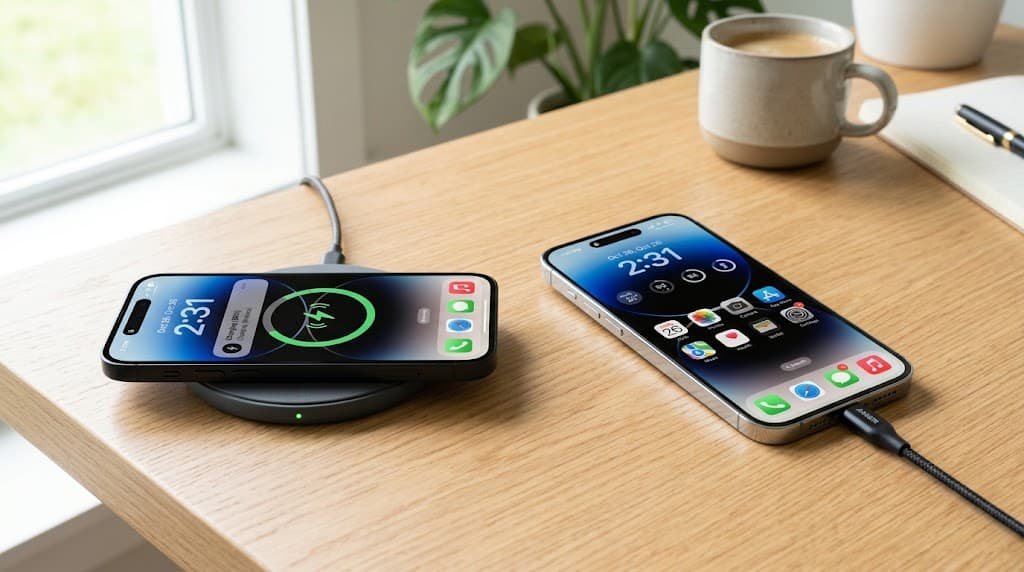
The core function wireless charging provides is eliminating the physical cable connection – no port wear, no cable to locate, a simple set-down-and-go habit that’s genuinely convenient for many daily routines. This convenience comes from inductive power transfer, which is inherently less efficient than a direct electrical connection, losing some energy as heat during the transfer process itself.
That heat loss is the entire mechanism behind the battery-wear concern. It’s not that wireless charging is fundamentally different in kind from cable charging – it’s that the same heat-related degradation mechanism runs somewhat hotter, somewhat more consistently, for anyone using it as their primary daily method rather than an occasional convenience.
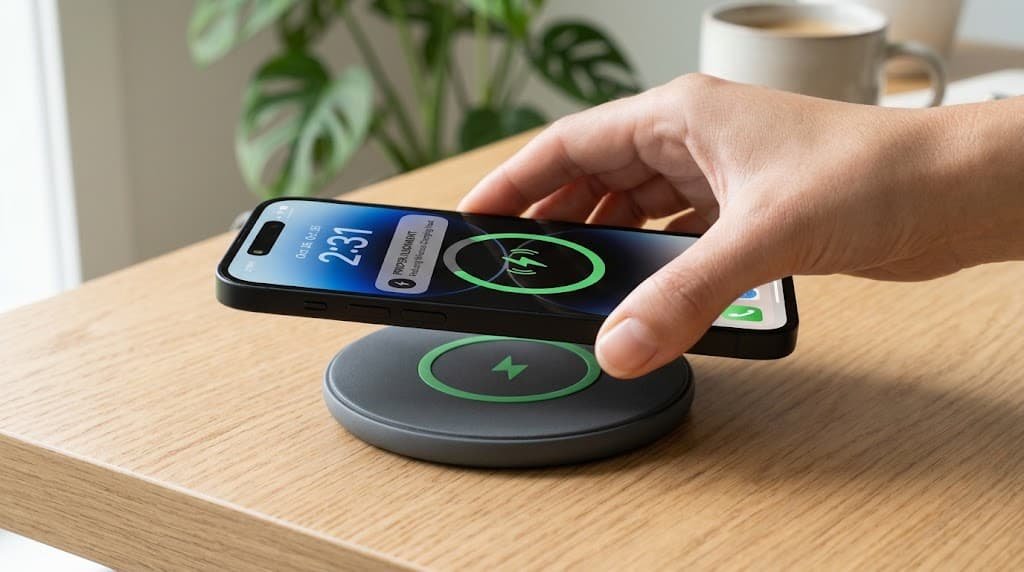
Alignment between the phone and the charging pad also genuinely affects this mechanism directly and measurably. A phone positioned slightly off-centre on the pad often triggers less efficient power transfer as the system compensates, generating meaningfully more heat than a well-aligned connection would for the exact same charging session. This is precisely why two different people using the exact same wireless charger can experience noticeably different heat buildup, depending entirely on how consistently they place the phone in the optimal position each time they charge.
The kinds of replacement, and what each costs you
Standard cable charging at a lower speed. This directly eliminates the inductive heat loss entirely, since a direct electrical connection doesn’t share the same inefficiency mechanism. The trade-off: you lose the actual convenience wireless charging was solving in the first place – a cable to locate, a port that experiences physical wear over years of repeated insertion, and the “set it down” habit that made wireless charging appealing in daily use.
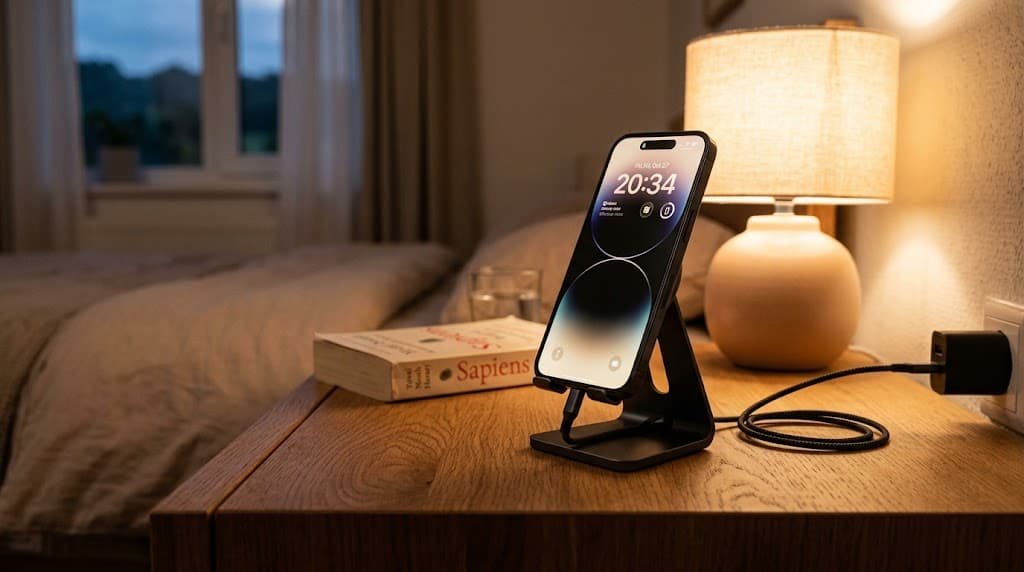
A charging stand that still uses a cable but keeps the phone upright and visible. This preserves much of wireless charging’s visual and functional convenience – notifications still visible, phone still accessible at a glance – while returning to direct cable efficiency underneath. The trade-off: you still need to physically connect the cable each time, which reintroduces the exact daily friction wireless charging was designed to remove, just with a nicer resting position once connected.
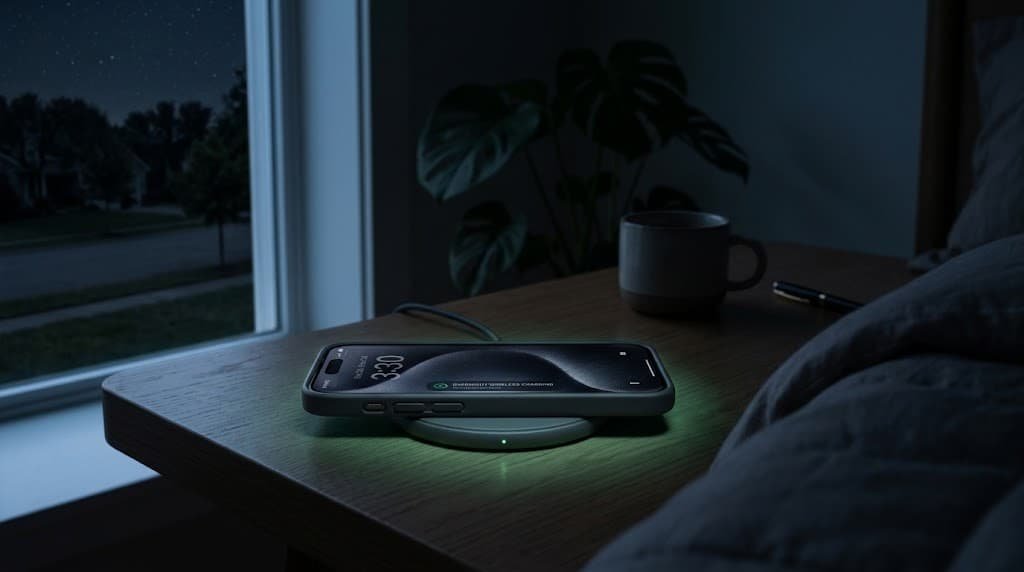
Reducing wireless charging specifically to overnight use only, while switching to cable for daytime top-ups. This doesn’t eliminate the heat-related mechanism entirely, but concentrates wireless charging’s use to the one scenario – overnight, unsupervised, low time-pressure – where the convenience genuinely matters most and the extended duration doesn’t compound with fast-charging heat the way a hurried daytime top-up might. The trade-off: this requires an actual habit change and ongoing discipline, which is easy to intend and easy to quietly abandon within a few weeks without any external reminder.
The trade-off nobody warns you about
The cost that shows up mid-transition isn’t the charging speed difference – it’s rediscovering how many small daily moments actually depended on the phone being immediately accessible on a wireless pad rather than tucked away connected to a cable.
Most advice about switching away from wireless charging focuses entirely on the efficiency numbers and the battery-health benefit. Nobody mentions clearly enough that the habit itself was solving a real problem – not losing track of where your phone charges, always having it visible and reachable – and reverting to cable charging without addressing that underlying need often means the cable gets skipped entirely on busy days, undermining the entire point of switching in the first place.
How to switch without losing what worked
Start by identifying which specific moments made wireless charging genuinely convenient for you – a bedside table where visibility mattered, a desk where quick access mattered – rather than assuming the convenience was uniform across your whole day.
Test cable charging specifically in that identified location first, using a cable long enough that reaching for the phone doesn’t require unplugging it, before assuming the whole daily routine needs to change at once.
Check in after the first week specifically: did the cable habit stick in that location, or did you find yourself reverting to wireless charging out of simple momentum? This distinction tells you whether the switch is genuinely working or whether the underlying convenience need wasn’t actually addressed by the change.
When to stick with wireless charging
If you charge primarily overnight, for extended, low-pressure periods rather than quick daytime top-ups, the heat-related wear concern matters considerably less than it does for someone using fast wireless charging repeatedly throughout a busy day.
I’ll say this plainly: wireless charging gets criticised as inherently damaging, but for genuinely occasional or overnight-only use, the actual difference in long-term battery wear compared to cable charging is smaller than the efficiency numbers alone might suggest. The concern genuinely scales specifically with frequency and charging speed, not with the mere presence of an inductive connection in your routine at all.
The one test worth doing before you commit
Before switching your entire routine, try cable charging exclusively for one week in the single location where wireless charging currently matters most to your daily habits.
This one simple test reveals more about whether the convenience or the battery-health concern genuinely matters more to you than any amount of reading about the underlying mechanism in the abstract – the answer becomes genuinely obvious once you’ve lived a real week with the alternative in place.
Avoiding the same problem next time
Whatever charging method you settle on, check one property before building a long-term habit around it: does it have a built-in way to protect the specific daily moments that actually matter to you, or does it treat all charging scenarios as equally interchangeable?
A charging habit with no accommodation for the specific moments that made the previous method appealing tends to quietly fail and revert eventually, regardless of how good the underlying efficiency argument for switching actually was in the first place.
This same principle applies to any future charging method you might adopt, not just the current choice between wireless and cable. The specific mechanism changes – a different technology may solve the heat problem differently – but the underlying question of which daily moments a method needs to genuinely preserve remains the actual test worth applying before committing to any habit change long-term.
Questions readers keep asking
Does wireless charging actually damage phone batteries faster than cable charging?
It can, but the effect scales specifically with frequency and charging speed rather than being an inherent, unavoidable property of wireless charging itself. Occasional or overnight-only wireless use causes meaningfully less cumulative heat exposure than using it as a fast, frequent daytime charging method.
Is it worth completely giving up wireless charging to protect battery health?
For most people, genuinely no – reducing frequency or reserving it for overnight use specifically addresses most of the heat-related concern without requiring you to give up the convenience entirely. Complete elimination matters more specifically for anyone already genuinely showing signs of reduced battery capacity.
Will switching to cable charging feel inconvenient at first?
Likely yes, at least for the first week or two, since you’re rebuilding a physical habit around locating and connecting a cable rather than simply setting the phone down. This adjustment period is normal and typically fades as the new habit becomes routine.
Does phone case thickness affect wireless charging heat generation?
Yes, meaningfully – a thicker case increases the distance between the phone and the charging coil, which the system compensates for by increasing power output, generating more heat in the process than a thinner case or no case would for the same charging session.

