Choosing an eSIM or a physical SIM for a week abroad is mostly a question about your phone. What settles it is whether the phone can hold your home number open while the trip line works. When it can, the eSIM wins for most travellers, and when it can’t, the physical card is the safer buy. Our traveller has a phone with room for two lines. Her trip lasts seven days, and she expects eight texts to her home number in that week. No price appears below and the figures are rough, so check your own phone’s settings first.
What Decides an eSIM or a Physical SIM for a Week Abroad
Start with a count of what must keep working. Our traveller expects a bank code and seven other texts from family and couriers. Each one arrives on her home provider’s line. That line has to stay alive during the trip.
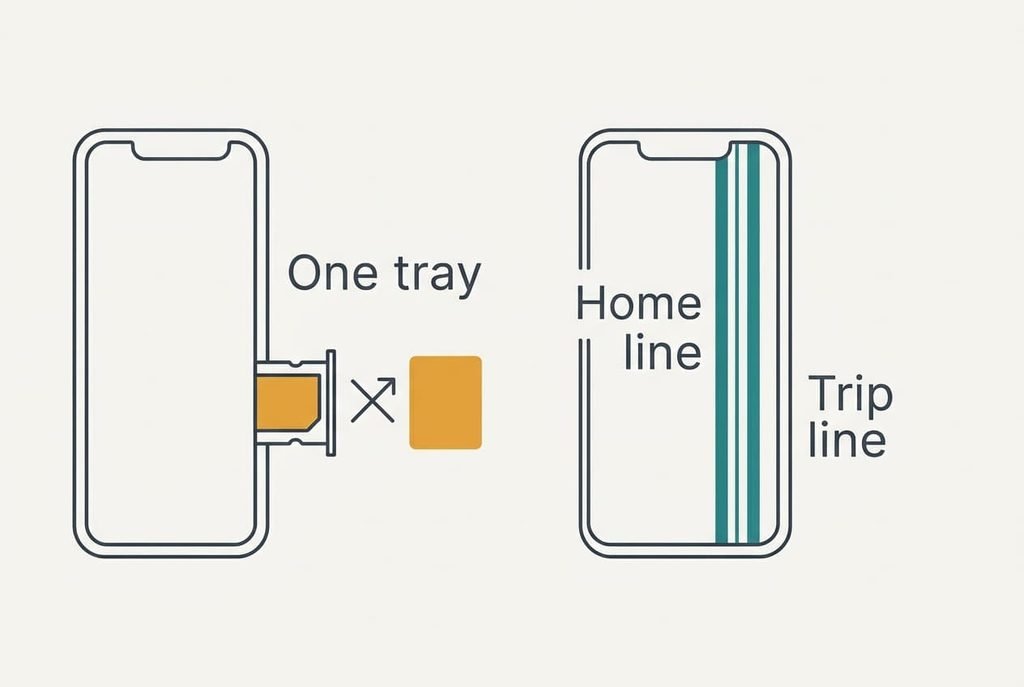
A phone with a single tray holds one card at a time. Swapping in the trip card pushes the home card out. The eight texts then wait in a queue she can’t see. A phone with an eSIM holds a second line as software, so both lines stay active together.
Check whether your phone has room for two lines at once before you compare anything else, because every other point follows from the answer. Look in the mobile settings for an entry that adds a digital or second line. A handset tied to its provider accepts neither kind of trip line, so ask for the lock to be lifted first.
Then count the minutes you can spare. An eSIM installs at home over Wi-Fi in about 6 minutes. A physical card bought on arrival costs about 25 minutes of queueing and 90 seconds of work with the tray tool. A week abroad leaves little room for lost mornings. Those minutes weigh more than they would on a long stay.
A Physical SIM and an eSIM, Row by Row
The table compares behaviour and leaves out price and speed, since the figures above settled both. Check each row against the phone in your hand.
| Question | eSIM | Physical SIM |
|---|---|---|
| Phone needed | a model with a digital line, free of a provider lock | any phone with a tray, free of a provider lock |
| Home number during the trip | stays active on the second line | switched off unless the phone has two trays |
| Ready before you leave | yes, installed at home | no, collected after you land |
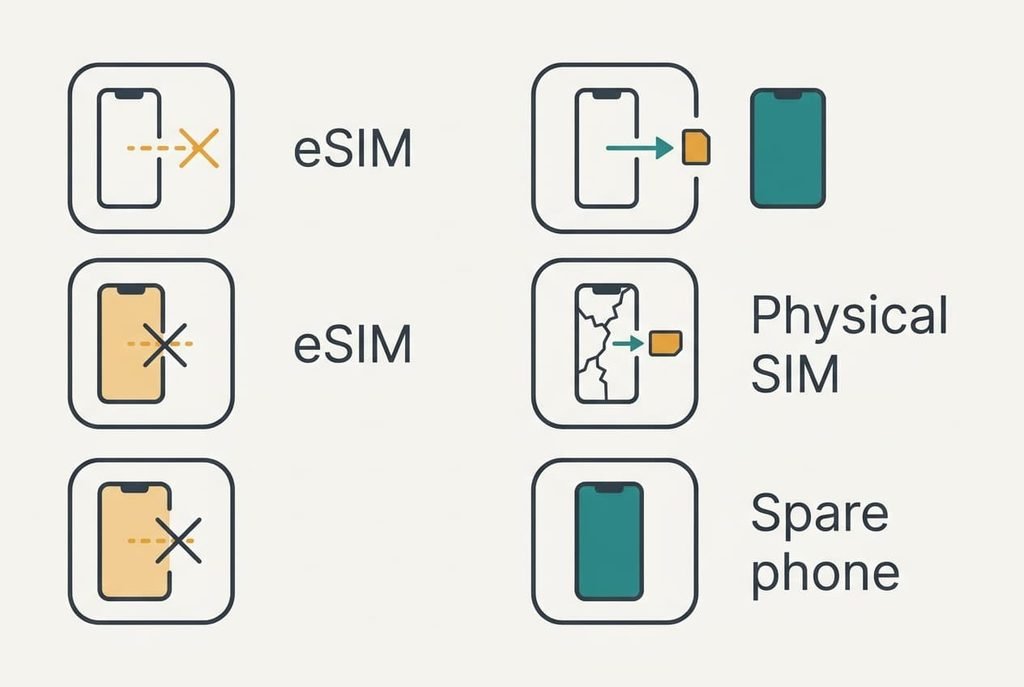
| Phone lost or broken | the line is lost with the handset | the card moves to a spare phone |
| Changing handset mid-trip | needs a new profile from the provider | move the card in a minute |
| Small parts to mislay | none | a tray tool and a card 12 mm wide |
The surprise sits in the loss row. A physical card moves to a spare phone in a minute, whereas an eSIM dies with the handset and needs a new profile from the provider, usually arranged while you’re still abroad.
Two other rows deserve a glance. The home-number row decides most trips, because a bank code that lands on a switched-off line can’t be read until you swap the cards back. The handset row matters only if you change phone, which most week-long travellers never do.
Where the eSIM Wins
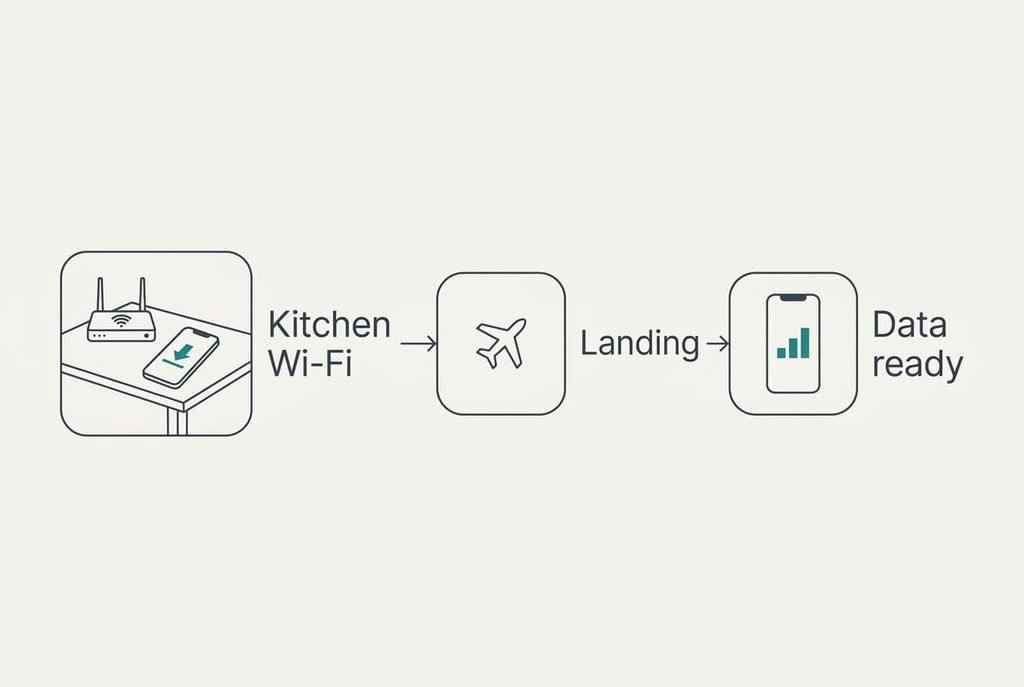
For an eSIM or a physical SIM for a week abroad, the eSIM wins whenever a home number must keep working. Install the profile in the kitchen over Wi-Fi, and the line is ready before you leave. Our traveller lands at 22:00 after a three-hour flight. She switches the line on and has data before the passport queue ends.
Both lines then run together. She sets mobile data to the trip line and leaves calls and texts on the home line. The bank code then arrives on the number it was sent to.
That arrangement is the main prize, and the physical card can’t match it on a single-tray phone.
An eSIM also removes the small parts. There is no tray tool to carry and no 12 mm card to drop down a seat. You switch the trip line off at the airport on the way home. The profile then waits in the settings for the next journey.
The cost is the loss row. A lost phone takes the line along, and the provider’s contact details should live elsewhere.
Where the Physical SIM Wins
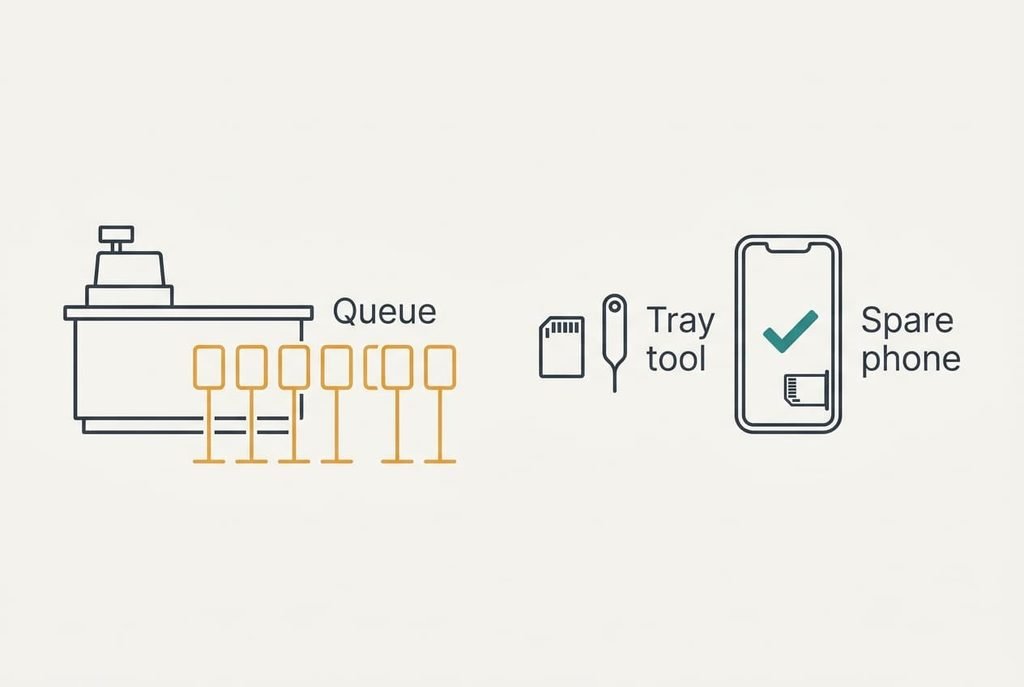
The physical card wins when the phone is the weak link. An older handset without a digital line can’t hold an eSIM at all, and a card works in nearly any phone without a provider lock. A card also survives a change of handset. If the screen cracks on day three, she moves the card to a cheap spare phone. The line carries on within a minute.
It suits a trip where two people share one phone between them, since a card can pass from one handset to another. It also suits a traveller who wants no setup before the flight. A card bought at the destination needs no profile and no scan.
Plan for the price in minutes. Our traveller would spend about 25 minutes in a queue after a night flight. Her home number goes quiet while the card is in. The physical card is the sturdier tool and the slower one.
Keep the home card in a coin pocket of your bag, and note which way up the tray holds it.
When Neither Suits the Trip
Some trips fit neither line. A phone tied to its provider, or a destination where you can’t buy a trip line until you land, leaves you with one fallback, the plan you already have. Ask the home provider for a one-week add-on, and read its fair-use limit before you fly.
Where an add-on costs too much effort, use hotel Wi-Fi with a calling app instead. That works for a week spent in hotels and cafés, though texts to your home number may not arrive until you’re back on a normal line.
Forwarding is the part to check before an eSIM or a physical SIM for a week abroad becomes the whole plan. Ask the home provider whether texts can be sent on to another number, and whether that extra step carries a fee. A relative with a second phone can then hold your home line, and you’ll hear about the bank code by message.
Which One to Pick
If your phone has room for two lines and you expect texts to your home number, take the eSIM. Install it at home and set data to the trip line, with calls left on the home line. Confirm that both lines show as active before the flight. Expect about 6 minutes of work.
If the phone is older or tied to its provider, or may change hands during the trip, buy the physical card. Buy it in the arrival hall, where staff will fit it for you, and allow about 25 minutes after landing. Keep the home card safe meanwhile. Whichever line you choose, save the provider’s activation page as a screenshot before you fly, so a missing setting can be fixed offline.
Settle an eSIM or a physical SIM for a week abroad before you pack, and test the chosen line once on Wi-Fi with a short call. Write the provider’s number on paper and tuck it beside your passport, because a dead phone can’t read its own settings. Pin the line choice in your notes and recheck it the day before you fly, since a plan made a month ahead can drift.
Questions Readers Keep Asking
Is an eSIM hard to set up?
About 6 minutes at home. You scan a code from the provider and confirm one prompt, then the line appears. The usual stumbling block is a phone tied to its provider, so check that first. Do the scan on Wi-Fi, because the profile needs a connection to download.
What if the eSIM won’t switch on at the destination?
Restart the phone, then turn the trip line off and back on in the settings. If it stays dead, contact the provider’s support from the hotel Wi-Fi. Keep their number on paper. A physical card in your bag works as a backup only if your phone has a tray.
Which suits two people sharing a trip?
If each person has a phone with a digital line, give each an eSIM, so no card changes hands. If only one phone supports it, a physical card lets the pair swap it between handsets. A shared card gives one person a line at a time, so agree who holds it each day.