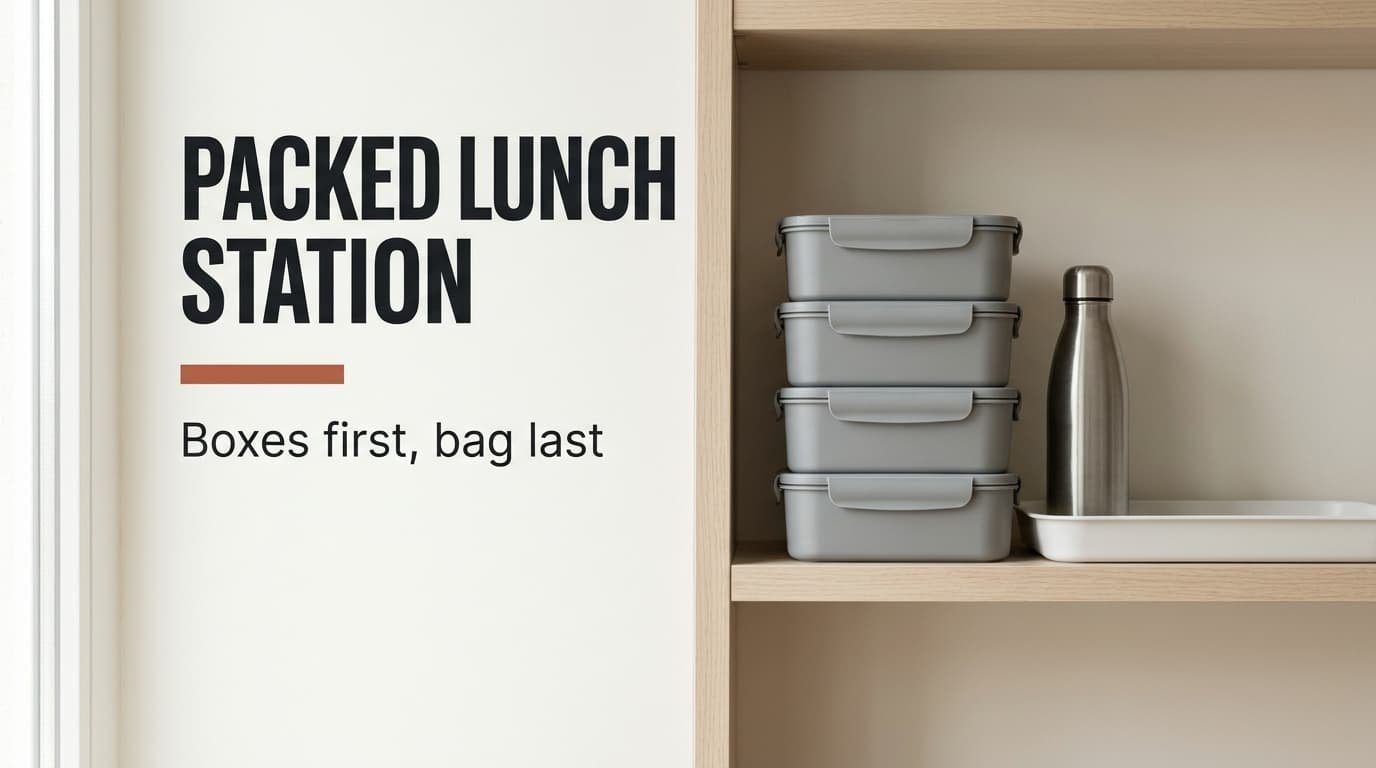
Nobody packs a good lunch while hunting for a lid. A packed lunch station ends the search by keeping every piece on one shelf, and five purchases build it, with the boxes outranking the rest. We use a Utrecht kitchen that has one shelf of 90 × 30 cm over the worktop, serving two adults who pack ten lunches a week. A kettle and a freezer are already in place. All numbers come from that single kitchen, and yours will differ. Follow the sequence, and stop the moment the morning shrinks from fourteen minutes to eight.
What Decides a Packed Lunch Station in a Small Flat
Time sets the habit’s lifespan. Hunting for boxes and matching lids by trial stretches a morning to about 14 minutes, while a single shelf brings it to 8. Six minutes saved on five mornings is 30 minutes a week, and across 52 weeks that’s 26 hours handed back to you.
A leak sets the second rule. A box that drips inside a bag ruins whatever else is in there within one commute, and nothing bought afterwards repairs that. Seal quality outranks every extra.
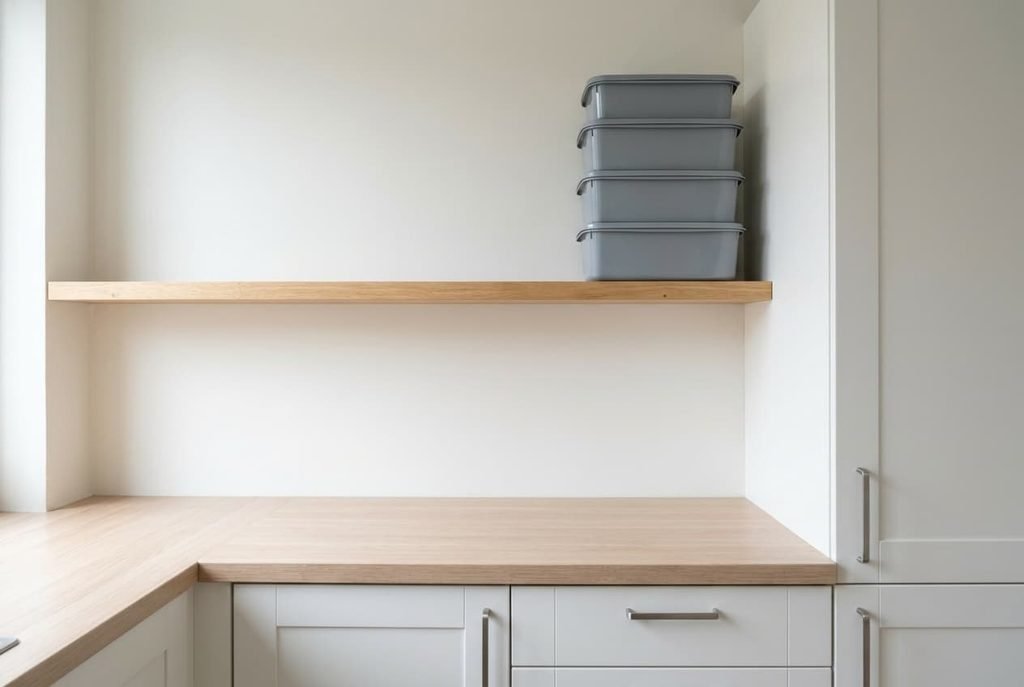
The flat adds its own boundaries. The shelf gives 90 × 30 = 2,700 cm², and the tray that carries the station shouldn’t swallow half of that. Screws in a rented wall are out. Every piece must sit on the shelf or travel in the bag.
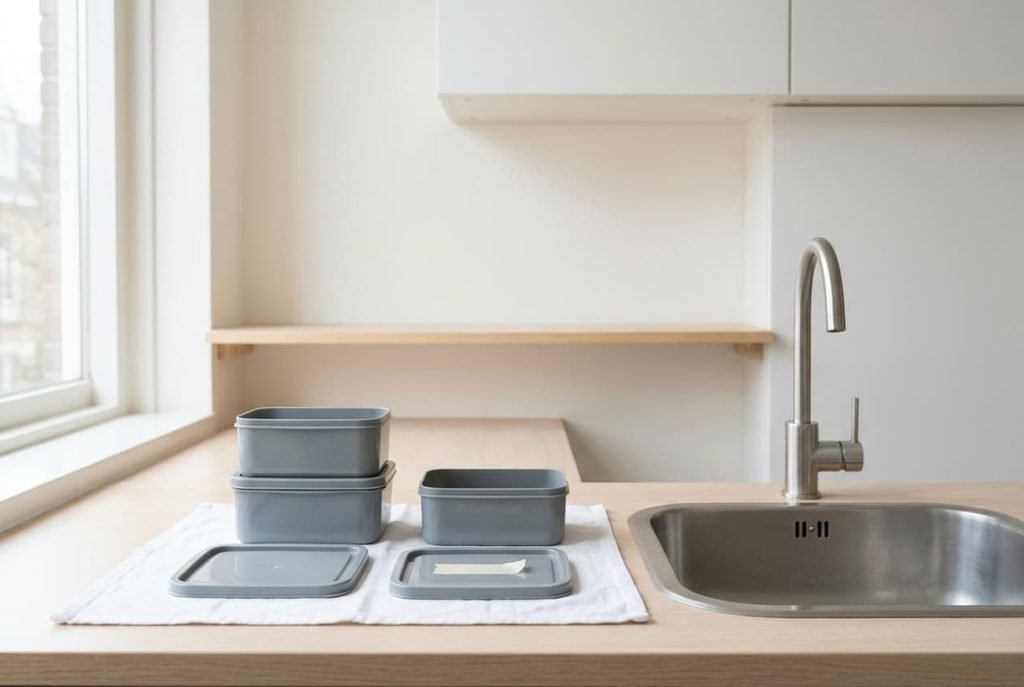
Count the boxes next. Ten lunches a week means two a day for five days. A box is washed and dried within a day. A set of four rotates comfortably: two are full while two dry or wait. Fewer than four sends you to the cupboard for a spare, and more than six crowd the 90 cm shelf. Portion size matters too: a 350 g meal of rice and vegetables fills about 600 ml, which makes 800 ml the right size, with space for a side pot.
Decide on the boxes before anything else.
Five Purchases for Station Lunches, Costliest Mistake First
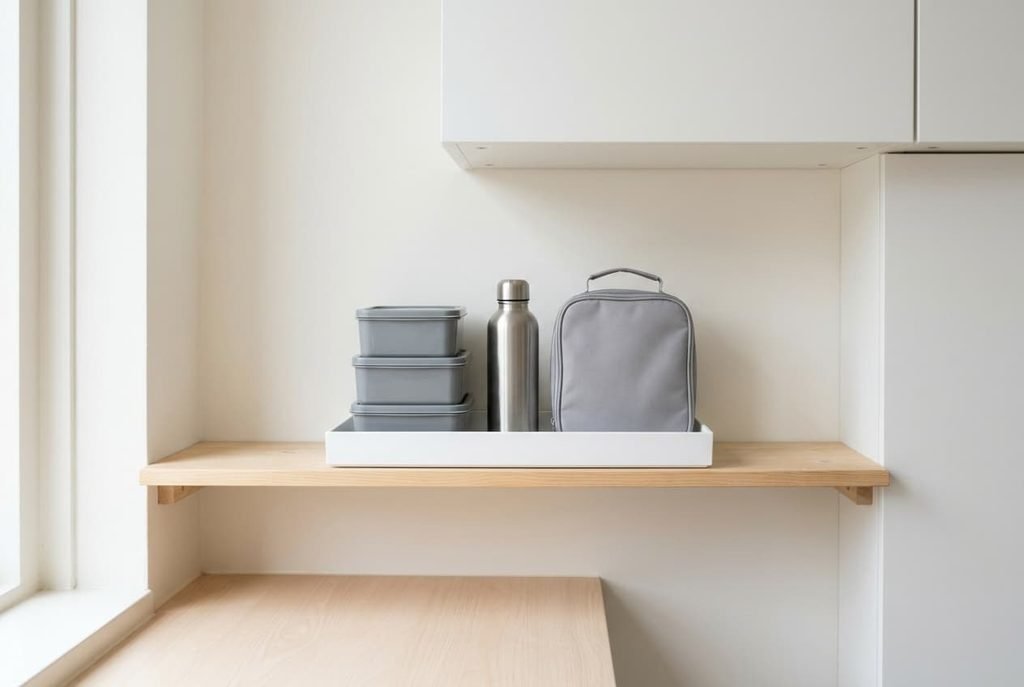
1. Four lidded boxes of 800 ml, each 18 × 13 × 6 cm, lead the list because everything else serves them. Tier: BUY ONCE. Two adults use two a day while the other pair waits clean. Stacked, four boxes reach 24 cm, leaving 6 cm of air under a 30 cm shelf. A silicone gasket sitting in a groove seals the rim, whereas a plain press-on lid weeps within months. Put 200 ml of water in a box, seal it, then shake it upside down over the sink for ten seconds. Any drip rules it out, and so does a clip that needs force. Thin hard lids warp in a hot wash; pick a thick one.
2. A steel bottle of 500 ml with double walls takes second place. Tier: MID. The air gap between the two walls slows heat moving in either direction. Tea stays warm and water stays cold until lunchtime. Fill it from the kettle at breakfast and pour at noon; warm water proves the gap works. A single wall sweats and burns the palm. The lid thread fails first. Test it by turning it a few times and feeling for grit.
3. A shallow tray, 36 × 26 cm with edges raised, is third. Tier: BUY CHEAP. It covers 936 cm², about 35% of the shelf, and it keeps a packed lunch station from spreading across the worktop. One trip carries everything. A tray made in one piece rinses clean in a moment, while one with a folded metal edge traps crumbs in the fold and rusts at the corners.
4. An insulated bag of about 8 litres, 28 × 20 × 14 cm, is fourth. Tier: MID. Two boxes lie side by side inside it and leave 2 cm free along the length. Stitched seams outlast glued ones, which peel at the corners. Open and close the zip ten times in the shop; one that catches will fail first.
5. Two reusable cold packs of 15 × 10 × 2 cm come last. Tier: BUY CHEAP. One rides in the bag while the other freezes at home. A thick film keeps the gel inside for years, whereas a thin one splits after a season on a freezer shelf. Press a pack hard between your palms; it should feel firm all over.
Why the Cold Pack Is the Item to Scale Down
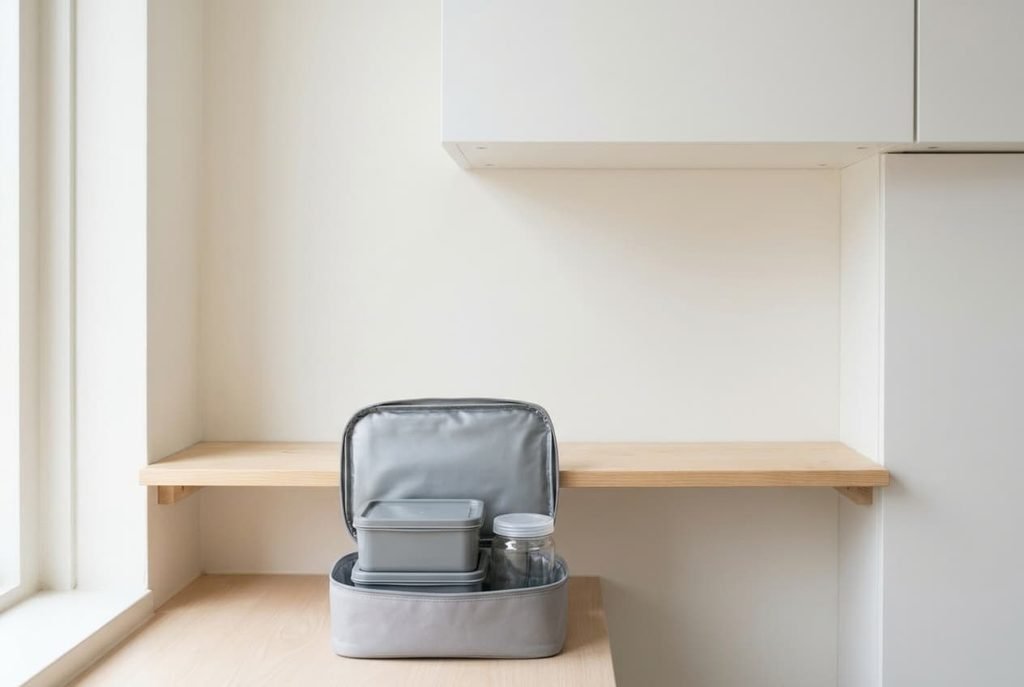
In a packed lunch station the cold pack is the first purchase you can drop. A 250 ml pot of water frozen overnight does exactly that job for nothing, and you own one already. Melting ice takes up about 334 kJ per kilogram, which means 250 g absorbs roughly 83 kJ on its way to water. A gel pack of similar size takes in a comparable amount, which is why the freezer pot cools the bag equally well.
The pot earns its place twice. By noon it has thawed into a cold drink, while a gel pack stays a lump. At 8 cm across it sits beside the boxes in our 14 cm bag without crowding. Two pots rotate as easily as two packs: one rides in the bag and one waits in the freezer. Its one drawback is the lid, which must close firmly, otherwise meltwater seeps into the bag.
Hold off on the packs until a month of lunches shows food that’s still warm at noon in summer. Until then, give your attention to the lid.
Habits That Keep the Station Running
Because a packed lunch station shares the worktop with breakfast, the routine around it needs care. Wash lids and boxes together but dry them apart. A lid pressed onto a wet box traps a stale smell by Friday.
Write the day on a short length of masking tape stuck across each lid.
Cook in two batches. Five portions of rice with vegetables and a protein take about 15 minutes on Sunday evening and again on Wednesday, against about 100 minutes for ten separate mornings of cooking from nothing. That’s 70 minutes saved. Keep the portions in the fridge inside their boxes; the morning job is then only to close a lid and drop the box in the bag.
Put the tray back on the shelf’s edge after each use. It looks trivial, and it prevents the search that ruined the old mornings. Once a week, scrape the groove of each gasket with a fingernail, because a crumb under the seal lets water through. Prepare the fruit the evening before, and the side pot will be ready when you are.
What to Skip
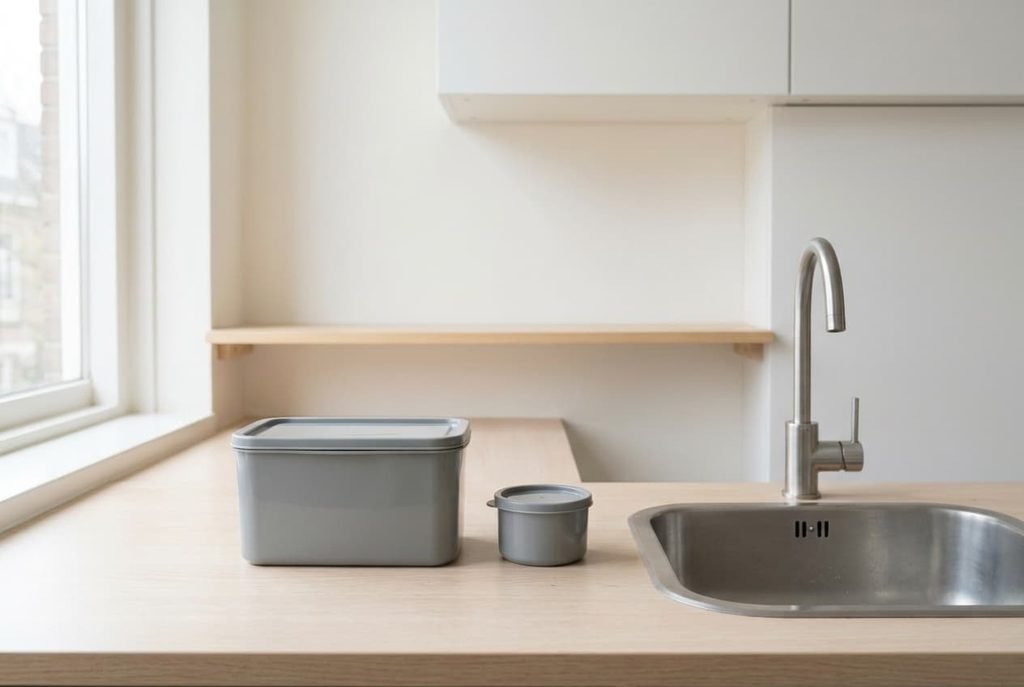
Skip boxes with six compartments, because the dividers steal about 100 ml of every 800 ml, and the food ends up mixed in the bag anyway. One roomy box and a small side pot handle sauces and fruit. Heated lunch boxes need a socket at work, and most offices already have a microwave. Vacuum sealers add one more machine to store. A printed weekly planner on the wall turns an easy habit into homework. Finally, skip buying the whole set at once. Two boxes and a bottle will show you within a week what the rest of the station needs. Novelty shapes deserve the same suspicion, since a round box wastes the corners of a square bag, and disposable liners add rubbish every day.
Stop adding pieces once the morning takes eight minutes. Time it with the lunch you pack most often, because that figure measures your real mornings. For most flats the boxes and the bottle come first, and the bag can wait. The station earns its keep by making mornings dull, which no single gadget achieves alone. Put any spare effort into one box whose lid truly seals, then re-check its gasket after a month of washing.
Questions Readers Keep Asking
How many boxes do I need?
Four for two adults, which is two in use and two clean. A third pair only helps if you pack dinner as well. Each extra box takes 18 × 13 cm of shelf, and more than six crowd a 90 cm shelf quickly.
In what order should I buy the pieces?
Rank them by what a mistake costs. A leaking box ruins a whole commute, which puts it first. The bottle follows. After that come the tray and the bag, and the packs come last, if they ever do. If the freezer pot works, you’ll never buy them.
How do I judge a lunch box before buying?
Look at the lid first. A gasket in a groove and four clips are good signs. Shake a water-filled box upside down over the sink. Press on the lid and check that it doesn’t flex. Trace the rim with a fingertip, because a rough seam holds old food.