Two monitors can share a shelf and still tell you different things. A CO2 monitor for a small study only earns its place if the figure on its screen is a measurement. The whole job is to tell you when the air has been used up. The deciding criterion is the sensor type, meaning whether the unit measures the gas or guesses it from something else. A small room matters most here, since a study with the door closed fills far faster than a lounge ever does. Treat the rounded numbers below as assumptions and rework them for your own room.
Buying a CO2 Monitor for a Small Study: What Decides It
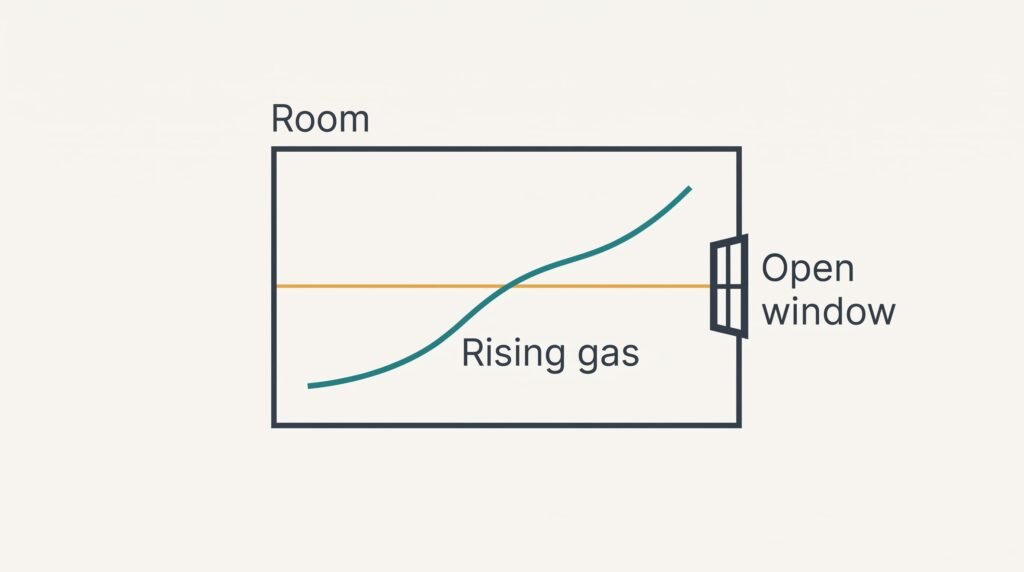
Every breath puts carbon dioxide into the room, and a closed door lets it pile up. Take an assumed study of 2.5 × 3 × 2.4 m, which holds 18 m³ of air. One adult at a desk adds roughly 0.02 m³ of the gas an hour. Dividing 0.02 by 18 gives about 0.0011, or 1,100 parts per million (ppm) an hour in a sealed room. Outdoor air sits near 450 ppm. The room therefore reaches the common 1,000 ppm cue for opening a window after (1,000 − 450) ÷ 1,100 = 0.5 hours. Real rooms leak and the climb is slower, yet its shape stays the same.
That climb is what the monitor must show you. The deciding criterion is whether the sensor measures the gas or estimates it, because only a measurement follows the room. A measuring sensor passes infrared light through a small chamber and reads how much of it the gas absorbs. An estimating sensor detects other airborne compounds and infers a figure from them, and those compounds don’t rise and fall in step with your breathing.
Four Checks in Order of Priority
1. Sensor type. This is how the unit arrives at its figure: infrared measurement, or an estimate built from other compounds in the air. In daily use, a measuring unit climbs steadily as you work and falls soon after the window opens. An estimating unit may leap when you spray polish and sit calm in stale air. Look for “infrared” or “NDIR” in the specification, and treat “equivalent CO2” wording, or silence on the subject, as an estimate. Get this wrong and you act on a figure that drifts away from the room.
2. Calibration. This is how the unit sets its zero point, and it’s the item that buyers almost never ask about. Many units assume the lowest reading of the past week or so was fresh outdoor air, then shift every figure to match. In a study that is never fully aired, the unit decides that stale air is normal and reads low. Look in the manual for automatic baseline correction plus a manual fresh-air reset. A miss here lets the figures sink a little each month, and nothing warns you.
3. Display and alert. This is how the figure reaches you. A number hidden behind a button press goes unread. A colour band or a soft beep reaches you mid-sentence. Put the unit where it will live and read it from your chair. A miss turns the unit into an ornament that nobody consults.
4. Power and placement. This covers what runs the unit and where it can stand. One that needs charging every few days is flat just when the room fills. Check that the cable or battery plan puts the unit at head height, one to two metres from you. A unit tucked under the desk reads the air at your knees. Getting it wrong leaves you with a blank screen or a misleading one.
Specs on a CO2 Monitor for a Small Room That Sellers Oversell
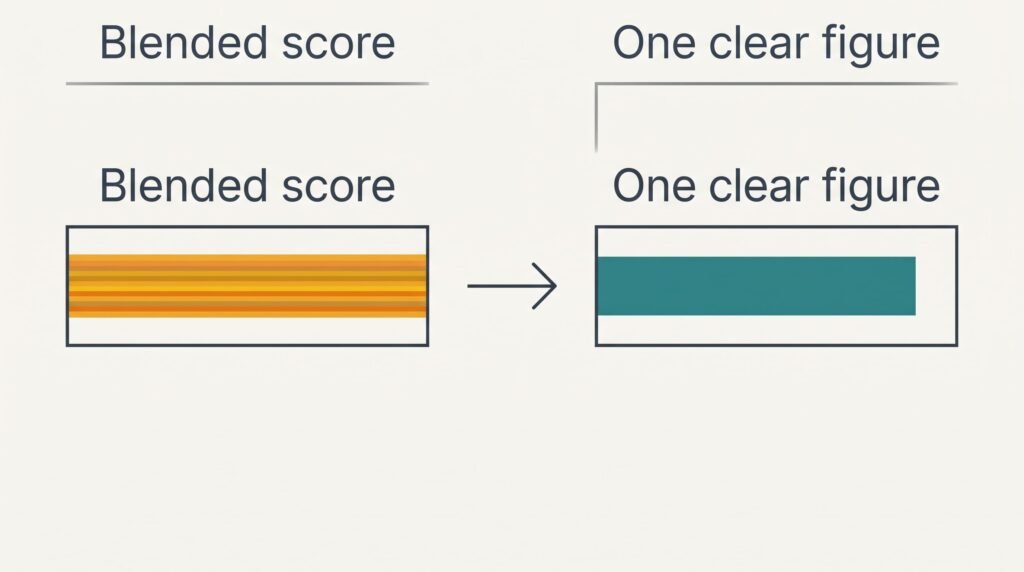
A single “air quality score” hides the one figure you need, because it blends several gases into one colour. Sellers push it since a lone colour photographs well and looks as if the thinking has been done for you. A score can turn amber for reasons unrelated to the stale-air problem you bought the unit to solve.
Extra readings get the same treatment. Humidity and temperature are pleasant extras on a CO2 monitor for a small study, though they can’t make the carbon dioxide figure any truer. A display that shows the number to the last digit suggests a precision the sensor doesn’t have. A few hundred ppm is the scale on which you actually decide to open the window.
An app with a year of history looks impressive, but it helps only if you’ll read it, and a monitor beside you answers the question in a glance.
Three Readers and Where Their Priorities Move
Joanna works in a box room with the door shut all day. Calibration leads her list, because her unit may never meet fresh air without help. She puts a ten-minute reset beside an open window in her calendar each month.
Kwame shares a study with two children doing homework in the evening. For him the display and alert matter most, since nobody will cross the room to press a button. He wants a colour band visible from the doorway and a quiet beep he can silence.
Ravi rents a room and moves his desk between two walls. Power and placement decide his choice, and a unit that runs for weeks on a battery suits a room with one awkward socket. Sensor type stays near the top for all three readers.
When to Walk Away From the Listing
Close the page when the specification never names the sensor type. A seller with an infrared sensor says so, because it’s the main selling point, and silence suggests there’s nothing to boast about. Wording such as “detects air quality” with no gas named belongs in the same bin. Even for a CO2 monitor for a small study, a vague listing is reason to shop elsewhere. A shop assistant who can’t say which sensor sits inside has told you enough.
Leave the page too if the manual describes no way to reset the zero point. A monitor you can’t recalibrate will drift in a room that rarely gets fresh air. A refund period under a fortnight is another reason, since you need time to run the checks below on different days and at different hours.
Waiting for a clearer listing costs very little.
The Two-Minute Check When the Monitor Arrives
Carry out the test on arrival day, with the refund period still wide open. Carry the unit to an open window and wait a minute for the reading to settle, then read it. Outdoor air should show a few hundred ppm, and a figure above 1,000 in the open means the unit is wrong or still warming up.
Then bring it indoors. Breathe gently towards it from about 30 cm for ten seconds. A measuring sensor should jump by hundreds within a minute and fall back once you ventilate. A unit that ignores your breath earns a refund request, and testing a CO2 monitor for a small study this way costs nothing.
Rank the four checks as listed, with sensor type on top, since it settles whether the number is worth watching at all. The other three decide how well that number reaches you and how long it stays honest. Hold on to the packaging and the listing page until the refund period ends, in case a check fails.
Questions Readers Keep Asking
What reading means I should open a window?
The usual cue to open a window is a figure above about 1,000 ppm. Outdoor air sits a little under half of that. Treat the line as a prompt rather than a verdict. Act earlier if the room feels heavy, since your own judgement of the air still counts.
How much should I spend compared with a basic gadget?
Spend on the sensor rather than the app. A measuring unit usually costs noticeably more than an estimating one. That gap is the single item in the budget that changes what the number means. Extra gases and app history add comfort but rarely add truth, which means they can wait.
How long before I regret the purchase?
Regret arrives when the figures stop matching the room, which for a calibrated infrared unit happens slowly. Plan a fresh-air reset each month. A unit you can’t reset, or one that only estimates, will disappoint within the first season, and no accessory fixes that.