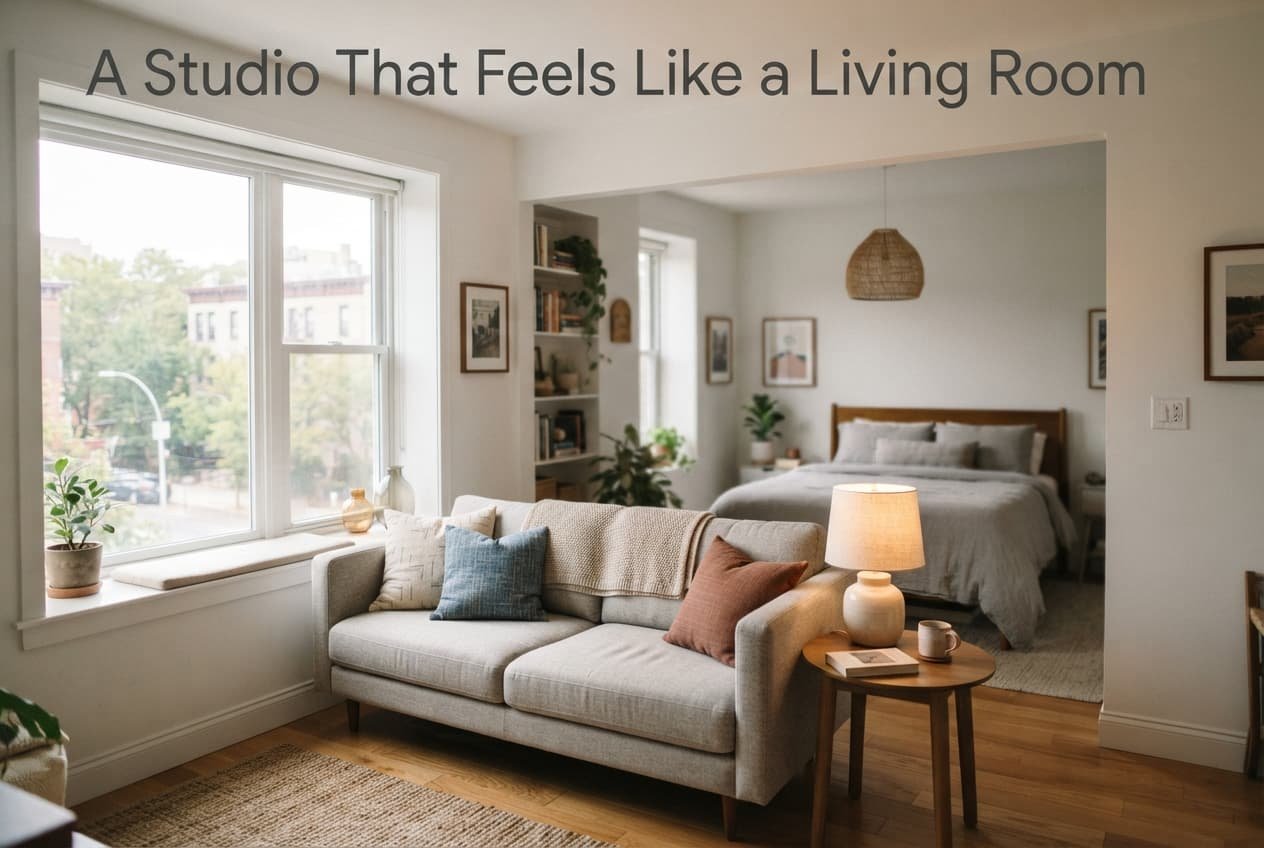
You have a bed, a sofa, a table and a lamp, and still the room reads as a bedroom with a sofa put in it. The pieces are all good, nothing is broken, and the studio is tidy. The trouble is that a room is read by its cues, and most of the cues in your studio point the same way. The sofa is present, but it is not behaving like a living room.
What decides it
People read a room by what its furniture is turned toward and what each area invites them to do. A living room invites sitting, talking and putting a drink down. A bedroom invites lying down. If the sofa faces the bed, sits at the foot of it, or has nothing beside it to hold a cup, it reads as a seat for the bedroom, however good it looks.
So the question is not whether you own the right things. It is what the room asks people to do.
The causes, diagnosed
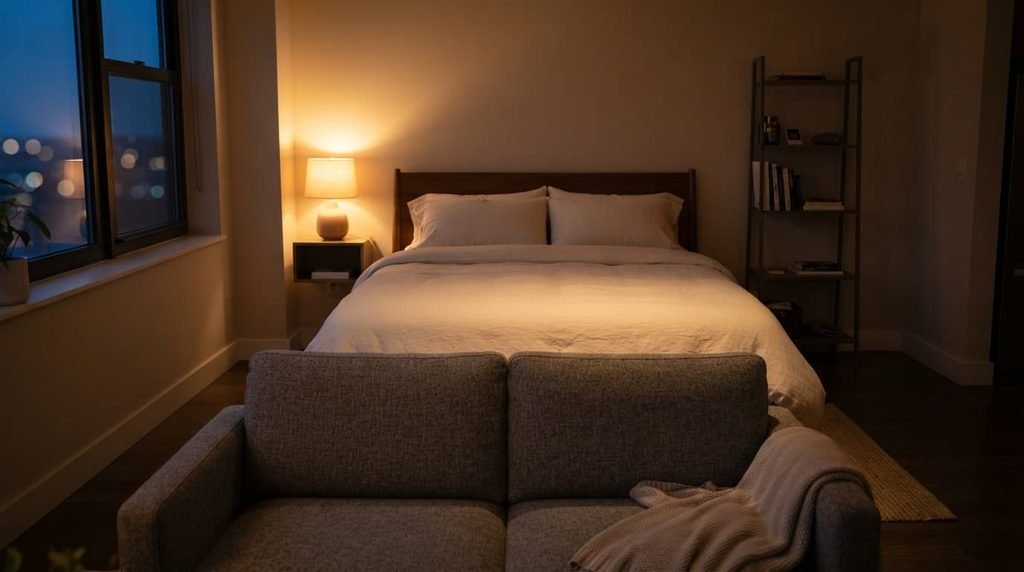
The sofa faces the bed or the wrong way. If the sofa looks toward the bed, it makes the bed its focal point and becomes part of the bedroom. Stand where a guest would sit on it and look. If the bed is the view, this is your cause. A sofa turned toward a window, a shelf, a television or a wall of pictures gives the living area its own centre.
The living-room cues are missing. A living room has a surface for a drink beside every seat, somewhere to look at that is not the bed, and a light you can read by. A studio often has none of these near the sofa. If a visitor would have to put a mug on the floor, the sofa area is not working as a room.
The sofa is too small beside the bed. The bed is the largest object in the room, and a small sofa beside it looks like an afterthought. The visual weight is lopsided, and the bed wins by scale. A sofa with substance, of a decent depth and with proper arms, holds its own and signals that sitting is a main activity.
The sofa area is the dim part of the room. In the evening the bedside lamp is on and the sofa corner is dark. The eye finds the lit part, and the lit part is the bed. Without a light by the sofa, the bedroom becomes the room.
The habits belong to a bedroom. If you eat, work and watch television from the bed, the room becomes a bedroom whatever the furniture says, because that is how it is lived in. The sofa is empty for most of the day, and a seat nobody uses does not change what a room is.
Where the usual advice goes wrong
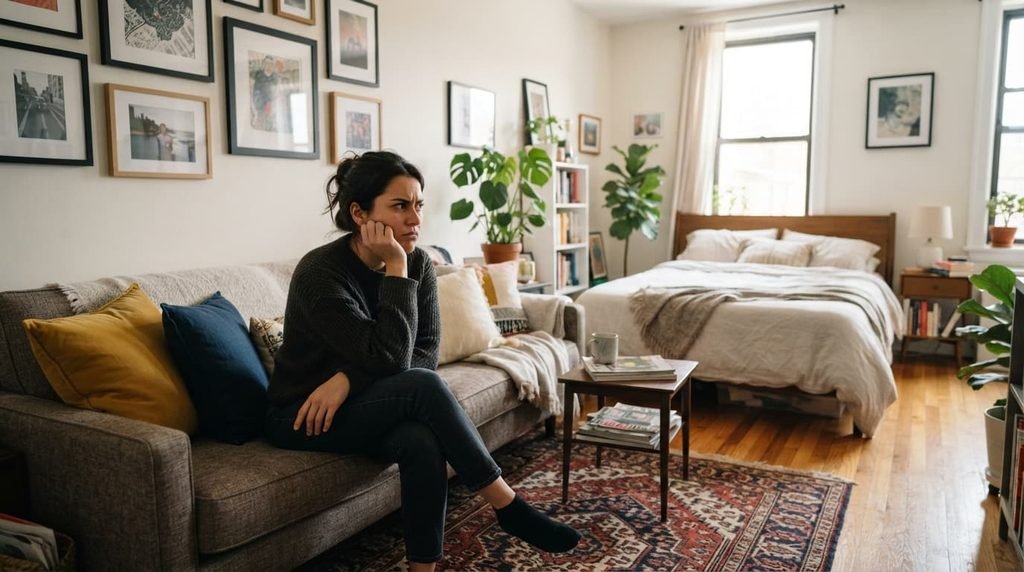
The most common advice is to buy more: another cushion, a bigger rug, a decorative piece for the sofa wall. None of these changes what the sofa faces or what it invites. They add things to a room whose problem is its orientation.
Another piece of advice is to divide the room with a screen or shelf. That can help, but if the sofa is still turned toward the bed, you have divided a room and left the cause in place.
What a sitting area needs
Five things make a sitting area read as a living room. A comfortable seat, a surface within reach for a drink, a light you can read by, a view that is not the bed, and something soft or textured to settle into, such as a throw or a cushion. If one is missing, the area feels unfinished, and if two are missing, it feels like an afterthought.
Matching the fix to your cause
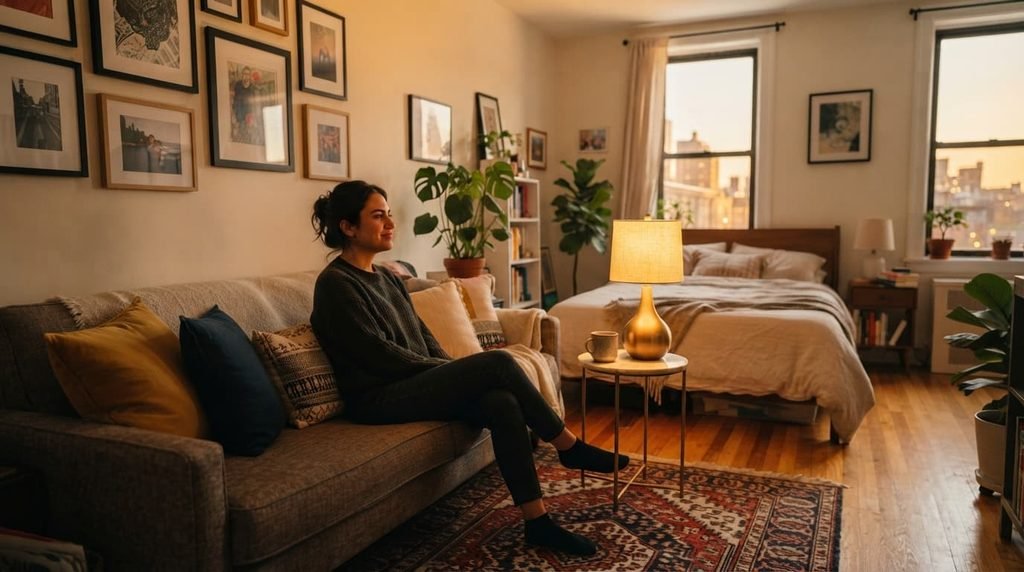
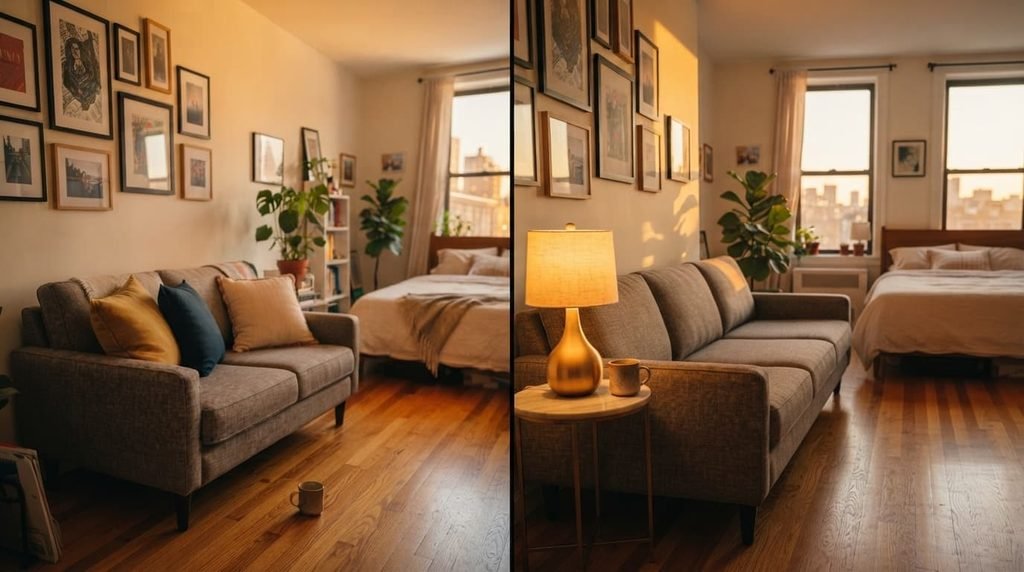
If the sofa faces the bed, turn it toward another focal point, even a wall of pictures or a shelf, and give it a back to the bed.
If the cues are missing, add a side table or a small coffee table, and make sure something interesting sits where a person looks when seated.
If the sofa is too small, replace it or add a second seat, such as an armchair, so the living area has more visual weight.
If the area is dim, put a lamp beside the sofa and switch it on in the evening, ahead of the bedside lamp.
If your habits belong to the bedroom, move one routine to the sofa. Have your evening tea or your television there, and keep the bed for sleeping.
A worked example
Take a studio where the sofa is a small two-seater pushed against the wall opposite the bed, facing it. There is one lamp, beside the bed, and no table near the sofa. The guest test confirms it: visitors sit on the bed and rest their mugs on the floor.
Work through the causes. The sofa faces the bed, it has no surface beside it, it is small next to the bed and it sits in the dark in the evening. Four causes out of five. The fixes follow in order. Turn the sofa a quarter turn so that it faces the window, add a small side table beside it, put a lamp on the table, and swap the two-seater for a three-seater when the budget allows. Nothing decorative has been bought, and the room now has a second centre.
If you have already tried the obvious fixes
You have moved the sofa, added a rug and bought a lamp, and the room still feels the same. Run the guest test. Ask a visitor where they would sit and where they would put a drink, without telling them what you are checking. If they sit on the bed or put the mug on the floor, the room still reads as a bedroom, and the living area is not yet inviting.
Then look at what is visible from the sofa. If the first thing you see from it is the bed, no change of cushions will help, because the line of sight is the problem. Use a shelf or a tall plant to give the eye something else to rest on, and fix any shelf to a wall as the instructions say. If you are unsure what the wall can carry, bring in a licensed professional to assess it first.

Questions readers keep asking
Is a bigger sofa always the answer?
No. A bigger sofa helps only if scale is the cause. If the sofa faces the bed or has no light or surface beside it, a larger one is just a larger sofa in the same bedroom.
Does a rug help?
It can mark the sitting area, but it will not change what the sofa faces. Treat it as a finishing touch once the orientation and the cues are right.
What if the room is too small to turn the sofa?
Try turning it a quarter turn, with its back to the bed and its side to the window. Even a small change in angle changes what the sofa faces and what it invites.
How long before the room feels different?
Often straight away, once the orientation changes. The habit change takes longer, so give the new arrangement a few weeks of real use before you judge it.
Does the room need a television to read as a living room?
No. Any focal point will do: a window with a view, a shelf of books, a wall of pictures or a fireplace. What matters is that the sofa faces something other than the bed.