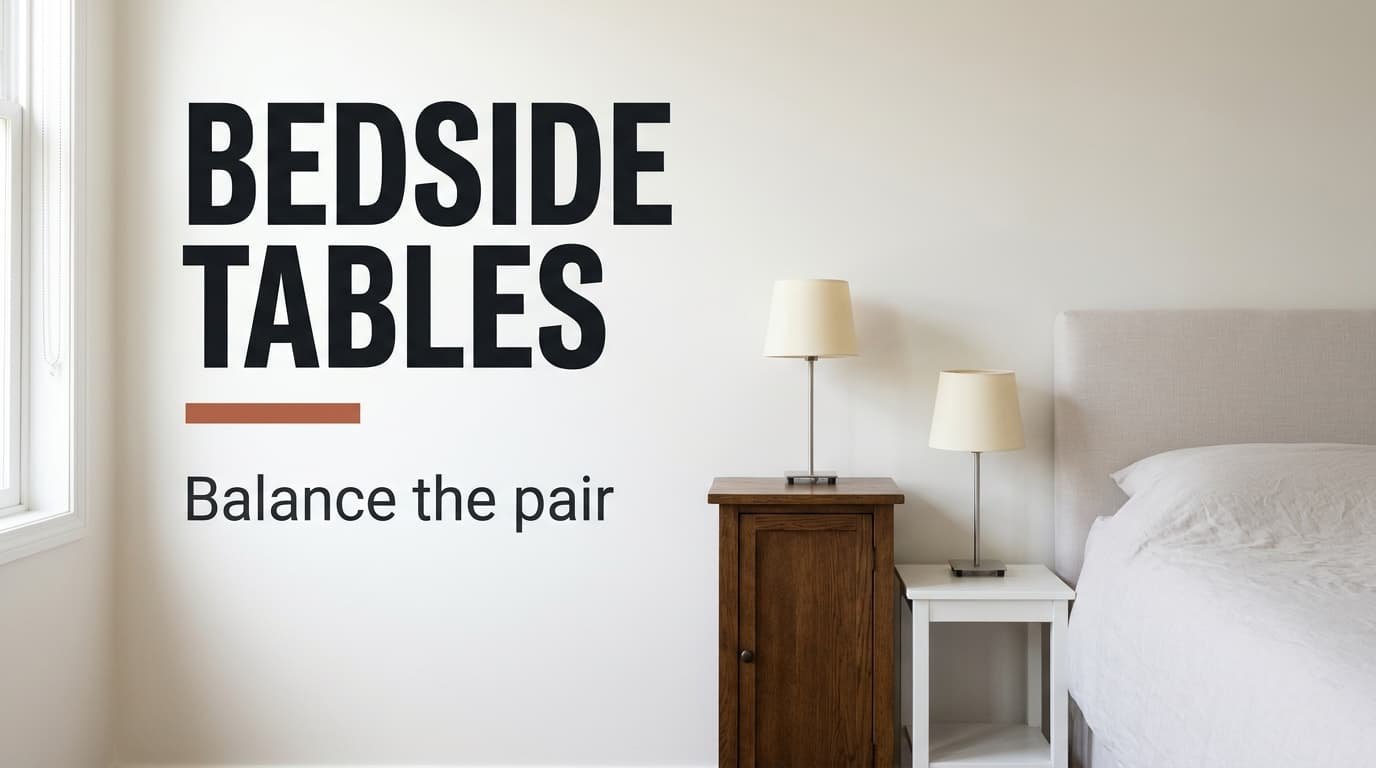
When bedside tables look uneven, the furniture is seldom to blame. The eye lays one half of the bed over the other and catches a mismatch in height first. Bulk and position follow. We follow a double bed (160 cm wide, 200 cm long) in a rented Groningen flat, with two tables that were each chosen sensibly. One photograph and a tape will show which mismatch you have, and the whole check is a ten-minute job. No special tools are needed. Most cures are free, and the single purchase comes last. The figures are assumed samples. Your own tape will give the real ones.
How Bedside Tables Look Uneven to the Eye Across a Bed
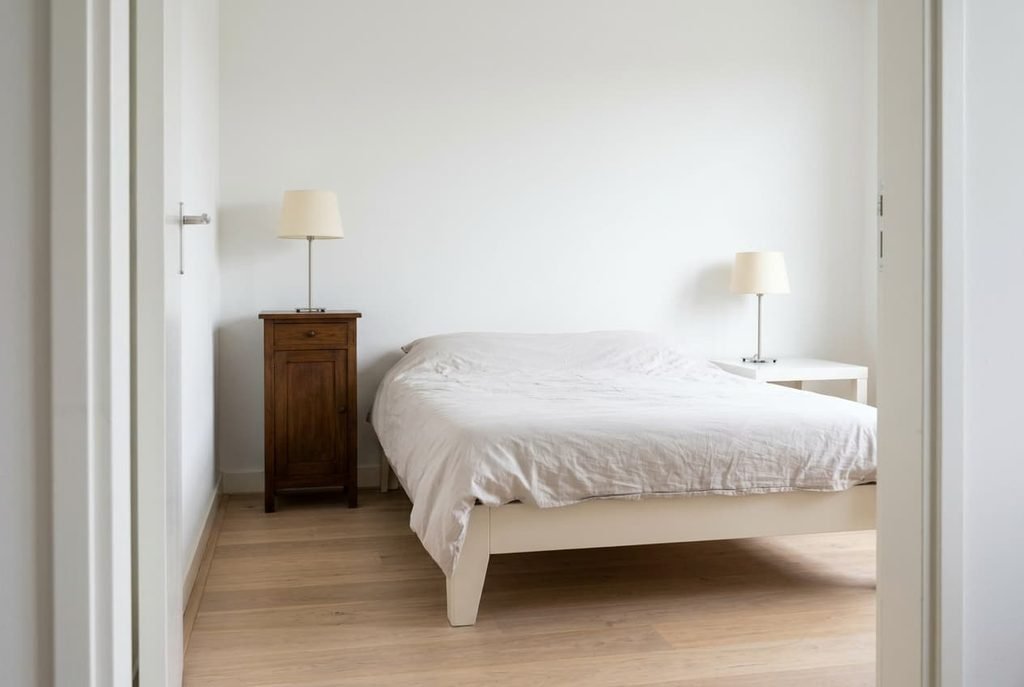
A bed with a table on each side asks for a mirror reading. The eye folds the left side over the right and tests three cues. One is the height of each top. Another is the visible face each table shows. The last concerns how far each table stands from the bed’s centre line. Assume that a difference above about 10% on any cue registers as a flaw.
In the Groningen bedroom the mattress top stands at 55 cm. The left table is dark oak. It is 45 cm wide and 62 cm tall. The right one is white. It is 40 cm wide and 48 cm tall. Height gives 48 ÷ 62 = 77%, which makes the right table 23% shorter. Its visible face of 1,920 cm² is 31% smaller than the 2,790 cm² on the left. The lamps widen the gap. A 38 cm lamp stands on the left table and a 30 cm lamp on the right. Their tops reach 100 cm and 78 cm.
Nobody judges one bedside table in isolation from its partner.
The usual response is buying a matching table for the odd one out. That mends a single cue. The other two cues are left untouched, and the pair still jars.
Tables Look Uneven: A Photo and a Tape Measure
From the doorway, photograph the whole bed. Flip the picture left to right in your phone’s editor. A balanced pair looks the same either way, and an uneven pair looks like a different room. Watch the lamp tops before anything else, since they pull the eye hardest.
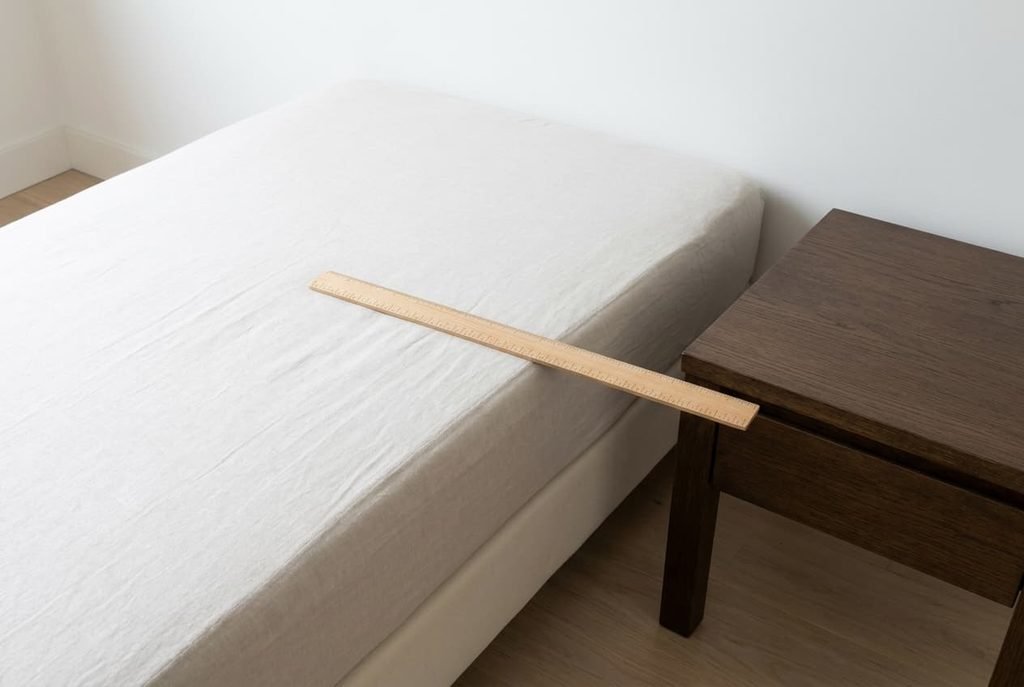
Next, rest a ruler on the mattress and read how far each tabletop sits above or below it. Measure the height and width of each table. Finally, measure from the bed’s centre line to the middle of each table with a tape.
Squint at the picture for the last check. The table that fades into the wall is too pale against it, and the one that jumps forward is too dark. Judge this by daylight, then again under lamplight, which shifts the tones. When you decide whether your bedside tables look uneven, trust the measurements over the first impression.
Mark a pencil tick on the floor under each table before you move anything.
Three Faults Behind a Pair of Tables That Look Odd
In a room where bedside tables look uneven, three faults are on the list. Each entry names a symptom, then a cause, then remedies ordered from least to most effort. Take them in order, and finish as soon as the flipped photo matches the original.
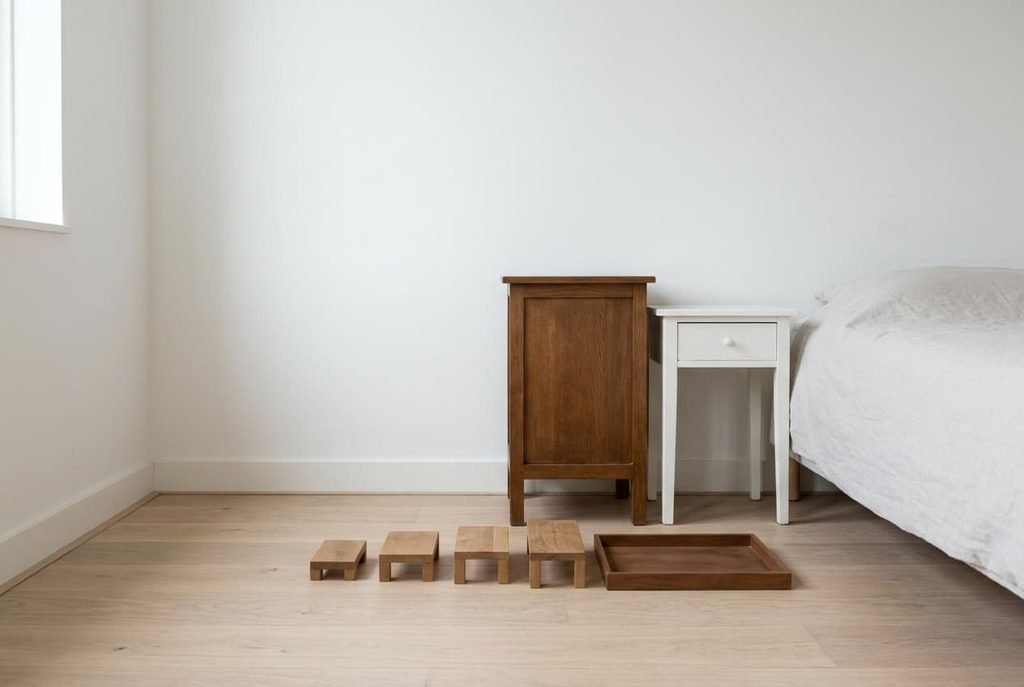
One table sits well below its partner. The culprit is height. The right top is 14 cm below the left one, and the lamps add 8 cm to the gap. Prove it by standing a ruler upright beside each table and reading both heights from the same floor. Begin by swapping the lamps so that the 38 cm lamp stands on the 48 cm table. The tops then reach 86 cm and 92 cm, a difference of 6 cm in place of 22 cm. Next, lift the low table on four 10 cm risers, which brings its top to 58 cm against 62 cm. Replace the lower table only after that, and measure the mattress before you choose its successor.
One table vanishes while the other dominates. The culprit is contrast. Assume oak returns 20% of incident light. The wall returns 70% and the white table 75%. The oak lies 50 points from the wall, against just 5 for the white table. Put a dark tray you already own on the white table so that it gains an edge. Then swap the lamp shades, giving the pale shade to the dark table. If the effect fades, a matching pair of shades in one colour is the only purchase.
The pair sits off-centre from the bed. The culprit is position. The left table touches the bed with a gap of 3 cm, while the right one stands 18 cm away. Their centres lie 105.5 cm and 118 cm from the bed’s centre line. Slide the right table to a 3 cm gap and the figures become 105.5 and 103 cm. A radiator or a socket may block the move. Then move the lamps instead, and the tables can stay put. A shallow wall shelf can replace a table that has nowhere to go.
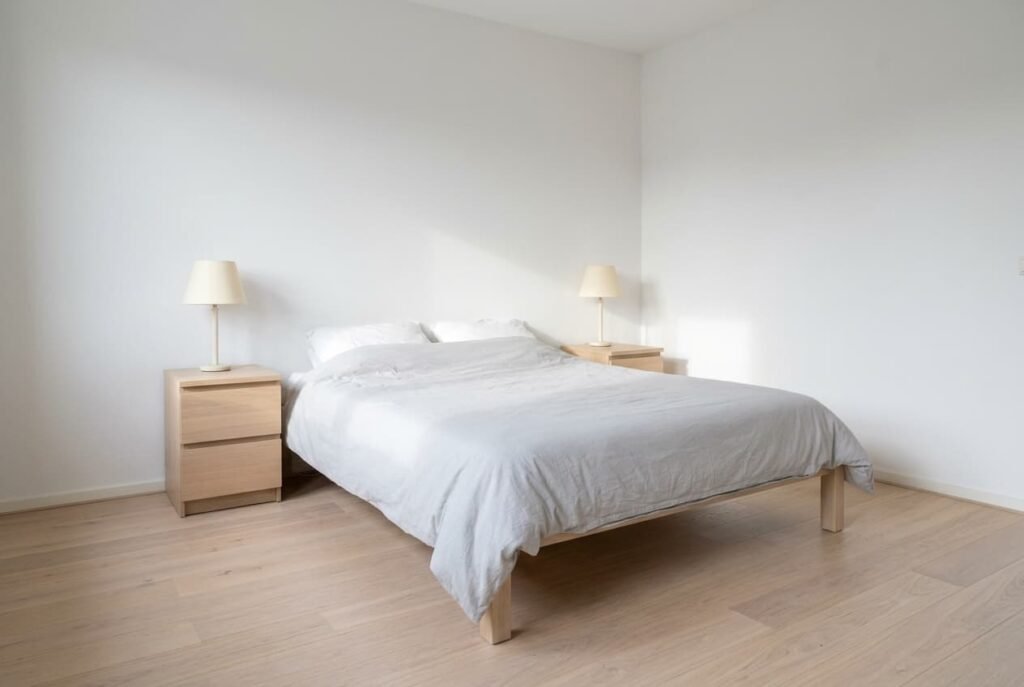
Choosing a Pair That Stays Level With the Bed
Carry three numbers when you shop. The mattress top is 55 cm. Each tabletop should land within 5 cm of it. One table’s width should stay within 10% of the other’s. Write them on a card, because a tape measure in the shop beats memory.
Think about tone too. Pick tables that differ from your wall by a similar amount, since a pale wall swallows a white table. If you keep two different tables on purpose, let the lamps carry the repeat. One shape in two matching shades echoes across the bed, and the eye accepts the difference underneath it.
In a rental the tables are your own property. Every fix above is free to try, and each can be reversed. Wall shelves need the landlord’s consent. Record the wall’s state in a picture before any drilling, which keeps the end-of-tenancy check simple.
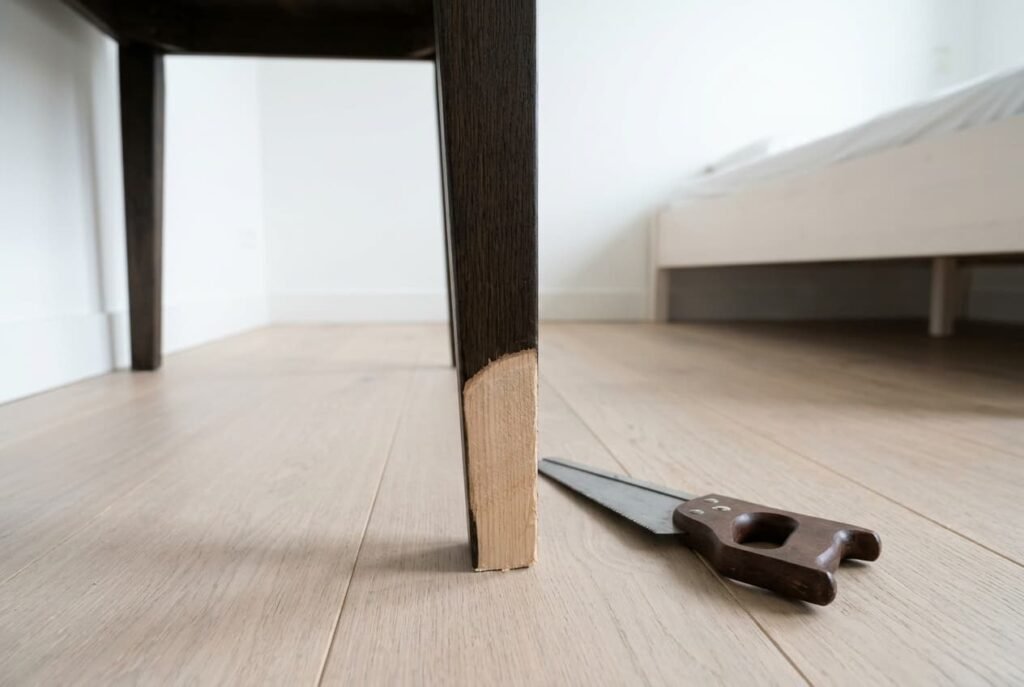
A Repair That Costs More Than It Saves
Some people reach for sawing 14 cm off the taller table’s legs. It sounds precise. The cut is permanent, and the tabletop drops to 48 cm, which sits 7 cm below the mattress and makes you bend for the lamp switch. The drawer ends up closer to the floor. Shoes and rug edges catch it there. Raw end grain also swells and splits over a few winters. A saw can’t cure the reason bedside tables look uneven either, since the lamp tops still differ by 8 cm afterwards and the pair keeps jarring. A shortened table also loses its resale value, because a second buyer needs the original height. Moving house with a table that fits no bed adds a further problem, since every later bed brings a new height to match.
Read the result as a measurement, not a verdict on anyone’s taste. Record the three cues. Find the largest gap, then fix that one with something already in the flat. Take a fresh photo afterwards. Flip it and compare the two. Leave the arrangement alone for a week, because the eye settles on a new balance slowly. If the pair still jars, the next gap on your list is the one to treat. Most rooms need a single adjustment, and many need nothing beyond swapping two lamps. Keep the card with your numbers in a drawer, ready for the next time you move a table.
Questions Readers Keep Asking
What actually causes the mismatch between the two tables?
Usually one of three gaps, with a separate remedy for each below. Height comes up most often. In our example the right top stood 14 cm lower, the white table matched the wall within 5 points, and the centres sat 12.5 cm apart. A single gap is enough to jar the eye, and two together look worse.
Is there a quick fix?
Yes. Swap the two lamps so the taller one stands on the lower table, then slide the further table to the same gap from the bed. Neither step needs money, and five minutes covers both. Flip a fresh photo afterwards to see whether the pair now reads as balanced.
Can this be fixed without buying new furniture?
Mostly, yes. Lamps and trays handle the first step of every fault. Risers, or a change in the gap from the bed, handle the second. Only a replacement table or a shelf needs a purchase, and both are optional. You can leave the walls alone and still balance the view in an evening.