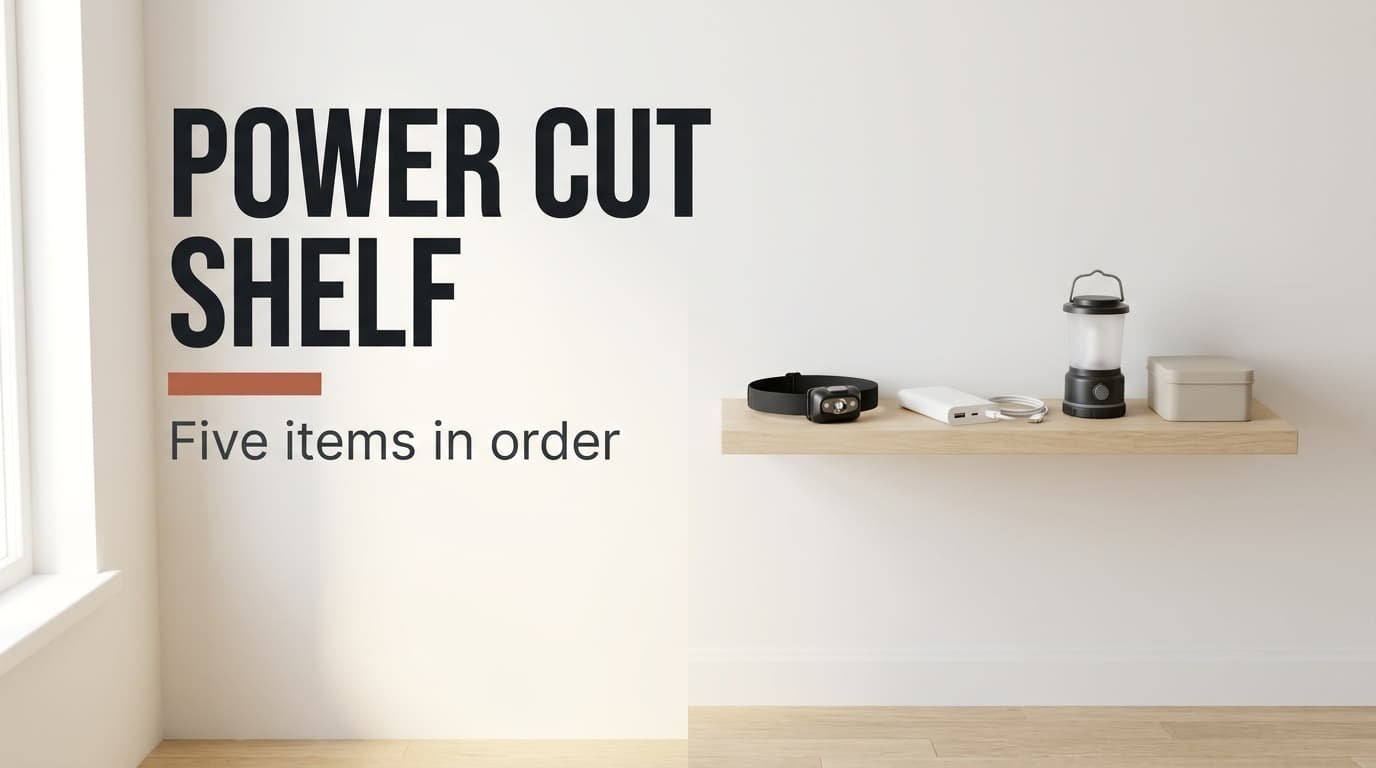
Outages are rare in the Netherlands, yet one dark evening shows how much a flat leans on its sockets. A power cut shelf for a small flat can be five items in a single box, and the buying order outweighs the money spent. Our example is a 48 m² flat in Zwolle with a hall cupboard, one shelf measuring 40 by 30 cm and a free height of 25 cm. We assume a cut of four hours after dark. Every number is a sample. Check your own cupboard with a tape before buying anything.
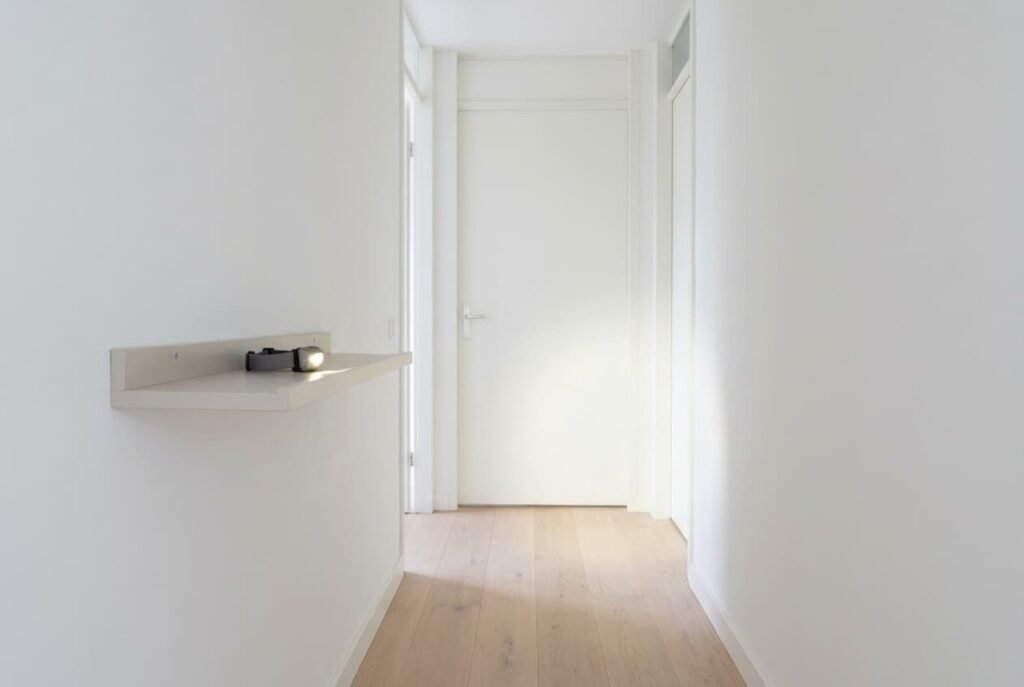
Why a Power Cut Shelf for a Small Flat Starts With Light
Four hours without power splits into three needs. You must see, you must keep your phone alive, and you must find the box itself in the dark. Heat and food ask nothing of the shelf, because a closed fridge stays cold for about four hours and an autumn flat cools slowly.
Light leads the list because every other job needs you to see, and a dark flat makes simple tasks slow. Picture the dark trip to the bathroom at night with one hand on the wall. A head torch makes that a normal walk. Without one you’ll reach for the phone screen, and that drains the one device you wanted to keep.
The phone is the second need. It holds your contacts and the outage report, and it works as a torch of last resort. A battery of 4,500 mAh gives a day of light use, and an evening cut of four hours takes a modest share of that. The risk is a phone that starts the evening at 20%, which is why the spare charge matters more than the lamp.
The box is the third need, and people tend to forget it. A power cut shelf for a small flat works only if everything sits in one place, under a label you can read by torchlight.
Five Buys for a Small Flat Shelf That Covers a Power Cut
1. A head torch with three AAA cells and a low mode tops the list since it frees both hands. Aim for about 150 lumens on high and a dimmer setting that lasts through the night, which on three cells can mean 40 hours. Tier: MID. A battery box with spring contacts and a hinged lid survives years of use, whereas a clip-on cover cracks within a season. Watch for a switch that turns itself on inside a bag and flattens the cells. Press the button in the shop and confirm that it takes a firm push.
2. A power bank of 10,000 mAh, with a short cable taped to it, comes second. It stores about 37 Wh, which after conversion losses gives roughly 1.4 full charges to a phone of 4,500 mAh. Tier: MID. Better cells hold their capacity over the years, and a metal case sheds heat well. Cheap units have a thin cable socket that works loose. Hold it and wiggle it before you pay. A bank also needs a charge in hand. Plan to top it up each season.
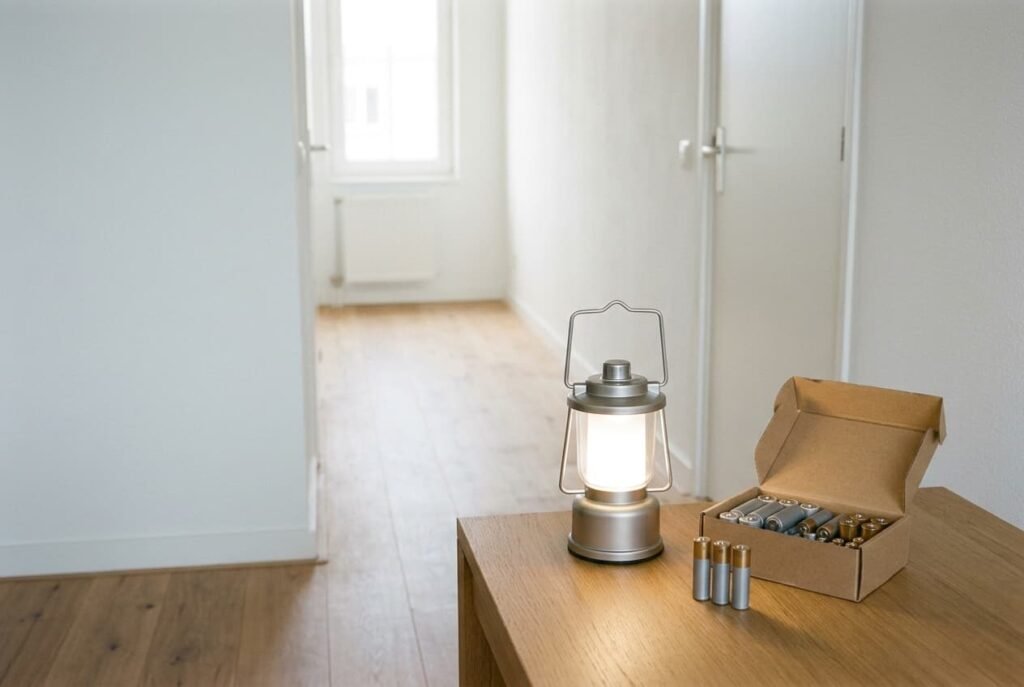
3. A battery lantern with warm white light comes third and lights the table and the sofa. Tier: BUY CHEAP, as little inside a lantern can wear out. On a low setting it can run for 30 hours on three AA cells. The usual flaw is a cold blue-white tint that tires the eyes. Pick warm white, and stand the lantern on the table where it lights faces and a quiet game of cards.
4. A box of twelve spare cells comes fourth, in the sizes your torch and lantern use. Tier: BUY CHEAP, since cells are the same inside whatever the box says. Store the cells in a dated case and keep new ones apart from old ones. Mixed sets drain the fresh cells, and an old cell that leaks can ruin the lantern. Tape a date to the lid, then use the oldest cells in the radio or a clock.
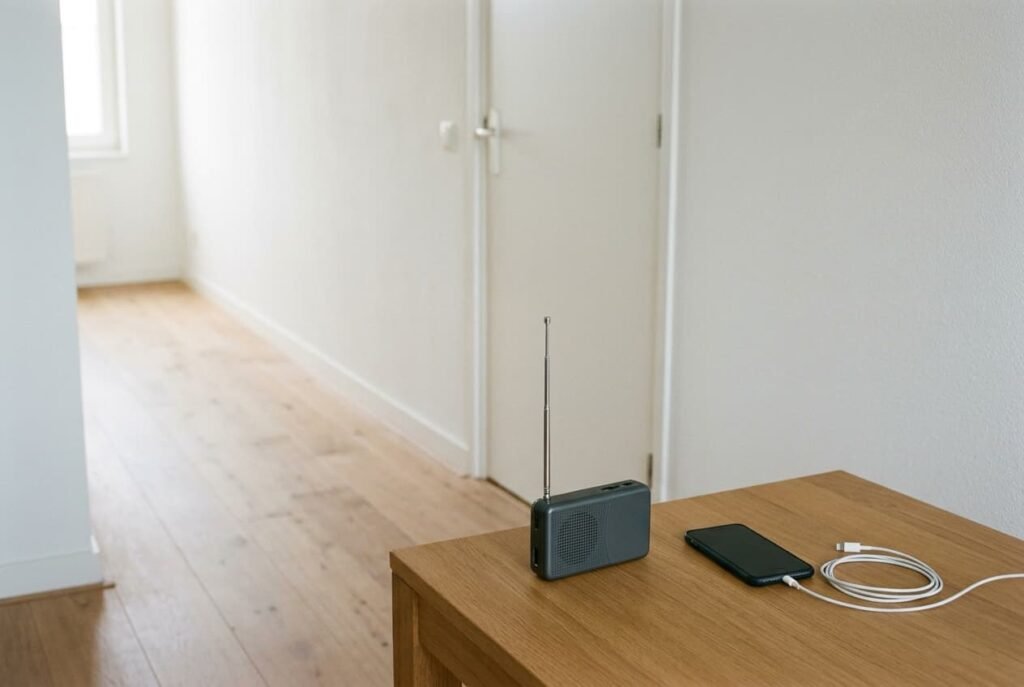
5. A pocket battery radio completes the set. Tier: BUY CHEAP, since few parts can fail. It is the only item that brings news when the phone network is down. A weak telescopic aerial is the flaw to test: extend it fully, check that every stage clicks into place and tune a station to hear whether the dial holds steady.
Why the Radio Is the Item to Scale Down
Of the five, the radio earns its place last. It fills a quarter of the shelf and wants cells of its own. Your phone already carries the news, and a bank of 10,000 mAh adds 1.4 more charges to it. A radio of the pocket size draws its own cells for hours, and those cells could power the torch instead.
The radio matters only when the mobile network fails as well. That happens in large regional outages, not in the common evening cut. A phone on a charged bank covers the news for a cut like ours, and the money is better spent on a sturdier head torch.
Keep the radio only when you live somewhere with a record of long outages and your phone can’t tune FM. Otherwise scale it down to nothing. Leave the shelf at four items, and let the freed quarter hold the box of cells in a tidy row.
Farms on a long rural supply line are different.
A cut out there can run for a day, and the radio becomes a real tool. For a flat in a town, a power cut shelf for a small flat can drop the radio without any loss.
When to Check the Shelf
A shelf only helps if its parts still work. Give it two checks a year. Tie the checks to the clock changes in March and October, which are easy dates to remember. Switch on the head torch and the lantern for a minute each. If the beam looks yellow or weak, replace the cells, then mark the date on the lid. You’ll see at a glance when the box was last renewed.
Bring the power bank to about half charge every six months, since it won’t hold itself up. A bank left empty for a year can lose capacity, and one kept full in a warm cupboard ages faster. Half is the safer resting level. Check the date printed on the box of cells and swap them before they expire. An old cell is the one most likely to leak.
Test the whole shelf once after dark by switching off the lights and timing your search for each item.
What to Skip
Skip candles. They need a holder and burn down within hours, and the flame sits close to curtains and paper. A battery lantern gives the same glow without the flame. A camping stove stays out of the list too, because gas appliances belong outdoors, and a generator has no use in a flat.
Skip the boxed emergency kit with forty pieces as well. It packs a whistle and a foil blanket beside a weak hand-cranked light, and none of them suits a four-hour evening. A power cut shelf for a small flat only needs what that evening uses. You pay for bulk and get a torch that fails after a season. Skip glow sticks and a second lantern, since one good lamp lights a small living room.
Four to five items cover the evening, and a sixth only adds clutter. A shelf of this size stays small when you resist extras. Pin the check dates to the lid, and let the box sit in the hall cupboard where you can reach it by touch. When a cut does arrive, you’ll know where everything is. The best result is a shelf you forget until the night it matters, then use for an hour and refill the next morning.
Questions Readers Keep Asking
How many pieces do I need to start?
Start with a head torch and a power bank. They cover light and the phone, which are the jobs that count in a four-hour cut. Add the lantern for lighting a whole room. Spare cells follow, and the radio comes last, if at all.
Which piece should I buy at the start, and which can wait?
The head torch goes at the top because it frees your hands and each later task needs light. The power bank follows within the week. Everything else can wait once you’ve tried the first two in the dark, and you’ll know by then what you missed.
How do I judge a head torch or a power bank in the shop?
Press the torch switch to confirm that it needs a firm push, and check that the lid closes with a click. Try the bank’s cable socket for wobble, and read the capacity printed on its case. A heavier bank of the same size usually carries bigger cells.