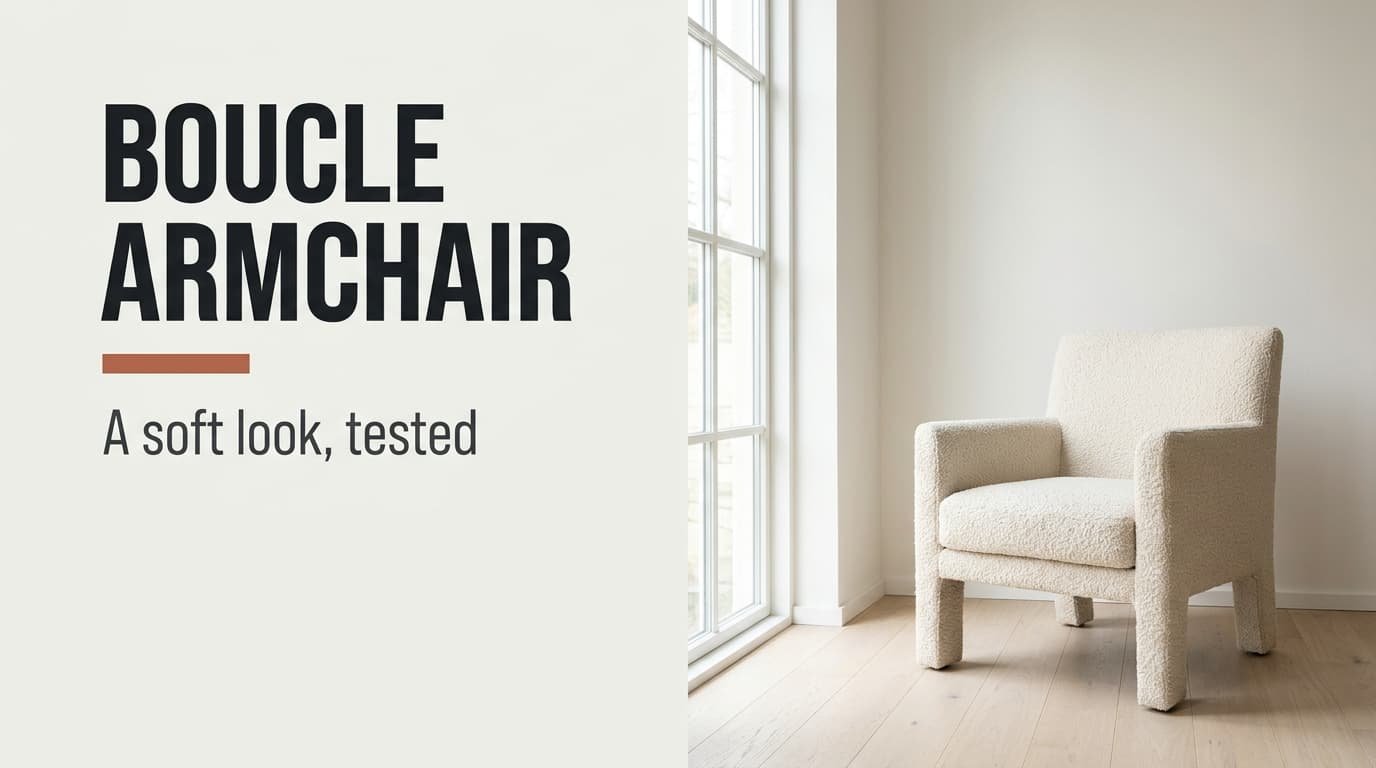
Boucle fabric on a family armchair is a woolly, looped cloth that has moved from magazine pages into ordinary Dutch living rooms. We have no sales data to size the trend. The argument rests on measurements. Our sample home houses two adults and a child, plus a cat, in a room of 3.6 × 4.5 m. The chair’s footprint is 80 by 85 cm, and the seat height is 45 cm. The room is the kind where one armchair does a lot of work. Treat every number as an assumed round figure, because a swatch in your own hands is the final test.
Where Boucle Fabric on a Family Armchair Came From
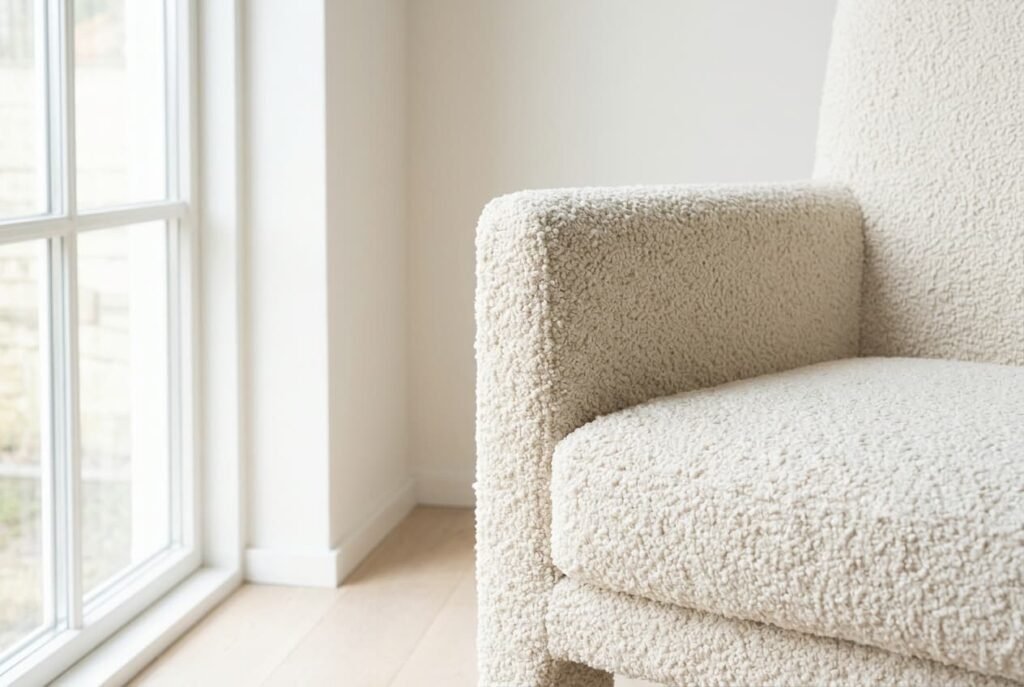
The word is French for looped. A boucle yarn is spun with small curls that stand out from the core, and the cloth woven from it keeps those curls on the surface as tiny loops. Nothing about the idea is new. Looped yarns have long been used for coats and blankets because the loops trap air and feel soft against the skin.
What changed is the setting. Smooth sofas filled the shops, and rooms with white walls and pale floors looked flat. A chair with a deep, textured cover gave the eye somewhere to rest without adding a pattern or a colour. The texture does the decorating.
Compact living rooms explain the spread as well. When one armchair is the only soft seat beside a sofa, it carries the visual interest of the whole room. People who buy one are choosing a feature, not a spare seat.
The cloth asks for something in return. The loops that look soft are the same part that catches dirt and wears. They also show each mark.
What Changes When a Family Armchair Gets Boucle Fabric
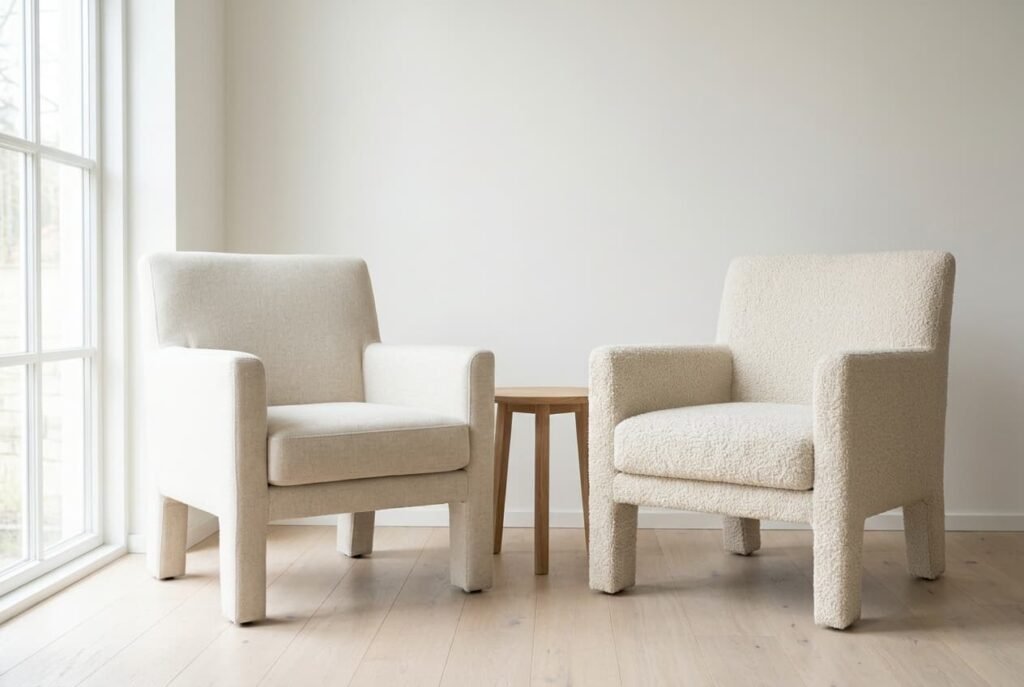
Swap a flat woven cover for a looped one in the same colour. Four things change, and each one yields to a tape or a stopwatch.
Surface moves first. The whole chair presents about 0.79 m² of cloth to hands and bodies. A flat weave offers that area at roughly its face value. A loop height of 4 mm turns each square centimetre into a small forest, and the surface that dirt can reach grows several times over. Crumbs fall between the loops and stay there, because a vacuum nozzle skims the tops.
Snagging moves second. A cat’s claw tip measures about 2 to 3 mm across, and a loop 4 mm high stands tall enough to hook it. In our assumed case, one scratching spell of two minutes pulls ten loops free in an unlucky spot. A flat weave gives the claw nothing to hold, and the same cat leaves it unmarked. Pulled loops can’t be tucked back without a needle. The damage stays.
Cleaning moves third. In our assumed test, a spill of 100 ml sinks into the loops and spreads sideways, and blotting takes about ten minutes on boucle against two on a smooth weave. Rubbing mats the loops down, and a pale patch stays where you rubbed. Boucle fabric on a family armchair therefore needs a calm, patient cleaner.
Comfort moves last, and in the cloth’s favour. The loops compress. The surface feels softer under a hand than a flat cloth does.
Who Boucle Fabric Suits, and Who Should Keep a Plain Weave
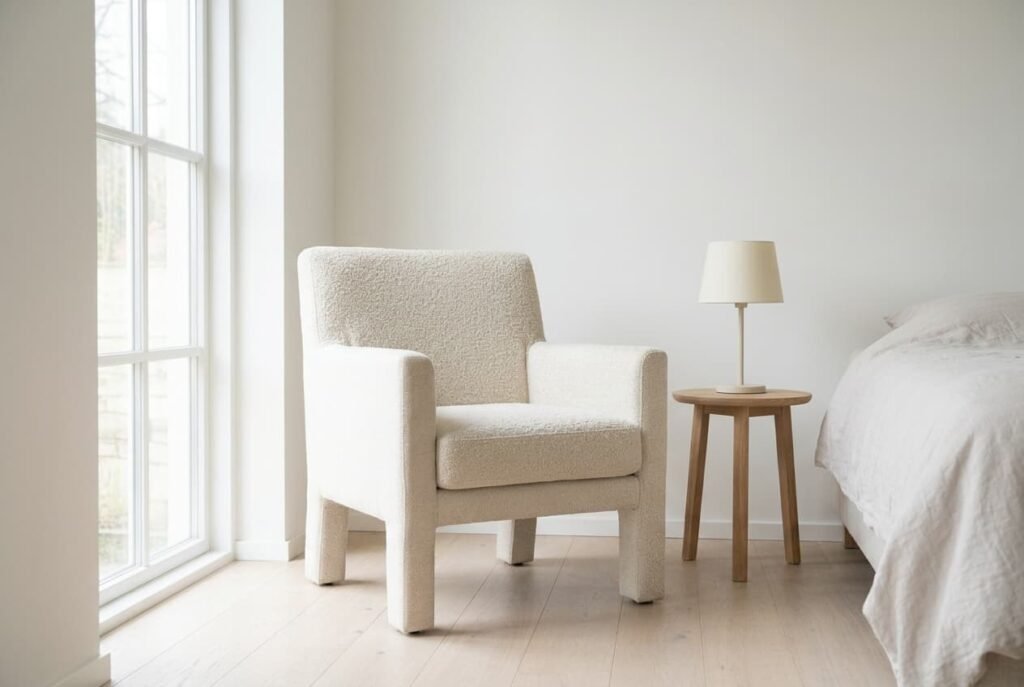
Adults who read in the chair gain most. Dry hands and clean clothes in a claw-free home leave the loops looking good for years. A bedroom corner or a quiet study suits boucle fabric on a family armchair better than the busiest room does, because fewer people touch it there.
Households with a cat should think twice. Claws find loops at once, and a pulled loop can’t be pushed back without a needle. A dog that jumps up brings mud, which the loops hold on to. A young child adds sticky fingers and crayons, and neither comes out of a looped surface easily.
Pale shades show every mark. A mid-tone oat or stone hides marks far better, and dark grey forgives too, although dust shows on it.
Rental life adds one more point. A cover that can’t be removed means the whole chair carries any stain to your next home. A removable cover that survives a machine wash changes the sums. Ask about that before you buy, and read the care label instead of assuming. A chair cleaned by hand for life is a separate decision from one whose cover goes in the drum.
Read the rub rating if the seller lists one.
Is the Switch Worth Making in Your Home
Our verdict: choose boucle fabric on a family armchair only when no claws live in the house and the chair stays clear of sticky hands. In our sample household the cat settles it. The answer is no for the main chair. A spare chair in a bedroom or a study is a mild yes.
For a household like ours, a flat weave in a warm colour gives most of the comfort without the risk. Put the texture into something that never meets a claw, like a cushion cover.
Count the days instead. A diary shows more than a guess, and boucle fabric on a family armchair deserves a proper count. Over one week, note how often someone with claws or wet hands, or anyone carrying a snack, uses the chair. Two days or fewer suggest the cloth might survive, and daily use points to a flat weave. A diary of seven lines is enough.
The Version That Will Date Fastest
The extreme form is a full suite in cream boucle. The sofa and chair share one pale shade and one looped texture with a pouffe and cushions, and together they cover about 4 m² of cloth, equal to a quarter of a 16.2 m² floor. One spill or one scratch then touches a large part of the room, and a repair can’t be matched against the rest.
The look also leaves the eye nothing to rest on, because every surface repeats itself. A single looped chair beside a flat sofa shows off the texture better than five pieces in a row.
The gentler version keeps one looped piece and pairs it with smooth ones. It costs less to replace and ages more kindly. We don’t recommend the full suite for anyone, and the sums above show why: one fault spreads across the lot. With a single looped chair, the damage stays in one place. A plain cover can then replace it.
Cream records every mug ring and every paw.
How to Try It Without Committing
Ask for a swatch of about 20 × 20 cm, or borrow a cushion in the cloth. Pin it to a board near the spot where the chair will stand and leave it for seven days. Drag a fingernail across the loops, spill a spoonful of water on a corner and time the blotting. Then look at it in daylight and lamplight, because looped cloth shifts shade as the light moves.
If any loop lifts under a fingernail, a claw will lift it as well. If blotting takes more than five minutes, the chair will frustrate you within a month.
Looped cloth is popular for a good reason, which is texture without pattern. Write the test results on one page beside the dimensions of your chair. A swatch that survives earns the idea a place, and one that fails the nail test sends you back to a flat weave. Run the test again on the exact cloth you’re offered, because two looped fabrics can behave very differently.
Questions Readers Keep Asking
Should I replace a working armchair with a boucle one?
Only if the old one has lost its shape or its cover has worn through. A sound chair has many years left, and the cloth alone changes the look. A new cover on the same frame can give you the texture at lower cost to your wallet and your waste bin.
Does boucle suit a household with a cat or a dog?
Usually not for the main chair. Claws hook the loops and mud settles into them, and neither is easy to remove. A flat weave or a tight, low-pile cloth copes better. Keep boucle for a cushion or a chair the animal doesn’t use.
How long will a boucle armchair last?
With dry use and gentle vacuuming, the loops can look good for years. Wear shows first on the arms and on the front rim of the seat. Hands and knees rub that part most. The look fades before the frame does, and replacing the cover is possible if the frame is sound.