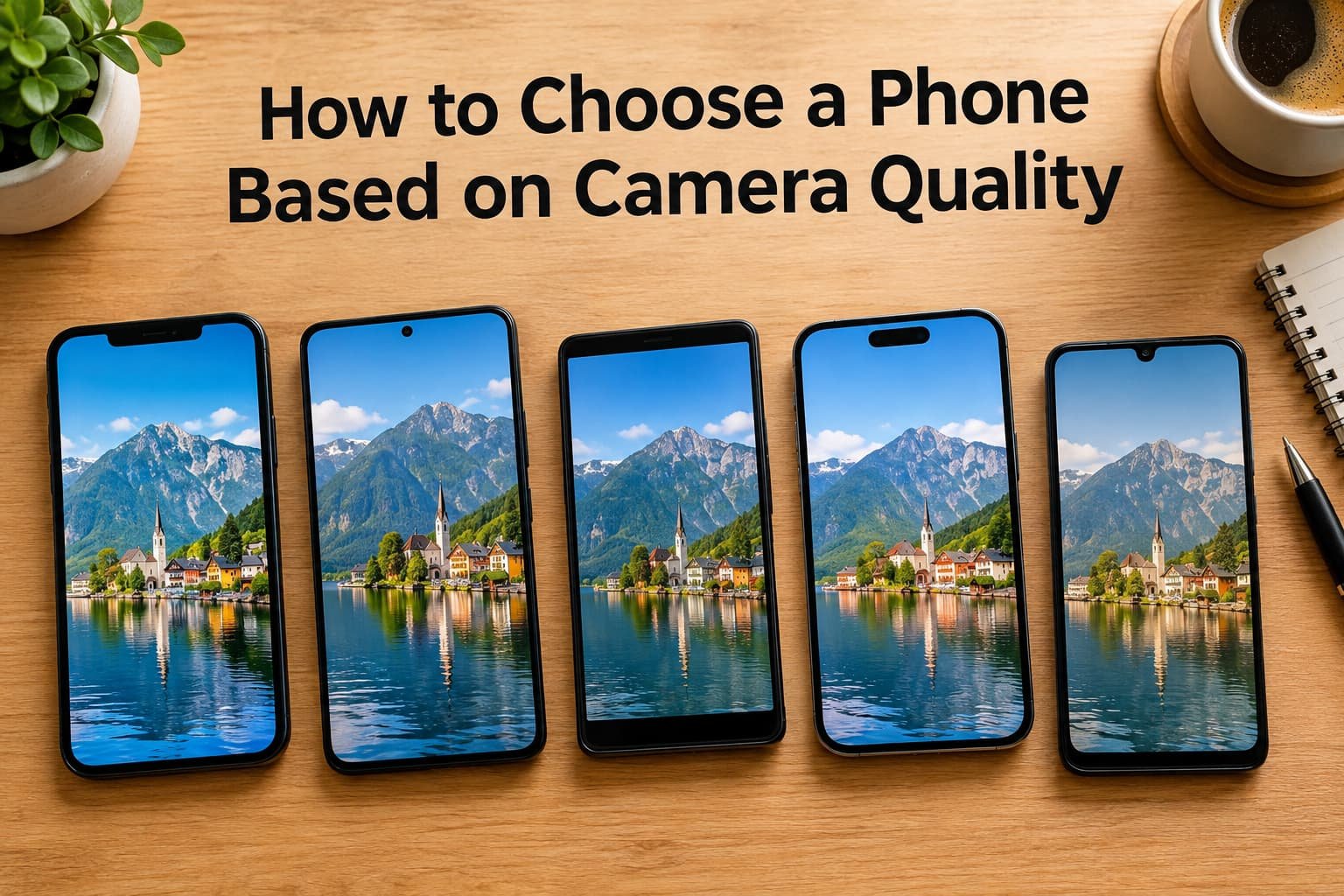
Choosing a phone based on genuine camera quality comes down to a handful of criteria you can evaluate on any phone in front of you, not simply which one advertises the highest megapixel count. A phone chosen purely for an impressive-sounding camera specification often disappoints once your actual typical shooting situations reveal what that specification doesn’t tell you.
What actually decides this
The deciding factor is how well a phone’s camera performs specifically in the conditions you actually shoot in most often, not simply how it performs in ideal, well-lit marketing photos. A phone genuinely needs to handle your actual typical situations well – low indoor lighting, everyday quick snapshots, whatever you photograph most – since a camera that excels only in ideal conditions doesn’t serve your actual daily use particularly well.
This matters because most phone camera marketing emphasises headline specifications and best-case sample photos, while your actual daily use pattern – specific lighting conditions, specific typical subjects – behaves meaningfully differently from the curated conditions marketing materials are built around.
The criteria that actually matter, in order
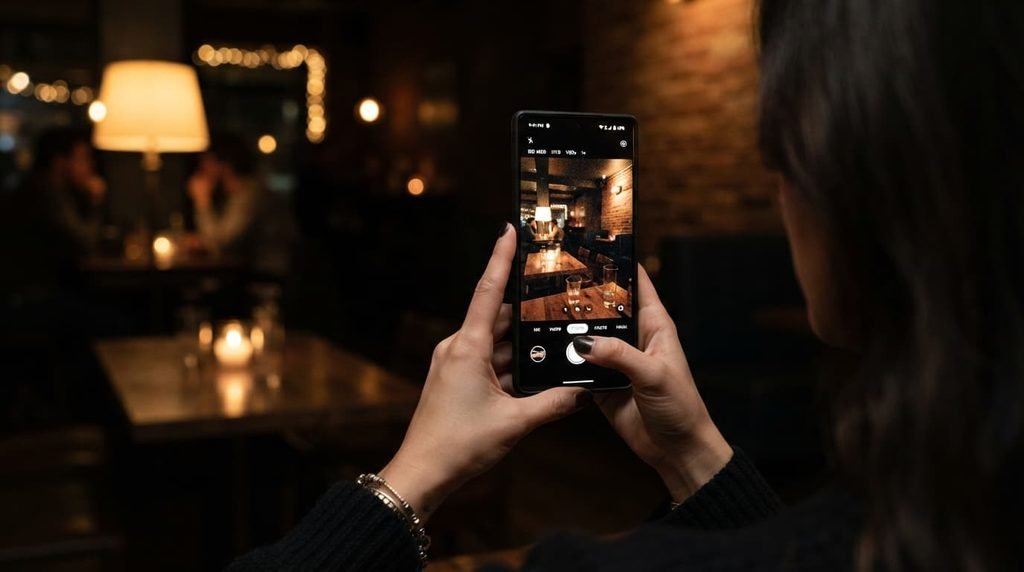
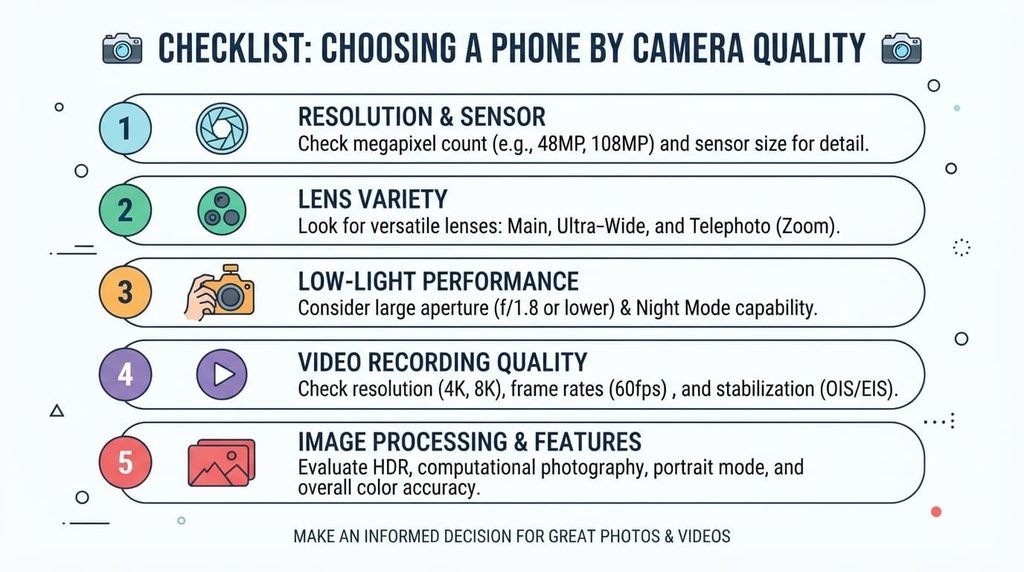
1. Genuine low-light performance for your actual typical indoor and evening shooting. Look specifically for how a phone performs in dimmer, everyday conditions rather than bright outdoor daylight alone, since low-light performance varies considerably more between phones than daylight performance does, and most everyday indoor photography happens in genuinely imperfect lighting.
2. Consistency across the phone’s actual zoom range, not just its maximum advertised figure. A phone’s zoom quality typically declines once you move beyond its optical range into digital zoom territory, so checking actual sample results across the range you’d genuinely use matters more than the single maximum number alone.
3. How quickly and reliably the camera actually captures a moment. A camera that takes a genuinely long moment to open, focus, and capture can mean missing a fleeting moment entirely, making genuine responsiveness a practical criterion that pure image quality specifications don’t fully capture.
4. How the default camera app’s processing matches your actual visual preference. Different phones apply genuinely different automatic processing – some favour more vivid colours, others a more neutral look – so checking whether a phone’s default output style genuinely matches your own preference matters more than assuming all processing approaches are equally satisfying.
5. Video quality if you genuinely shoot meaningful amounts of video, not just still photos. A phone with excellent still photo quality doesn’t automatically have equally strong video capability, so checking this specifically if video genuinely matters to your actual use, rather than assuming it follows automatically from photo quality.
What doesn’t matter as much as it’s made out to
The single highest megapixel count is oversold for typical everyday use specifically, and it’s the specification most prominently marketed. For most typical daily photography, considerably more modest megapixel counts combined with genuinely good processing and low-light performance produce better real-world results than a very high count alone provides, since raw resolution addresses a narrower set of use cases than marketing emphasis suggests.
The number of separate camera lenses gets more attention than it deserves relative to how well each individual lens actually performs. A phone with several lenses where each one performs only adequately doesn’t necessarily outperform a phone with fewer lenses that each perform genuinely well for their specific purpose.
Matching the choice to your situation
If you genuinely shoot mostly in bright, well-lit conditions – outdoors during the day, well-lit indoor spaces – prioritise the criteria above proportionally less heavily around low-light performance specifically, since this particular limitation matters less for your actual typical shooting pattern.
If you genuinely photograph moving subjects frequently – active children, pets, sports – prioritise capture speed and reliability more heavily, since a camera that’s slow to focus and capture causes you to miss the specific moments that matter most for this particular use case.
What to walk away from
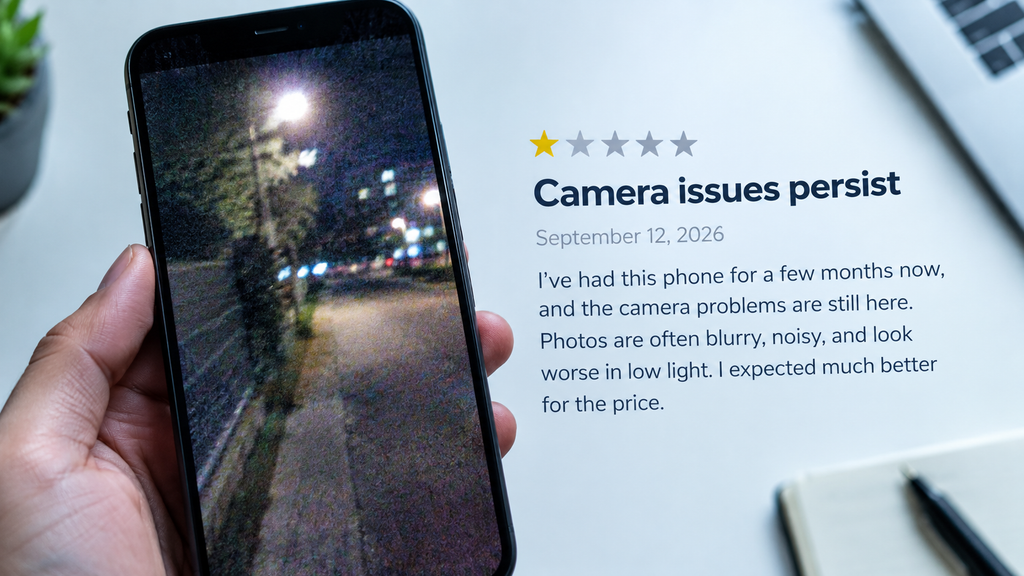
Any phone whose camera reviews consistently mention significant, uncorrected quality problems specifically in conditions you know you’ll regularly encounter – persistent low-light noise, unreliable focus – should end your interest regardless of how impressive its specifications otherwise appear.
A specification sheet doesn’t reveal genuine real-world performance the way consistent reviewer and user experience does, and a camera with a known, unaddressed weakness in your actual regular shooting conditions will likely disappoint you daily regardless of how strong its other capabilities are on paper.

The check before you commit
Before finalising any phone purchase based on camera quality, look at genuine sample photos taken by actual reviewers or users in conditions similar to your own typical shooting situations, rather than relying solely on the manufacturer’s own curated marketing photos.
This single check reveals genuine everyday performance far more reliably than marketing materials do, since a manufacturer’s own sample photos are typically captured in carefully chosen ideal conditions that may not reflect what you’ll actually experience during regular daily use.
Does camera software update support matter as much as the hardware itself?
Genuinely, yes – manufacturers periodically release software updates that meaningfully improve camera processing and add capability even without any hardware change, so checking a phone maker’s actual track record for ongoing software support is worth considering alongside the camera hardware’s current specifications.
What people get wrong about choosing a phone for its camera
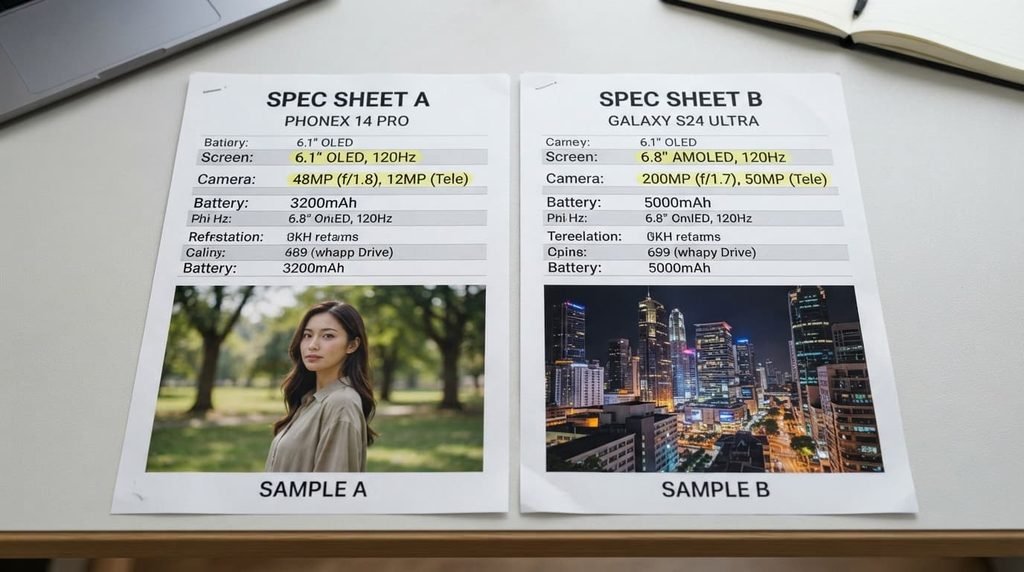
The most common mistake is comparing phones purely by reading specification sheets side by side, without seeking out genuine comparative sample photos taken in similar conditions. Two phones with similar-sounding specifications can produce meaningfully different real-world results, a difference specifications alone don’t communicate clearly.
A second common mistake is assuming the newest available model automatically has the best camera for your specific needs, when a slightly older model genuinely excelling in your particular priority areas – low-light performance, for instance – can sometimes outperform a newer model that improved in areas less relevant to your own actual use pattern.
Questions readers keep asking
Does a more expensive phone always have a meaningfully better camera?
Not necessarily in every respect – price correlates with camera quality broadly, but the specific criteria that matter most for your particular use can vary, meaning a less expensive phone genuinely strong in your specific priority areas can outperform a pricier one for your actual needs.
How can I test a phone’s camera before actually buying it?
Visiting a store to test the actual physical device in conditions similar to your typical use, or researching genuine sample photos and video from reviewers specifically testing in varied real-world conditions, both provide more reliable insight than specifications alone.
Is it worth reading professional reviews, or are user reviews genuinely more reliable for camera assessment?
Both offer genuine value for different reasons – professional reviews often test more systematically across varied conditions, while user reviews reflect genuine everyday use patterns closer to your own, so checking both types rather than relying exclusively on one tends to give a more complete, reliable picture.
Is it worth prioritising camera quality over other phone features entirely?
This depends entirely on how much photography genuinely matters in your own daily phone use – for someone who photographs frequently, prioritising camera quality makes sense, while someone who rarely takes photos may reasonably weight other features more heavily instead.