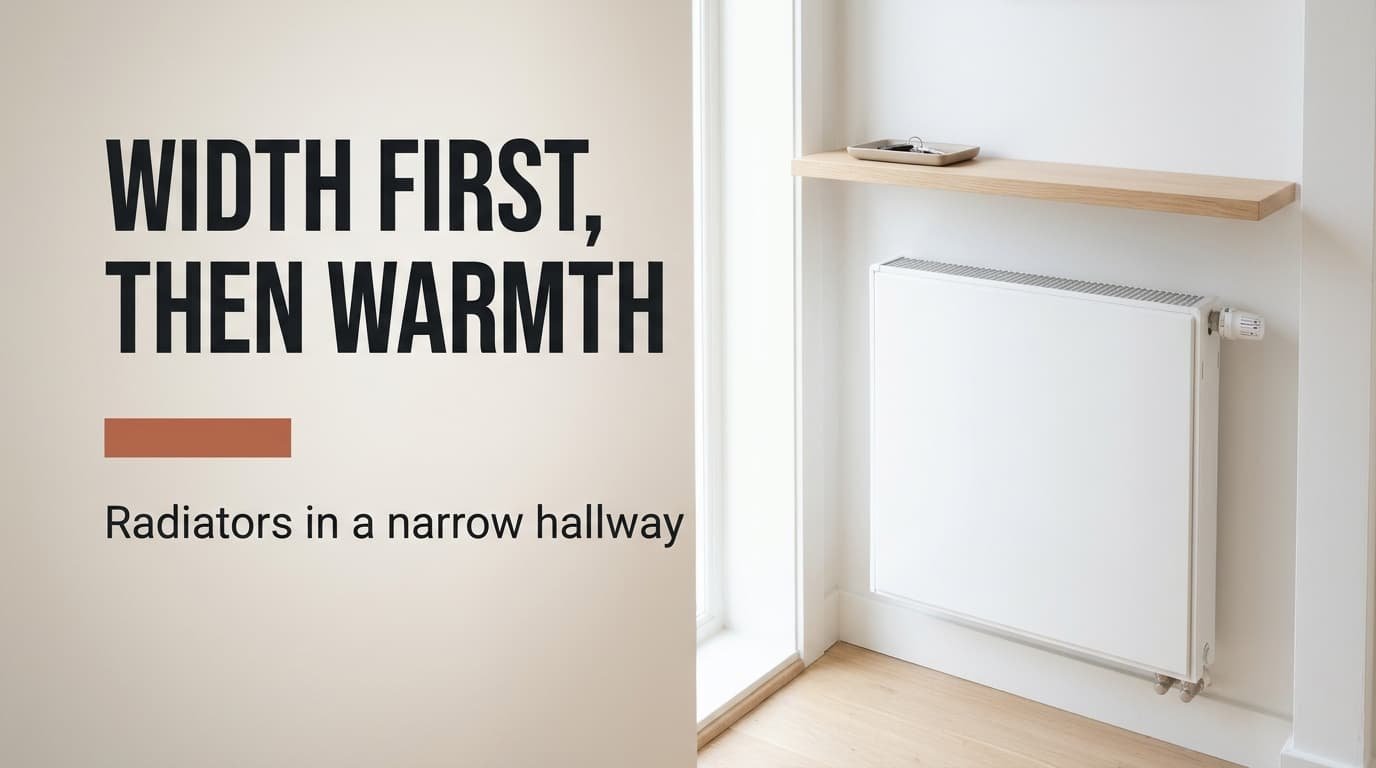
A radiator cover or a shelf sounds like a styling question, yet in a narrow hallway it turns out to be a question of depth and heat. Our example is a tenant’s home in Rotterdam, where the hallway runs 380 cm and is 105 cm across. The radiator measures 90 × 60 cm and sticks out 10 cm. Below, the two options are tested on walking width and warm air, and a table puts the numbers side by side. Later sections treat each option alone and then offer a third route, plus a rule you can apply in a minute. Read your own tape in place of our figures first, since a few centimetres can change the answer.
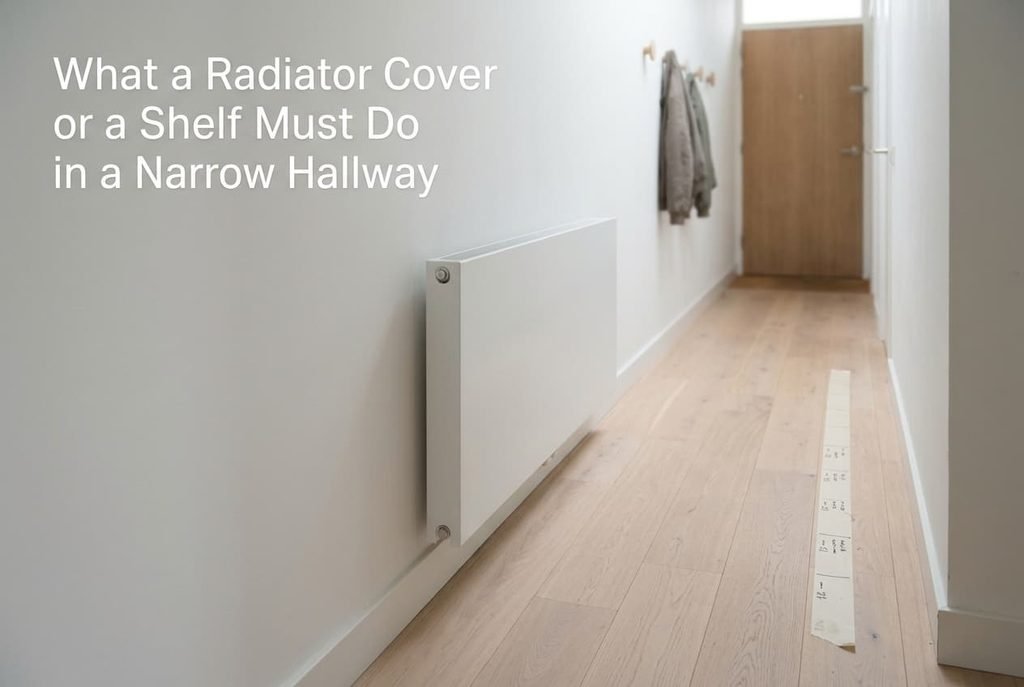
What a Radiator Cover or a Shelf Must Do in a Narrow Hallway
Whatever you fit has to give the hallway a place for keys and post, and it has to leave the heat free to reach the room. Those two jobs pull against each other, because anything near a radiator also stands in the stream of its warm air. A hallway is the harshest place for this trade, since nobody can walk around the problem. A living room can lose 20 cm to a cover unnoticed, whereas a hallway can’t.
The deciding measure is how much walking width each option removes, set against how much surface it gives back. The bare radiator already narrows our hallway to 95 cm. A cover standing 18 cm proud of the wall leaves 87 cm at floor level. A 15 cm shelf at 82 cm height leaves 90 cm there, and the floor below stays at 95 cm.
Heat is the other test. A radiator warms the room mostly by letting air rise past its panel, with a smaller share coming as direct warmth from its face. With a grille, a cover still lets the air through but hides the face. Over the top edge, a shelf bends the rising air outward instead of up the wall.
Both choices also change how you reach the valve and the wall behind it.
Two Options Compared Row by Row
The hallway is a straight run from the front door to the kitchen, so everyone passes the radiator many times a day. Each line below rests on a measurement. The figures assume our 90 × 60 × 10 cm radiator, mounted 12 cm above the floor.
| Point | Radiator cover | Shelf above the radiator |
|---|---|---|
| Width left at floor level | 87 cm | 95 cm |
| Width left at shelf height | 87 cm | 90 cm |
| Top surface for keys and post | 98 × 18 cm, 1,764 cm² | 90 × 15 cm, 1,350 cm² |
| Effect on the warm air | passes through a grille, face hidden | bent outward into the room |
| Reach to the valve | lift the front off first | open, no lifting |
| Cleaning behind and below | needs the cover removed | wipe the open panel |
The difference between them looks small on paper, but it repeats on every trip past the same spot all winter. A radiator cover or a shelf stops being a matter of taste once you look for the row where your hallway is weakest. Pick the option that gives way least there. On these numbers the shelf leads in five of six rows, and only the larger top surface favours the cover. That lead isn’t automatic, since the cover also hides the panel.
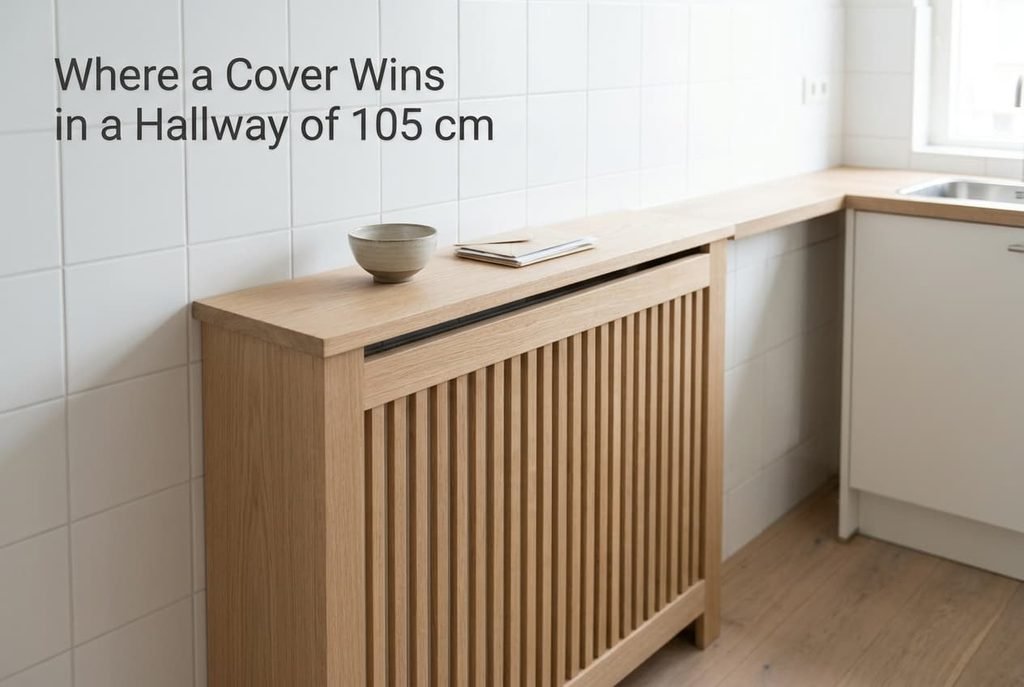
Where a Cover Wins in a Hallway of 105 cm
A cover suits a hallway that wants a tidy face and a landing surface in one piece. Its top measures 98 × 18 cm, which is 1,764 cm², and it stands at 80 cm, close to hip height. Keys and post both fit there without a console on the opposite wall, and a console would take another 20 cm of width the hallway can’t spare.
The cover also hides the pipes and the worn paint behind the radiator. For a tenant that matters, since the panel usually can’t be repainted or swapped. Inside the box, air still rises through the grille, so the room is warmed by moving air even though the face stays hidden.
Two costs come with it. The cover takes 18 cm from the walkway, so the hallway drops to 87 cm along the whole 98 cm length. It also slows the warm-up, because the air has to find its way through the grille before it reaches you. Lift the front off once a season to clear the dust behind it and to reach the valve.
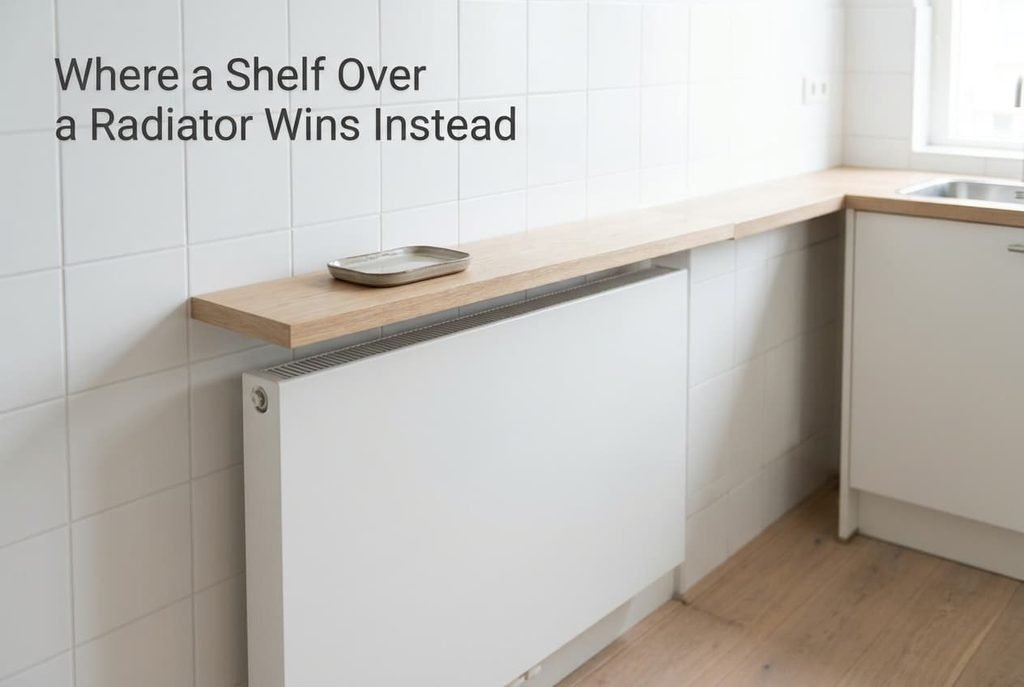
Where a Shelf Over a Radiator Wins Instead
A shelf suits a hallway where width matters more than hiding the panel. At 15 cm deep and 82 cm high, it leaves 90 cm exactly where a hip or a bag passes. The floor below holds nothing, so the walkway there stays at 95 cm. Its 90 × 15 cm top gives 1,350 cm², enough for a key tray and one small plant.
Heat gets a boost too. Warm air that would crawl up the wall now meets the underside and spreads into the hallway, which leaves the wall above cooler and the room warm sooner. Keep 10 cm between the radiator’s top edge and the shelf’s underside, so that air has room to move.
Three checks come first. The shelf needs two brackets in the wall, so ask the landlord about drilling. Scan for pipes and cables before you make a hole. Keep whatever sits on top light, since the surface above a radiator gets warm.
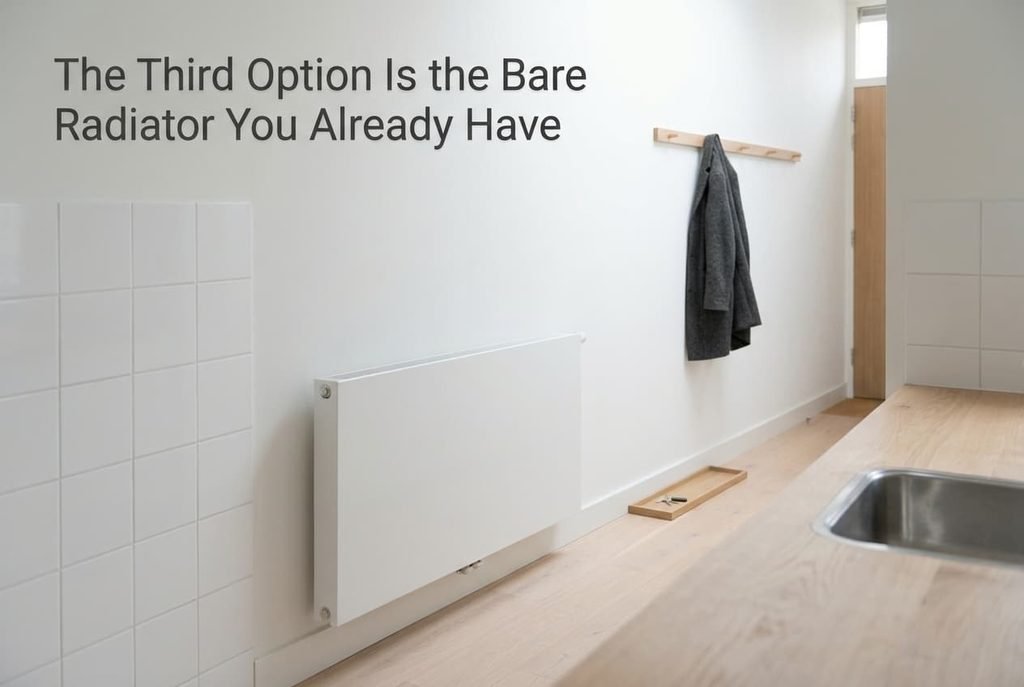
The Third Option Is the Bare Radiator You Already Have
Before you fit either, look at what the bare radiator gives you now. A bare radiator delivers its heat with nothing in the way, so it warms the hallway quickest. It costs no width beyond its own 10 cm. Nothing needs drilling, and nothing needs lifting.
The only gap is storage. Fix a slim rail with hooks to the opposite wall, or set a narrow tray beside the door, and the keys have a home that never touches the radiator. The rail takes about 3 cm of width, and the tray stays on the floor.
You can skip the radiator cover or a shelf altogether in a hallway under about 100 cm, or if you want to change nothing. The bare panel does look plain, but it doesn’t trap anything either. Paint in the wall’s shade makes it fade away, should the tenancy permit it. It also lets you reach behind it with a long duster whenever the hallway needs a clean.
Which One to Pick
Two branches cover most hallways.
If the hallway is 100 cm or wider and you want a landing surface for the daily clutter, choose the cover. Its 98 × 18 cm top holds keys and post. The grille hides a panel you can’t replace. Accept the 87 cm walkway and a slower warm-up in return for a neat finish.
If the hallway is under 100 cm, or you want the warmth to spread sooner, choose the shelf. It leaves 90 cm at hip height and bends the warm air into the room. Ask about drilling before you buy the brackets, and fix it at 82 cm so the 10 cm gap above the radiator stays open.
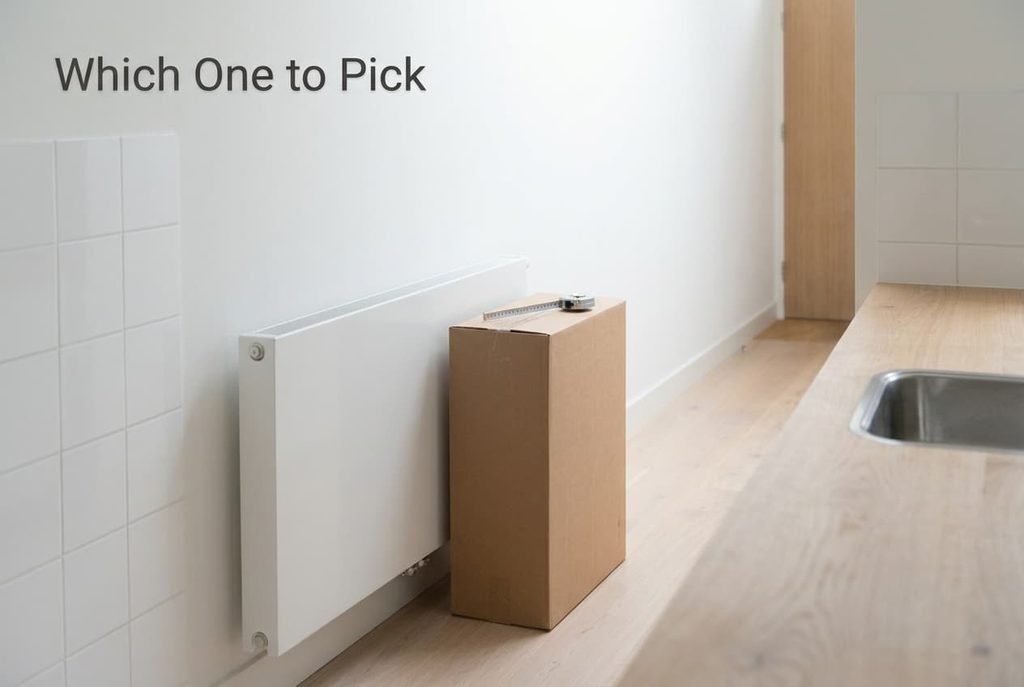
Before you commit, cut a cardboard box to the planned depth and stand it beside the wall for seven days. A radiator cover or a shelf only works if you can walk past it with a shopping bag and room to spare. If the box makes you turn sideways, you’ll want the thinner option. The week costs nothing and answers the question early.
Questions Readers Keep Asking
Which one lasts longer?
A shelf has no moving parts, so it should outlast its brackets and the plaster they grip. A cover’s grille and front panel can warp if the radiator runs very hot all winter. Choose a cover with a rigid back panel, and its edges will stay straight for many seasons.
How do I keep either one clean?
Wipe a shelf with a damp cloth whenever you tidy the hallway. A cover needs its front lifted off once a season so you can clear the dust that gathers behind the grille. Dry both completely, because trapped moisture dulls the finish over time.
Which suits a hallway with small children?
A cover, because it keeps the hot panel out of reach at knee height. A shelf leaves the panel open, so a child can touch it. Keep objects on a cover light, and fit a gate if the hallway is also the way to the stairs.