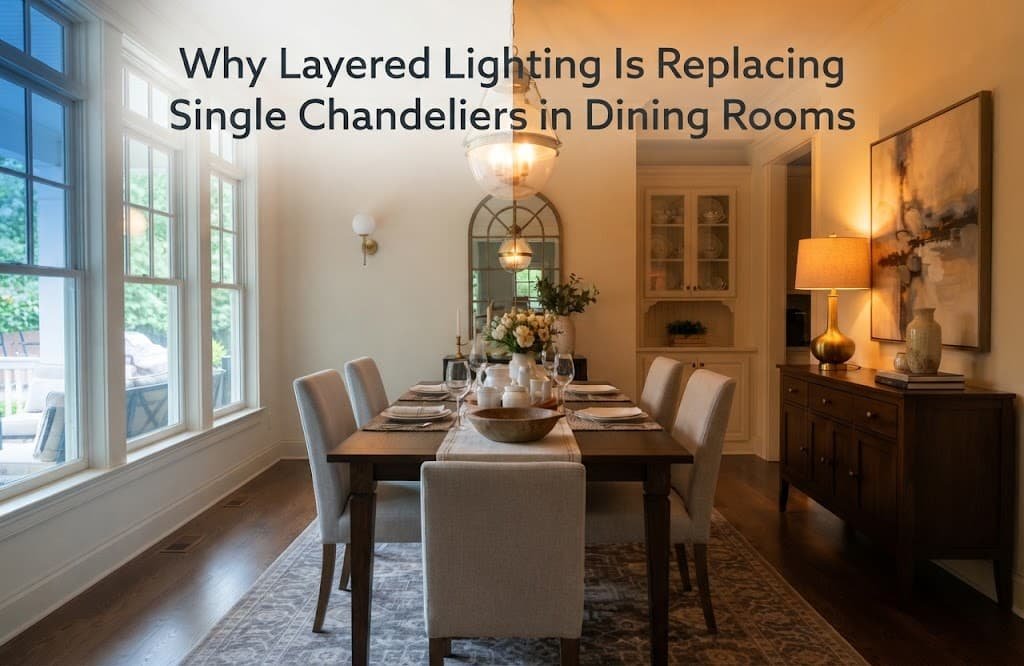
Layered lighting keeps steadily displacing the single statement chandelier as the primary approach to dining room lighting, for a reason grounded in measurable functional flexibility, not seasonal taste alone – and understanding that specific reason tells you whether it’s genuinely worth adopting or just the current version of a cycle that will eventually pass entirely. The shift is real and checkable in how much genuine lighting flexibility a layered setup actually provides compared to one fixed central fixture, not simply a matter of one lighting style being more fashionable than another.
What actually changed
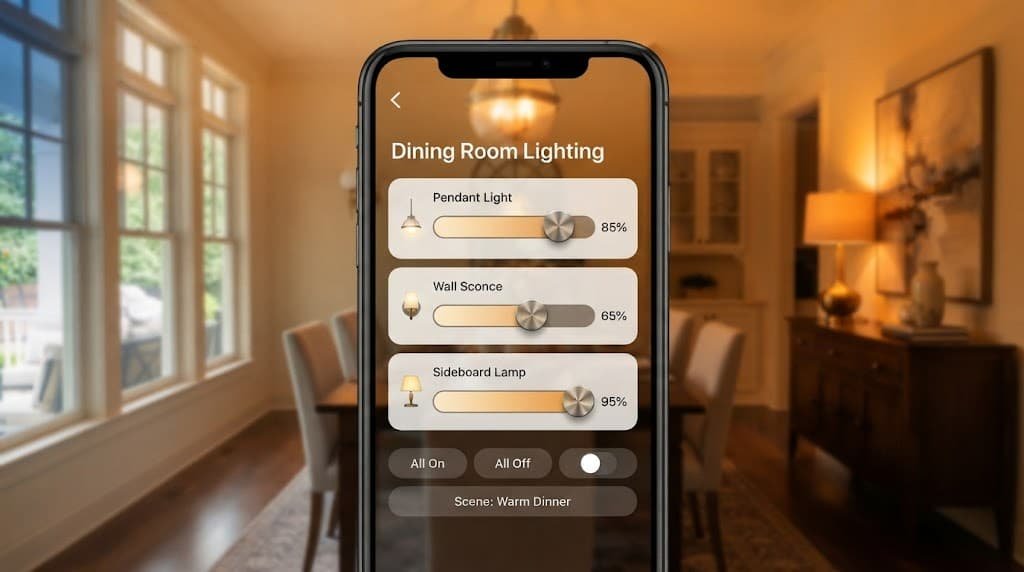
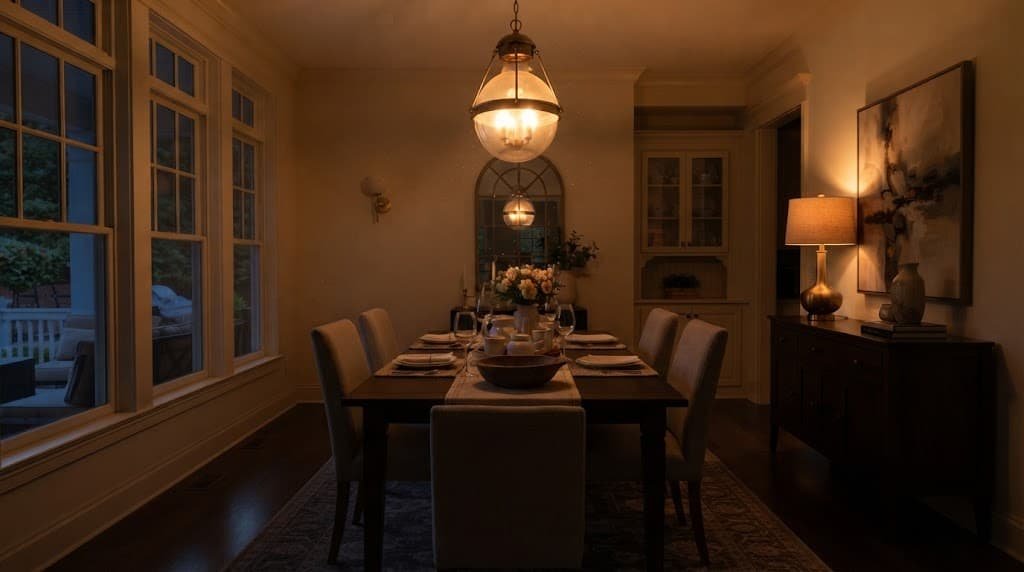
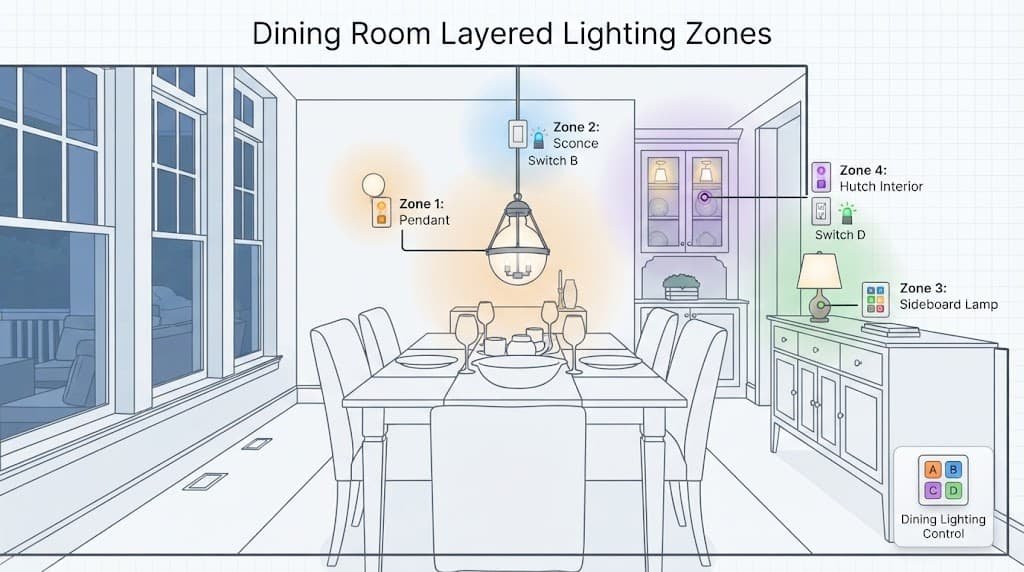
The measurable shift is a move away from relying on a single central fixture as the room’s only light source, toward combining multiple, independently controllable sources – a dimmable pendant, wall sconces, a sideboard lamp – that together cover a genuinely wider range of lighting needs than one fixture alone can provide. Where a single chandelier offers essentially one lighting condition regardless of the room’s actual activity, a layered setup allows genuinely different combinations for a bright daytime task versus a dim, warm evening meal.
This isn’t purely aesthetic preference – it’s a direct property of how multiple independently controlled light sources can cover a wider functional range than a single fixture, which is why the technique keeps recurring across different design eras rather than being tied to one particular decorating trend alone.
Smart or app-controlled fixtures have genuinely accelerated this specific shift, since they remove the practical inconvenience of manually adjusting multiple separate switches, letting a household set and easily recall specific combinations – a “dinner” setting, a “homework” setting – without needing to individually reconfigure several separate fixtures each and every time the room’s use genuinely changes throughout the day.
Why it keeps coming back specifically now
The continued popularity of dining rooms serving genuinely multiple functions – formal meals, casual daily use, homework, occasional work-from-home tasks – has created a direct tension that layered lighting specifically resolves: a single fixed lighting condition genuinely can’t serve both a bright, functional daytime need and a warm, dim evening atmosphere equally well.
For most of the last several years, this specific tension between wanting one flexible room and having only one fixed lighting condition has been increasingly common as households ask dining rooms to serve more varied daily functions than in previous decades, which is a concrete structural reason layered lighting’s popularity tracks this broader multi-use trend rather than purely following showroom styling alone.
This distinguishes the current cycle from earlier uses of multiple light fixtures, which were often driven primarily by a particular design movement’s aesthetic preferences rather than by an actual functional-range problem. The underlying mechanism is the same regardless of cause, but a technique genuinely driven by an actual functional need tends to persist considerably longer than one driven purely by a design movement’s popularity, since the underlying multi-use tension doesn’t simply disappear once the associated aesthetic eventually falls out of favour.
What this actually changes in a room
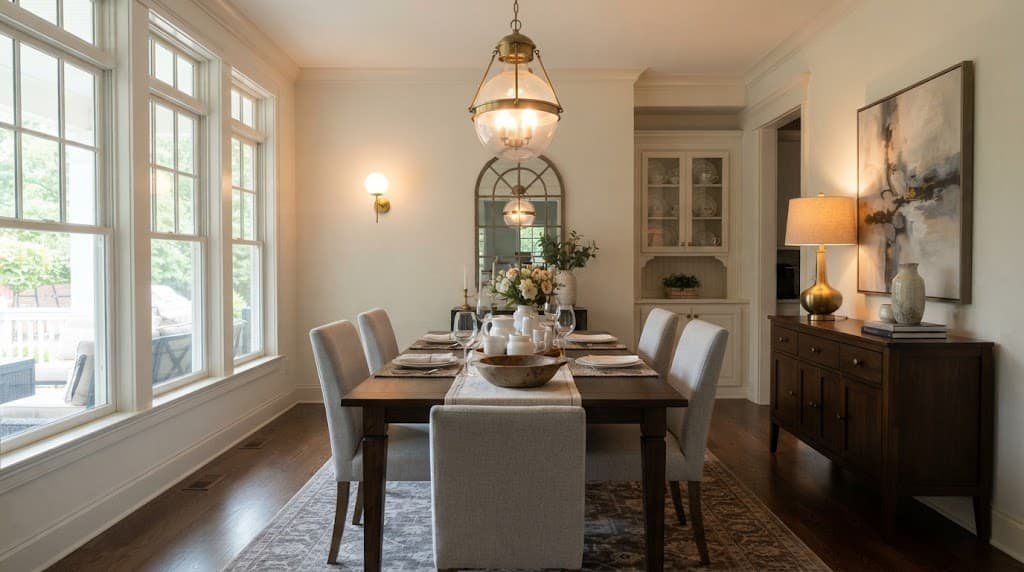
Independently controllable light sources allow the same physical room to genuinely shift between distinct lighting conditions without requiring any furniture or decor change, which is the direct mechanism behind layered lighting’s functional advantage over a single fixture. This isn’t a subjective impression – it’s the direct result of having multiple separately switched or dimmed sources rather than one fixture offering only a single overall brightness level.
Shadow and overall visual depth also genuinely change specifically with layered lighting, since multiple light sources positioned from different points in the room create more varied shadow and highlight patterns than one central overhead source alone ever does. This genuinely compounds with the functional benefit quite directly – a room lit from multiple angles tends to feel considerably more three-dimensional and visually interesting than one lit uniformly from a single central point alone.
Where this trend genuinely holds up
The functional-range mechanism behind layered lighting’s effectiveness doesn’t depend on current taste at all, which is genuinely why it’s a reasonable longer-term choice specifically for dining rooms that genuinely serve multiple different functions throughout the entire day. A room genuinely used for both formal meals and casual daily tasks alike benefits from this approach regardless of which decade’s aesthetic currently favours the specific fixture styles genuinely being used.
Where the verdict should stay negative
Layered lighting genuinely isn’t worth the added installation complexity for a dining room used for essentially one consistent function throughout its life, despite how consistently it’s marketed as a universal lighting solution.
In a household with a dining room genuinely used only for occasional formal meals, with no genuine daily or varied-use pattern requiring different lighting conditions at all, the functional-range mechanism that makes layered lighting genuinely valuable elsewhere simply doesn’t address a need that doesn’t meaningfully exist in that specific scenario whatsoever. Adopting the approach purely for its current fleeting popularity, in a room with genuinely consistent single-purpose use, adds unnecessary installation cost and complexity without producing the practical benefit people actually and reasonably expect to genuinely get from it.
What people get wrong when adopting it
The most common mistake by far is adding multiple light fixtures without giving each one genuine independent control, which entirely defeats the whole mechanism behind layered lighting’s actual real benefit. A room with three separate fixtures all controlled by the exact same single switch provides no more genuine flexibility than one fixture originally did, regardless of how visually layered the lighting genuinely appears when switched on together simultaneously.
A second genuinely common mistake is choosing fixtures purely for individual visual appeal alone without considering how their combined light temperature and overall intensity actually work together in practice. Mismatched colour temperatures between different fixtures – a warm pendant alongside a cool-toned sconce, for instance – can produce a genuinely quite uncomfortable, visually inconsistent overall result regardless of how attractive each individual fixture happens to look entirely on its own.
Questions readers keep asking
Does layered lighting actually save money compared to one statement chandelier?
Not necessarily upfront at all – multiple separate fixtures typically cost more initially than one central piece alone, though the genuine functional flexibility gained often justifies this specifically for a room used for genuinely varied purposes, which is a different consideration entirely from simple upfront cost comparison alone.
Is layered lighting just a temporary trend that will look dated soon?
The underlying functional-range mechanism it addresses doesn’t depend on current taste, which suggests genuine longevity specifically for multi-use dining spaces – though specific fixture styles chosen within the broader approach can still date in the usual way any decorating choice eventually does over time.
How many separate light sources does a dining room genuinely need for this to work?
Often just two or three independently controlled sources are enough to achieve meaningful flexibility – a main fixture over the table plus one secondary source, such as a sideboard lamp or wall sconce, already provides considerably more range than a single fixture alone.
Can I add layered lighting to a room that already has a chandelier, without replacing it?
Yes, absolutely, and this is genuinely often the most practical approach available – adding one or two secondary, independently controlled sources alongside an existing central fixture achieves the exact same functional flexibility without requiring the existing chandelier to be removed or replaced entirely, provided the new sources are genuinely on separate switches or dimmers of their own.
What people get wrong about the chandelier itself
The chandelier itself isn’t inherently the actual problem – a chandelier can genuinely remain a genuinely effective centrepiece within a layered setup, provided it’s placed on its own independent dimmer rather than being the room’s sole fixed-brightness light source entirely. The actual real issue lighting critics genuinely target is the “single source, single brightness” limitation specifically, not the chandelier itself as an object, which is genuinely worth distinguishing before assuming this trend requires removing an existing statement piece entirely and unnecessarily.