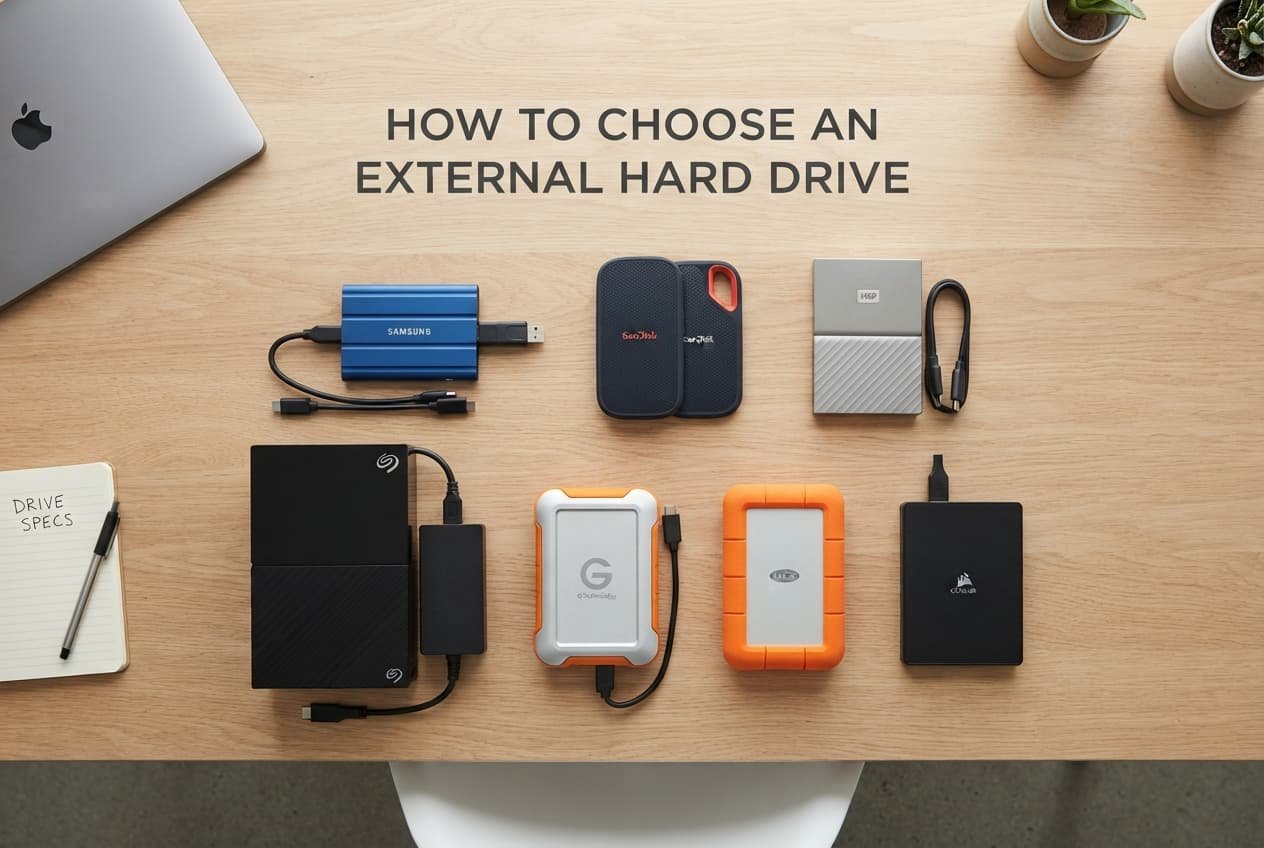
Choosing an external hard drive genuinely likely to serve you reliably comes down to a handful of specific criteria you can evaluate on any drive sitting in front of you, not simply which one offers the largest storage capacity for the lowest possible price. A drive chosen purely for capacity and price often disappoints once genuine reliability and actual daily usability reveal what those two specifications alone didn’t communicate.
What actually decides this
The deciding factor is how well a drive’s actual build quality and genuine reliability track record match your specific use pattern, not simply how much storage it offers per unit cost. A drive genuinely needs to handle your actual typical use – portability demands, environmental exposure, genuine data importance – since a drive excelling only on capacity and price doesn’t necessarily serve your actual daily and long-term needs well.
This matters because most drive marketing emphasises capacity and price prominently, while your actual ongoing experience – physical durability, genuine failure rate, ease of actual use – behaves meaningfully differently from what a simple capacity-per-cost comparison alone reveals.

The criteria that actually matter, in order
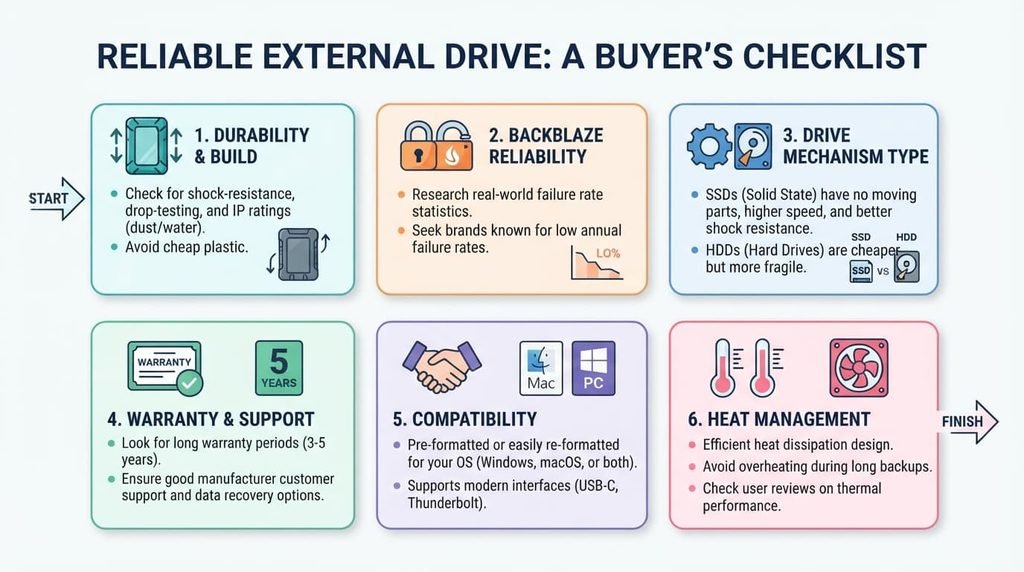
1. Genuine build quality and physical durability suited to your actual use pattern. Look specifically for construction quality appropriate to how you’ll genuinely use the drive – frequent travel demands more robust build quality than a drive staying permanently in one stationary location.
2. Manufacturer reliability track record and genuine warranty terms. A drive from a manufacturer with a consistently poor reliability reputation, regardless of how attractive its specifications appear, creates genuine risk for data you actually care about protecting.
3. Connection type and speed genuinely matching your actual devices and use case. A drive with connection capabilities mismatched to your actual devices creates practical friction or bottlenecks regardless of how impressive its other specifications are.
4. Genuine capacity matched to your actual realistic needs, not simply the largest available option. Significantly overbuying capacity you’ll genuinely never use adds cost without corresponding benefit, while underbuying creates recurring frustration, making honest capacity assessment worth doing directly.
5. Portability and physical size genuinely suited to how you’ll actually use and store the drive. A drive’s physical dimensions matter more for genuine daily convenience than many buyers initially consider, particularly for drives intended for regular transport between locations.
What doesn’t matter as much as it’s made out to
The single largest available storage capacity is oversold for typical household use specifically, and it’s the specification most prominently marketed. For many households, a more moderate capacity genuinely matched to actual realistic needs, combined with better build quality and reliability, serves better long-term than maximum capacity paired with more questionable durability.
Elaborate additional features – built-in encryption software, extensive companion app functionality – get more attention in marketing than they deserve relative to the core reliability criteria above for typical use. These features matter less for genuine long-term satisfaction than whether the drive reliably protects your actual data without unexpected failure.
Matching the choice to your situation
If you genuinely travel or transport the drive regularly, prioritise physical durability and shock resistance more heavily, since this particular factor matters more for your actual use pattern than it would for a drive remaining in one stationary location.
If you’re genuinely storing irreplaceable, critical data specifically, prioritise manufacturer reliability track record and warranty terms more heavily, since the consequence of failure matters more for this particular data than it would for more easily replaceable content.

What to walk away from
Any drive model whose reviews consistently mention premature failure or reliability issues during typical everyday use, should end your interest regardless of how appealing its capacity or price otherwise appears.
A specification sheet simply doesn’t reveal genuine long-term reliability the way consistent reviewer and user experience genuinely does, and a drive with a known, unaddressed reliability pattern will likely create recurring frustration and genuine data risk regardless of how attractively priced it initially and superficially seemed.

The check before you commit
Before finalising any drive purchase, research the specific model’s actual genuine failure rate and user-reported reliability directly, rather than relying solely on the capacity and price prominently displayed in-store or online.
This one single check reveals genuine long-term reliability far more reliably than specifications alone ever do, since a drive’s actual dependability often depends considerably more heavily on build quality and manufacturing consistency than on the capacity or price figures that marketing tends to emphasise most prominently and consistently.
Does the number of years a manufacturer has been producing storage devices genuinely matter?
Generally, yes, somewhat – manufacturers with a longer, consistent track record in storage technology specifically have typically refined their manufacturing processes over time, though this shouldn’t be your only consideration, since even established manufacturers can have specific models with genuine issues worth researching directly.
What people get wrong about choosing an external drive
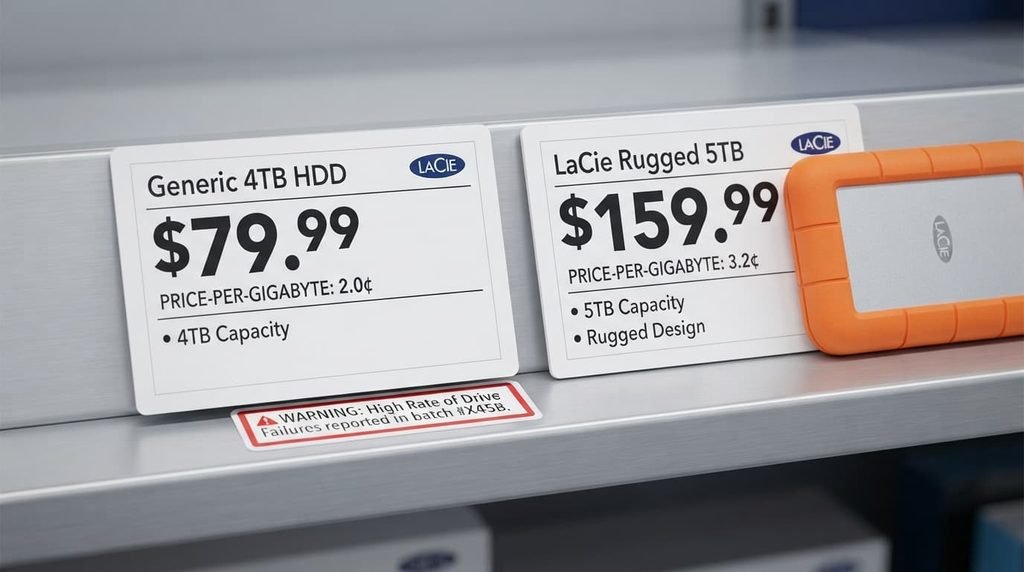
The most common mistake is comparing drives purely by their price-per-gigabyte figure, without researching genuine reliability differences that often matter more for total long-term value than raw capacity efficiency alone. This price-per-gigabyte focus is exactly what makes some models appear more attractively priced than their genuine reliability actually justifies.
A second common mistake is assuming all drives within the same general product line perform identically, when specific individual models can vary meaningfully in their actual components and resulting reliability, even within an otherwise similar product family from the same manufacturer.
What changes if you’re choosing a drive specifically for a shared household
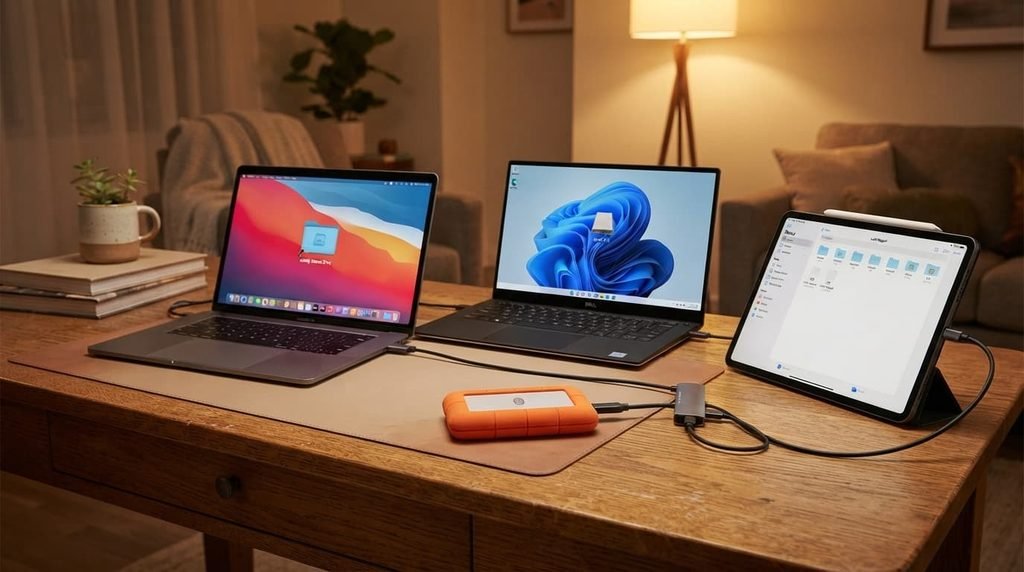
If you’re genuinely choosing a drive that multiple household members will actually use regularly, prioritise a connection type and format genuinely compatible across everyone’s actual different devices, since format incompatibility between different operating systems can genuinely create real friction a single-user purchase decision wouldn’t need to consider as carefully or thoroughly.
Questions readers keep asking
Does a more expensive drive always have meaningfully better reliability?
Not necessarily in every case – price correlates broadly with genuine build quality, but specific models vary considerably in their actual reliability track record, meaning researching a specific model’s real-world performance matters more than assuming price alone predicts this particular factor reliably.
Is it worth buying a drive specifically marketed as “rugged” or “durable” over a standard model?
For genuinely demanding use cases – frequent travel, potential physical exposure – this specific category can provide meaningful additional protection, though confirming the specific model’s actual durability testing and claims, rather than assuming the marketing label alone guarantees this, is worth doing directly.
Is it worth waiting to read multiple genuine long-term reviews before purchasing, rather than relying on initial impressions?
Genuinely, yes – initial unboxing reviews often miss the reliability issues that only become apparent after genuine extended use, making longer-term ownership reviews considerably more valuable for assessing this specific factor than first-impression coverage focused primarily on initial setup and appearance.
How can I estimate my genuine storage capacity needs before choosing a drive?
Reviewing your own actual current data volume and realistic future growth expectations, rather than simply assuming maximum available capacity is automatically the more prudent choice, gives a considerably more accurate sense of your genuine needs than defaulting to the largest option regardless of your own actual requirement.