Washable rugs are replacing wool ones in busy Dutch living rooms since a rug now has to survive spilled drinks and muddy shoes. A thin rug that goes through the washing machine copes with both far more cheaply than a thick one that needs a specialist. The change has a cost, and you’ll see it in warmth underfoot and in the soft feel. This article measures what changed and explains why households switch. It then names the cost and describes the extreme version. A short rule for deciding comes last. The figures assume a living room of 4 by 5 metres and an ordinary home washing machine.
Why washable rugs are replacing wool ones: the short version
A living room rug used to be an investment. You bought it once and vacuumed it weekly. A professional cleaned it every few years. That model assumed nobody wore outdoor shoes indoors and nobody ate on the sofa, and plenty of households don’t live that way now.
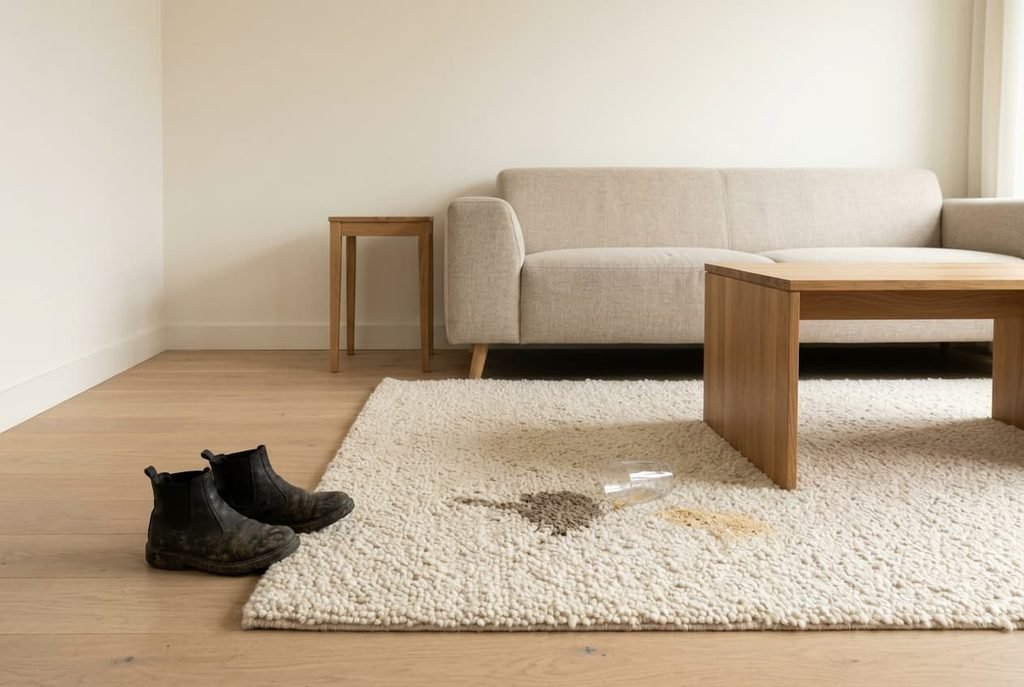
A wool rug soaks up a spill slowly and gives it back slowly. So a stain has to be blotted within minutes or it sets. A washable rug is built the other way round. It uses a thin flat weave that dries in an afternoon, and it goes through a home machine like a bedsheet. You don’t book anyone or carry anything down the stairs.
Two pressures push the switch. Rented homes change hands every few years, and a 15 kg rug is awkward to move. Busy rooms also collect grit faster than a weekly vacuum can lift it from a deep pile. Both pressures grow with every extra person in the flat.
The trend follows how the room is used.
What changed, in measurable terms
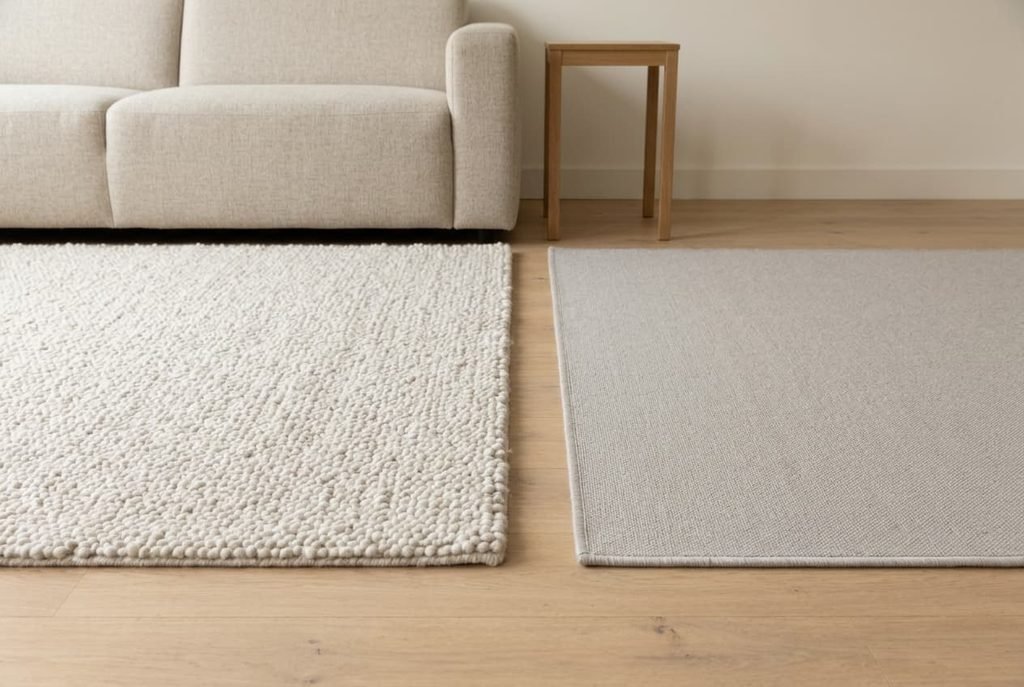
In measurable terms, the pile drops from about 15 mm to about 5 mm, and the weight falls from about 2.5 kg to about 1.1 kg per square metre, which moves the cleaning job from a delivery van to a drum. Compare the typical size on each side. A wool rug of 2 by 3 metres covers 6 m² and weighs about 15 kg. A washable rug of 1.6 by 2.3 metres covers 3.7 m² and weighs about 4 kg.
The cleaning routine changes with it. A wool rug gets a weekly vacuum and a professional clean every two or three years. That costs a day without the rug and a trip to carry it out. A washable rug gets the same weekly vacuum plus a machine wash every three months or after a serious spill. The wash takes about ten minutes of hands-on work.
Vacuuming gets quicker too. A 5 mm weave takes about 4 minutes a pass against 7 for a 15 mm pile. The weekly job falls from roughly 6 hours a year to roughly 3.5.
The footprint shrinks as well. At 3.7 m², the washable rug covers about 18% of a 20 m² floor, against 30% for the larger wool rug. Many households keep the same sofa and set a smaller rug in front of it. That leaves a wider bare border around the room. Washable rugs are replacing wool ones in size as well as in fibre.
Why washable rugs keep replacing the wool ones in family rooms
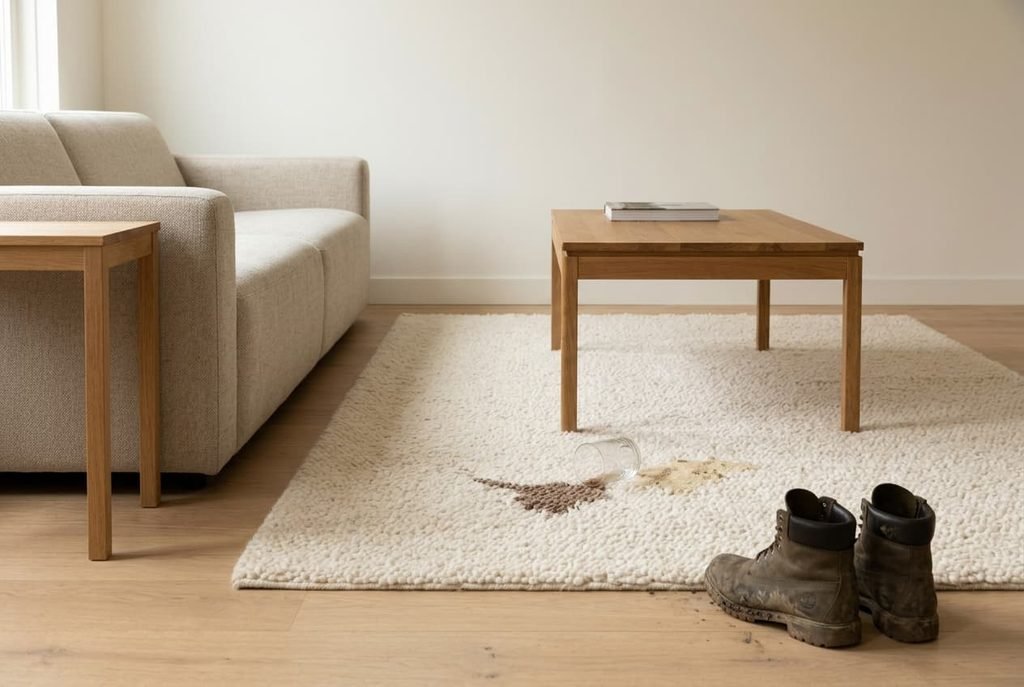
Three causes explain most of the shift. The first is spills. A family with a toddler or a dog can see several spills a month. Each one forces a choice between scrubbing at once and hoping it dries clean. A rug that tolerates the machine removes that choice.
The second cause is moving. A renter who moves every three or four years carries 15 kg of wool each time and often needs a second pair of hands. A 4 kg rug folds into a bag and fits in a car boot. Leaving it behind costs almost nothing, and taking it along costs no effort.
The third cause is grit. A thick pile traps sand from shoes deep in the fibres, and each vacuum pass lifts just some of it. A flat weave holds the grit on the surface. One pass removes most of it, and the quarterly wash clears the rest. Over a year the surface stays even, whereas the wool rug often flattens first along the walking paths where the shoes land. A family notices that change only when a guest points at the worn strip.
In a flat where outdoor shoes cross the room daily, grit is the real reason washable rugs are replacing wool ones. Spills only make the switch feel urgent, because they’re the part of the problem you can see on the day.
What you give up
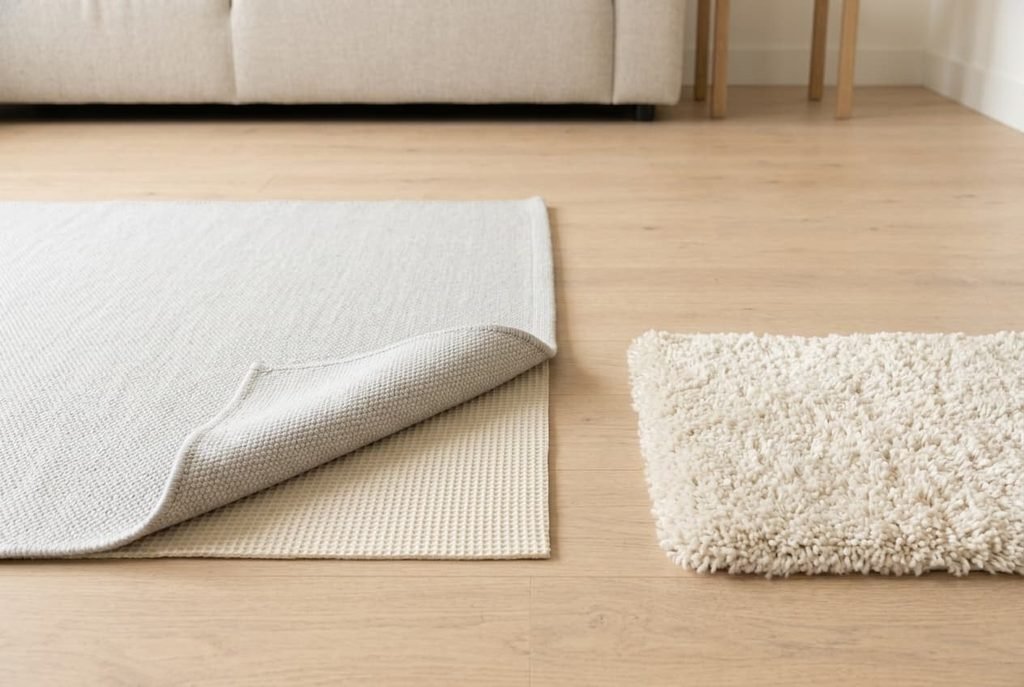
Warmth drops with the pile, because 5 mm of weave traps far less air than 15 mm of wool, so a bare winter floor feels cooler through a washable rug. That matters most in a ground-floor room with no underfloor heating.
Grip is the second loss. A flat weave slides on a smooth floor, so it needs a separate grip pad cut about 5 cm smaller than the rug on every side. The pad can’t go in the machine. It flattens within a couple of years, so you replace it separately.
Colour fades too. Frequent washing softens dyes, so a deep shade looks different within a year. A pale or patterned rug hides the change best. A plain dark rug shows it first. The feel changes as well: a flat weave is firmer under bare feet, and some people never get used to that.
The extreme version
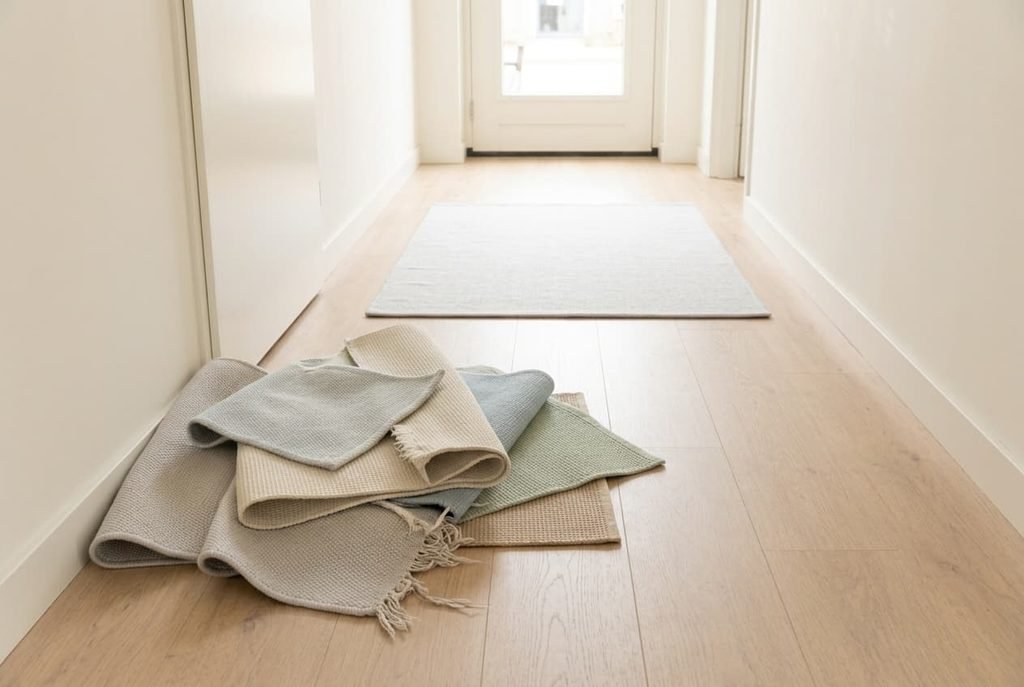
The extreme version treats the rug as a disposable item: a very cheap thin rug that gets replaced each year or so and sent to landfill without a second thought. That swaps cleaning effort for waste, and it misses the point of the trend. A washable rug earns its place by lasting for years because you can keep it clean. A rug bought to be thrown away has no advantage over a wool one, apart from an early saving that disappears after the second replacement.
Few households need to go that far.
If you buy a washable rug, wash it once in the first week. A rug that comes out of that wash misshapen or noticeably thinner will do the same every time. Return it before the colour has settled in your room. That first wash is the cheapest test you’ll get, and it shows how the weave will cope with the next ten.
Who it suits
Washable rugs suit a room where spills are routine. They also suit a rented flat where the rug has to move with you. A family with a toddler gets the most from them, because the first years of mess are the hardest on a thick pile. Keep the wool rug if the room is quiet and heated from below, because there the warmth and the feel are worth the cleaning effort. Test it with one question: how many times last month did something land on the rug? Two spills or more point to washable. None points to wool, and a single one is a coin toss.
Washable rugs are replacing wool ones fastest where the room takes the most punishment, and that tells you what to do. Match the rug to what the room really gets. Then clean it on schedule. A washable rug that never meets the machine is only a thin rug with a stain, and it won’t be any warmer than the wool one you gave away.
Questions readers keep asking
Should I replace a wool rug I already own?
Only if it’s causing a problem. A wool rug in good condition costs nothing to keep, so there’s no gain in swapping it early. Replace it when it keeps staining or has become too heavy to move for cleaning. Before you decide, try it in a low-traffic room for a month.
Who do washable rugs suit best?
Families with small children or a dog, and anyone in a rented home. They fit rooms where spills are routine and where the rug may need to move with you. A quiet formal room suits them less, because a thick pile adds warmth there and the cleaning effort stays small.
How long does a washable rug last?
A heavier weave with stitched edges holds its shape longest, while a very thin one frays sooner. Wash it on a cool cycle and dry it flat, and the rug then stays usable for several years. Colour usually fades before the structure gives way, so choose a shade you can live with.