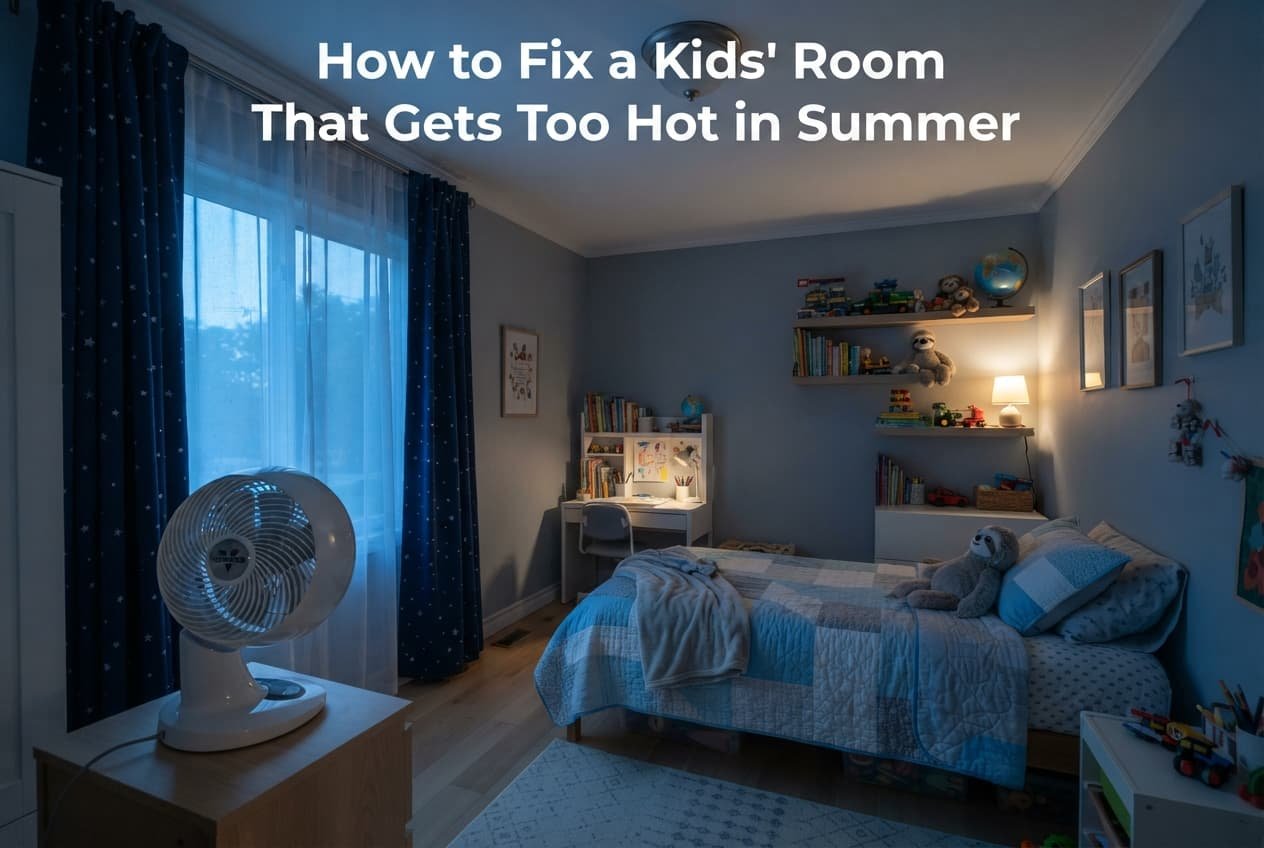
A kids’ room that genuinely gets too hot in summer usually isn’t a space with no possible fix – it’s a space where specific, addressable factors are combining to trap and retain heat, which is a fundamentally different problem than simply having a room in an inherently poor location. Understanding which factor is actually driving the heat determines whether the fix is simple and immediate, or genuinely requires a more substantial change.
What is actually happening
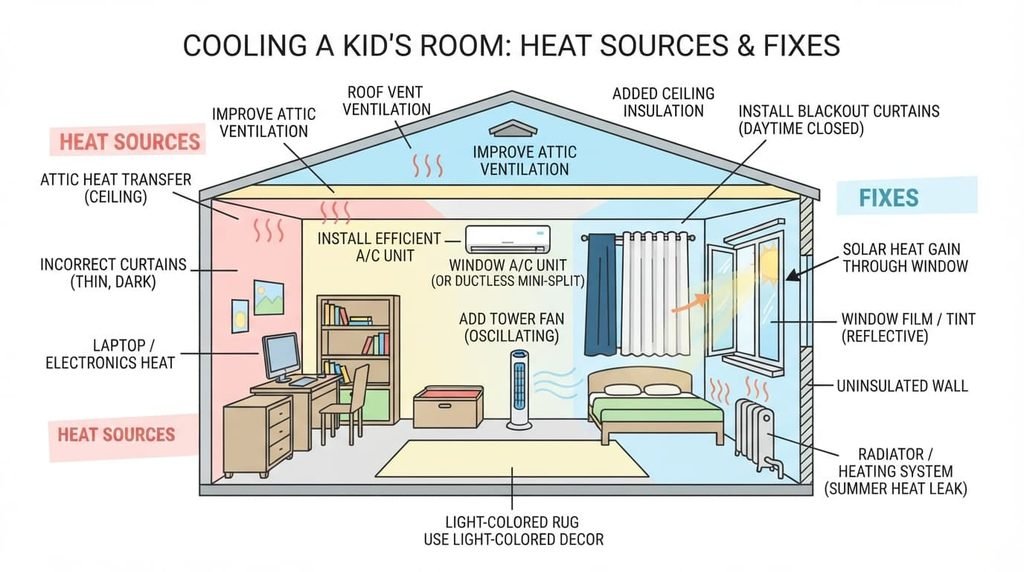
Persistent summer heat in a kids’ room typically stems from a combination of direct sun exposure through windows, inadequate air circulation, and heat-retaining materials or clutter that prevents the room from cooling effectively once the sun has passed. A room that faces direct afternoon sun specifically tends to accumulate considerably more heat than one with different window orientation, which compounds with any circulation limitation to produce genuinely uncomfortable conditions, particularly at bedtime when a cooler room matters most for comfortable sleep.
This matters because “the room is just hot” often gets treated as an unavoidable property of the space, when the actual issue is frequently this specific combination of factors, meaning a fix addressing only one – adding a fan, for instance – may not fully resolve genuine persistent heat on its own.
Confirm which pattern you have
Check specifically which direction your child’s room windows face and during which hours direct sun genuinely enters, since this determines whether window covering and timing-based fixes will meaningfully address your specific situation.
Check whether the room stays hot even well after the sun has moved away from that side of the house, or whether it cools reasonably once direct sun exposure ends – this distinguishes a genuine circulation or retained-heat problem from a purely sun-exposure-driven one.
The fixes, in order of cost
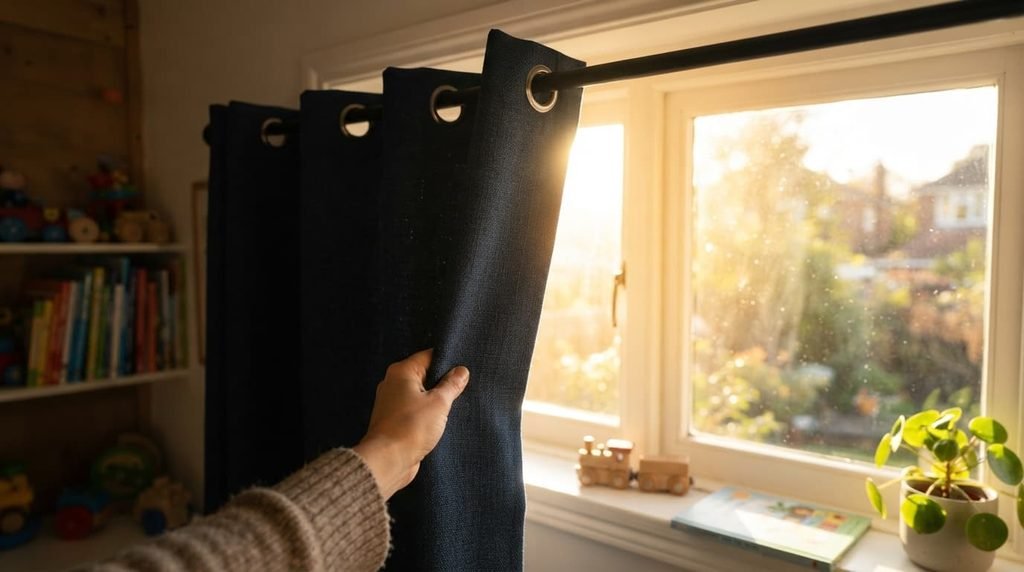
1. Add blackout or thermal curtains specifically, closed during your room’s actual peak sun exposure hours. This costs relatively little and directly addresses heat entering through windows during direct sun exposure, without requiring any structural change to the room.
2. Improve air circulation with a fan positioned to move air through the room rather than directly at a fixed point. This is a modest addition to the total cost but directly addresses heat retention after sun exposure ends, helping the room actually cool down rather than remaining warm well into the evening.
3. Reduce heat-retaining clutter and dark-coloured textiles specifically, since these absorb and hold heat more than lighter, more reflective materials do. This costs little beyond the effort involved and directly addresses a contributing factor that’s easy to overlook when focusing purely on windows and airflow.
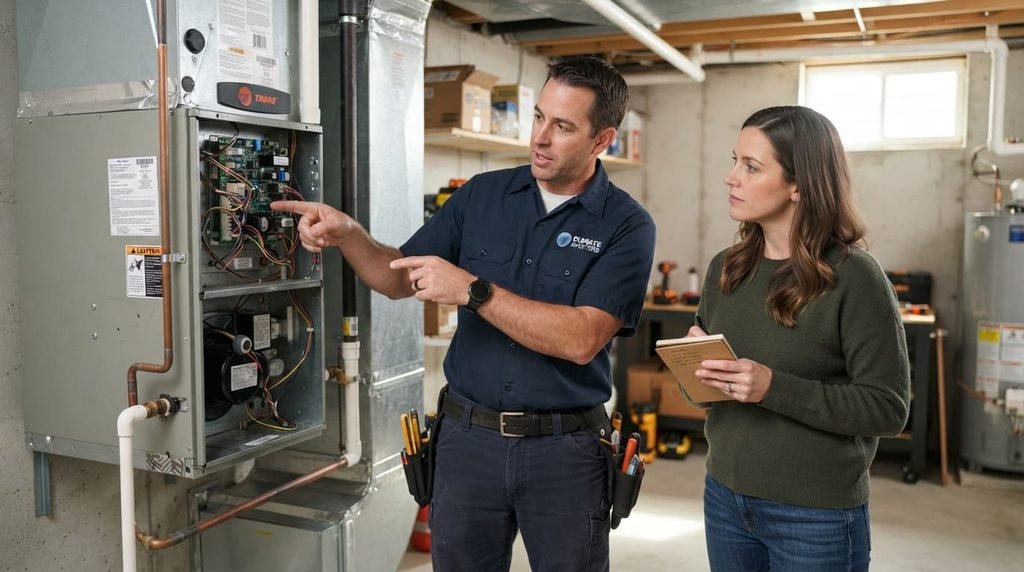
4. For a room with a genuine, persistent heat problem the fixes above don’t resolve, consult a licensed HVAC professional about the space’s specific cooling needs. This is a professional consultation, not a DIY project – any change to your home’s actual cooling system needs proper assessment of your specific setup before being considered further.
What isn’t worth doing
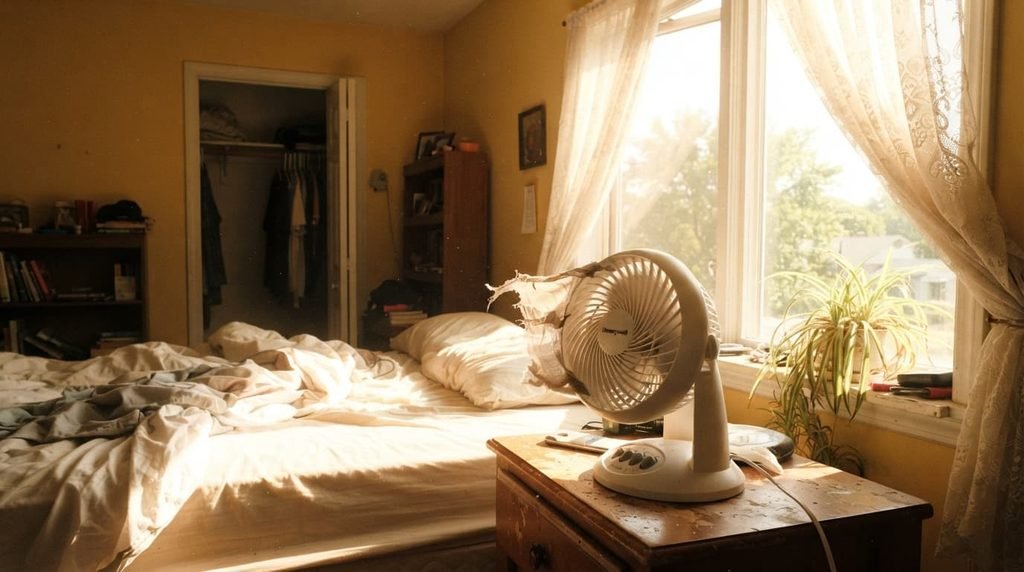
Relying entirely on a single small fan as your complete cooling strategy, without addressing genuine sun exposure or heat retention specifically, isn’t worth doing as a complete solution on its own.
A fan moves existing air but doesn’t reduce the actual heat load a room is accumulating from direct sun exposure or heat-retaining materials, meaning a small fan alone often provides only modest relief in a room where the underlying heat accumulation itself remains genuinely unaddressed.
Bedding weight and material also compound this problem specifically during summer months, since heavier or less breathable bedding retains body heat in a way that can meaningfully affect a child’s comfort even in a room that’s otherwise been reasonably cooled through the fixes above. Switching to lighter, more breathable bedding seasonally is a simple, low-cost complement to the other fixes covered here.
What people get wrong about fixing this
The most common mistake is assuming a hot room is simply an unavoidable consequence of summer weather, when the actual cause is frequently a specific, addressable combination of factors rather than something inherent to warm weather generally. Two rooms in the same home can vary considerably in summer temperature specifically because of these addressable differences, not because summer heat itself affects every room in a home equally.
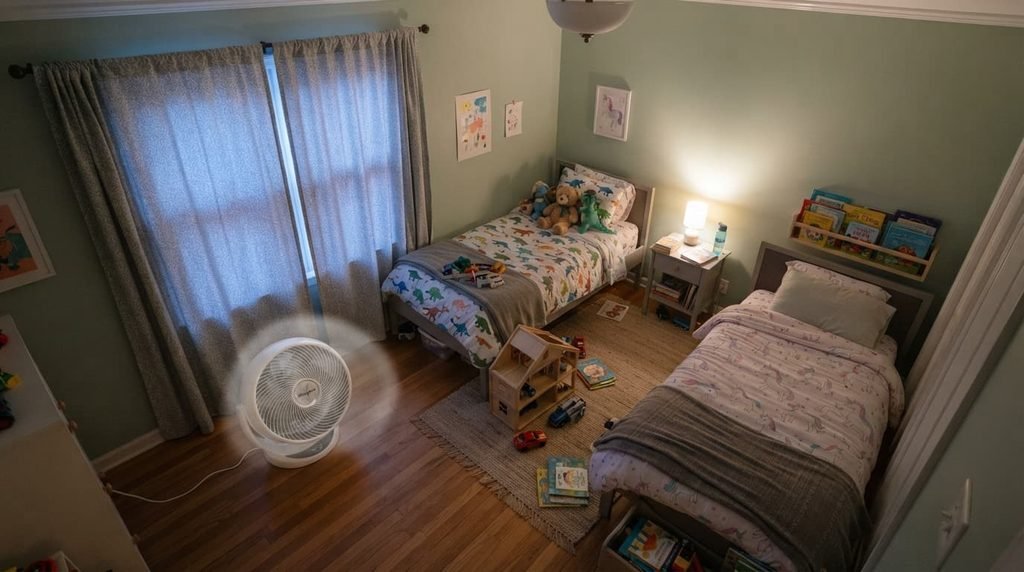
A second common mistake is addressing the heat only once a child is already trying to sleep, without considering whether the room could be pre-cooled earlier in the evening. A room that’s been closed up and accumulating heat all day benefits from curtains closed and air circulating well before bedtime specifically, rather than only addressing the heat once your child is already in the room trying to fall asleep.
What changes if your situation is different
If your kids’ room’s heat problem is genuinely limited to a few specific hours of direct afternoon sun rather than persisting throughout the entire day, prioritise a simpler, targeted fix – timed curtain closure during those specific hours – over a more substantial cooling change, since the actual problem window may not justify additional cost and complexity.
If you’re renting and cooling system changes genuinely aren’t available to you, the curtain, circulation, and clutter-reduction fixes become your practical ceiling, and a genuinely well-chosen combination of these can meaningfully address most summer heat without requiring any structural change to the space at all.
The one thing to check before you commit
If you’re pursuing the licensed HVAC professional option specifically, confirm with them whether your home’s existing cooling system can genuinely support additional capacity for this specific room, since this determines both feasibility and cost in ways that aren’t visible from simply assessing the room itself.
This matters more for this specific option than for the other fixes above, since those remaining fixes are all fully reversible, low-cost, and require no professional assessment at all, while a cooling system change carries genuine cost and complexity worth confirming clearly before any further planning proceeds.
Questions readers keep asking
Do blackout curtains genuinely help with heat, or only with light?
They genuinely help with both – blackout and thermal curtains are specifically designed to block a meaningful amount of heat alongside light, making them a reasonable first step for a room experiencing significant direct sun exposure during specific hours.
Is it safe to leave a fan running in a child’s room overnight?
Generally yes for a fan specifically designed for continuous use, positioned safely away from the bed and any cords out of reach, though following the specific fan’s own manufacturer guidance for safe placement and use is worth confirming directly.
Can plants genuinely help cool a hot kids’ room?
To a modest degree specifically through natural humidity regulation, though this effect is generally secondary to the sun-exposure and circulation factors covered above, so plants are a reasonable complementary addition rather than a primary cooling solution for genuinely significant summer heat on their own.
When is it worth considering a proper cooling system upgrade instead of the simpler fixes?
If you’ve genuinely tried addressing sun exposure and circulation and the room still doesn’t achieve comfortable temperatures for your child’s specific needs, that’s the point worth consulting a licensed professional about a more substantial cooling solution, rather than starting there before trying the simpler, lower-cost fixes first.