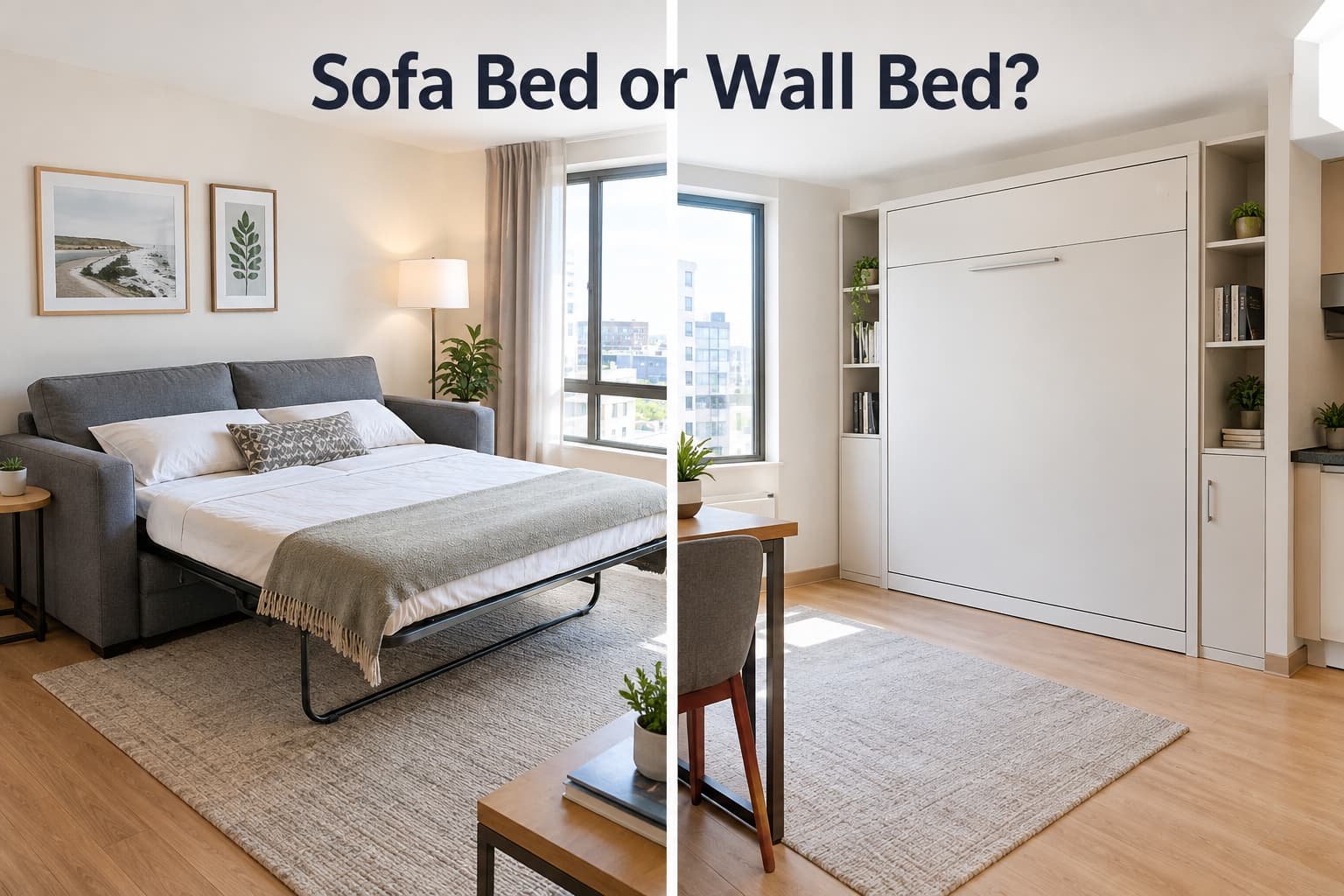
In a studio, the bed is the piece of furniture that argues with everything else. A sofa bed solves the argument by being a sofa for most of the day. A wall bed solves it by disappearing into the wall. Both get the bed out of sight until you need it, but they give up different things to do it, and the right choice depends less on style than on how often you actually sleep on it.
The one property that decides it
The deciding property is how often the bed is used. If it is your bed every night, comfort and the daily effort of setting it up matter most. If it is for guests a few nights a year, the value of the piece for the other three hundred and sixty days matters most.
A sofa bed turns a sofa into a bed. A wall bed is a proper bed that hides. That one difference explains almost everything below.
Head to head
| Sofa Bed | Wall Bed | |
|---|---|---|
| Daily sleep comfort | Often lower | Usually better |
| Space when folded | Sofa-sized | Slim on the wall |
| Needs wall fixing | No | Yes |
| Easy to move | Yes | No |
| Bedding stays on | No | Often yes |
| Seating included | Yes | Usually separate |
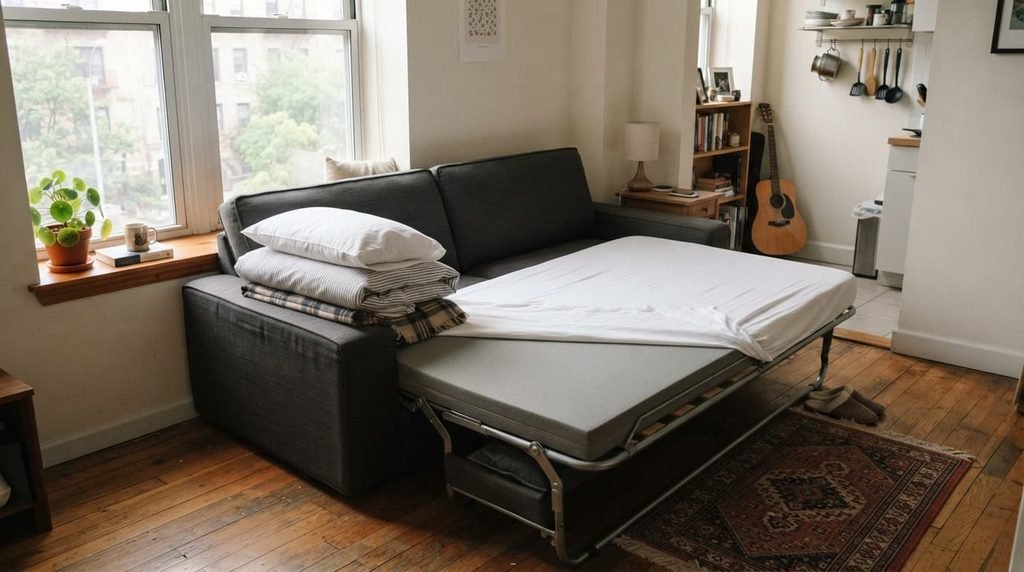
The row that surprises people most is the bedding. Many wall beds fold up with the bedding still on, so making and unmaking the bed takes seconds. A sofa bed means stripping the bed, folding the sheets and storing them somewhere every single morning. That daily effort is what decides whether people keep using the bed or give up and sleep on the sofa as a sofa.
Where a sofa bed wins
Anyone who needs the bed only occasionally benefits from a sofa bed, because it is a sofa all week and a bed only when it is needed. It needs no installation, it moves with you when you leave, and it works in a rented studio where nothing can be fixed to a wall. The unglamorous reason is that it replaces two pieces with one. In a small studio, one fewer large item to place is often worth more than any other feature, and the sofa is also your main seating, so you never have to find room for a separate one.
A sofa bed also keeps the layout predictable. It occupies the same footprint all day, and the open bed uses the floor space in front of it only for the hours when someone is sleeping on it.
Where a wall bed wins
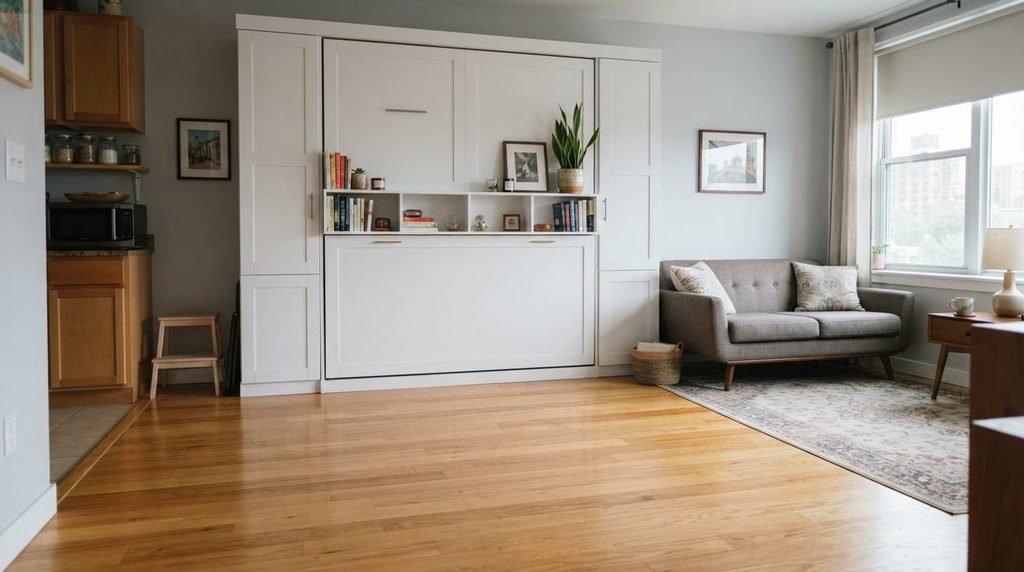
Anyone who sleeps on the bed every night benefits from a wall bed, because it gives you a real mattress that stays flat, rather than a thin one folded inside a sofa frame. The unglamorous reason is the floor. When the bed is folded away, the studio gets its floor back every morning, and the wall can double as storage, with shelves or a desk on the front of the folded unit in some designs.
A wall bed also keeps the routine short. When the bedding stays on, the whole job of turning the room from bedroom to living space is one lift, and that suits people who work from home and need the room to change twice a day. A wall bed also lets a studio hold a proper guest bed it could never fit otherwise, because the same floor serves as a living room or an office all day and only becomes a bedroom at night.
When neither is right
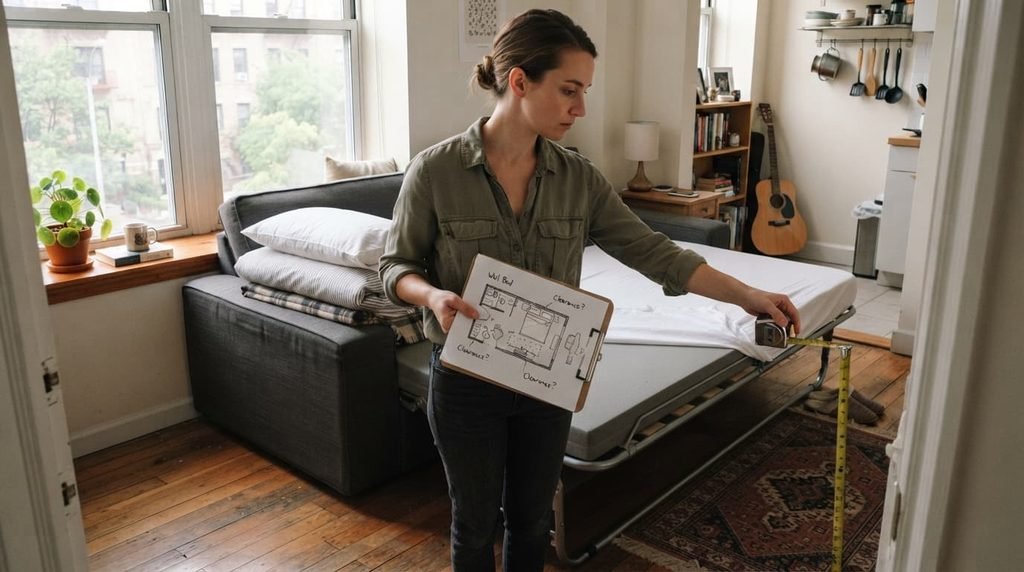
Choosing by how neat the piece looks in a showroom photograph, without measuring the floor you need when it is open, is worth ruling out whichever type you favour.
Both types need clear floor space when open, and in a studio that space often overlaps the route to the door, the kitchen or the window. A bed that fits the wall beautifully but blocks the only path across the room will be left folded away, and then you have bought an expensive cupboard.
A floor test before you buy
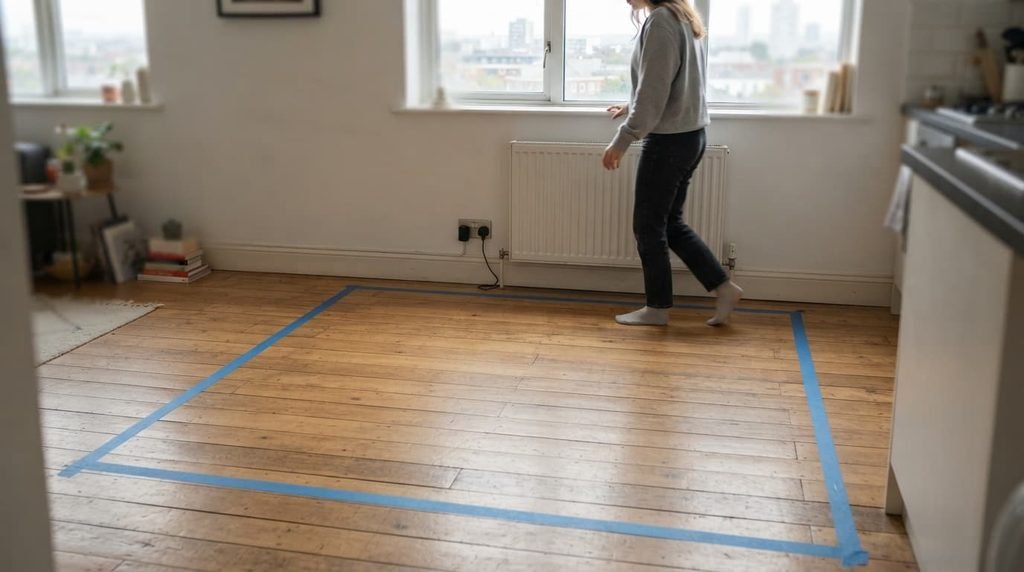
Measure the open footprint from the maker’s specification, then mark it on the floor with painter’s tape, or lay out newspaper, and live with it for a day. Walk around it, open the door, reach the window, and check that a radiator, a socket or a piece of furniture is not caught inside the line. If the marked bed makes the room unusable at any point in the day, you have learned something that no photograph would show you.
How to decide in thirty seconds
If the bed is yours every night and you can fix it to the wall, choose a wall bed. It gives you a real mattress and a quick routine.
If the bed is mainly for guests, or you cannot fix anything to the wall, choose a sofa bed. It is a sofa all week and needs no installation.
What changes the answer later
If a bed meant for guests starts to be your own nightly bed, a wall bed becomes the better fit. If you move to a rented studio, a sofa bed becomes the sensible choice. And a change of ceiling height or wall type can rule a wall bed out, because it needs a suitable wall and enough height to fold upright.
Installation and handling
A wall bed holds a heavy mattress on a mechanism that stores energy in springs or pistons, so it must be installed to the maker’s instructions into a suitable wall or a free-standing frame. If you are not sure what the wall is made of or what runs behind it, have a licensed professional check before anything is fixed. Never adjust or remove the springs or pistons yourself.
A sofa bed has a mechanism with moving metal parts too, so keep fingers and children clear while it opens and closes.
What people get wrong
The first mistake is buying a sofa bed for nightly use. The thin mattress and the frame beneath it wear on a nightly sleeper, and many people end up resenting the bed within weeks.
The second is assuming a wall bed fits any wall. It needs enough height to fold up, a wall or frame that can carry the load, and a clear floor in front of it.
The third is forgetting the sofa. A wall bed studio still needs somewhere to sit, so the space you saved on the bed has to be spent on seating.
Questions readers keep asking
Can I fit a wall bed in a rented studio?
Often it needs fixing to a wall or ceiling, so ask your landlord first. Some free-standing frames exist, but check with the maker how they are secured.
Are sofa beds really uncomfortable?
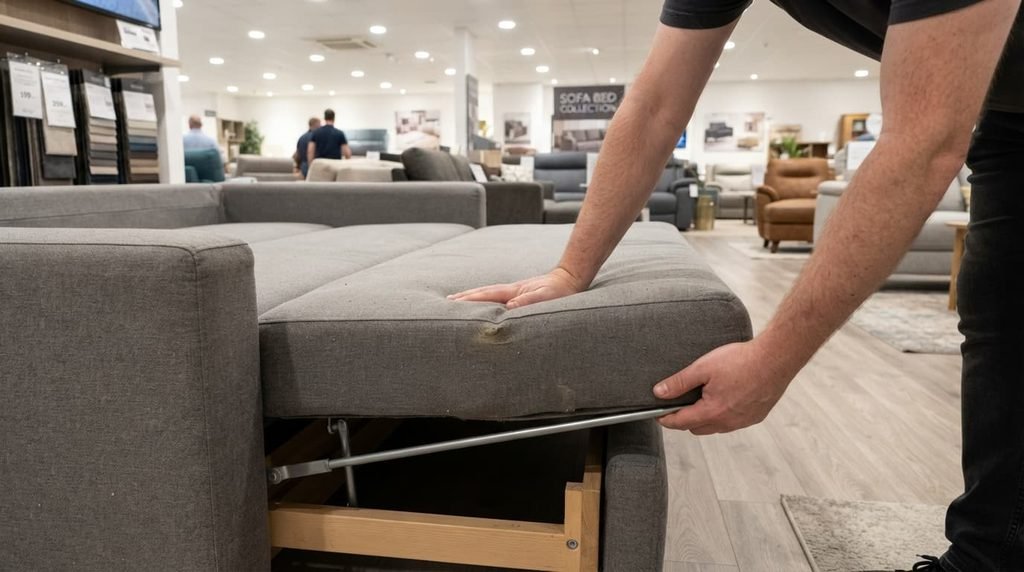
Many have a thin mattress and a bar you can feel, so test one by lying on it for ten minutes in the shop. Quality varies a great deal, and the better ones are noticeably more comfortable.
What mattress goes in a wall bed?
It has to fit the frame in size and thickness, and makers state a maximum thickness. A mattress that is too thick can stop the bed from folding properly.
Does a wall bed make noise?
Mechanisms differ, so test opening and closing in the shop. If you live near neighbours and use the bed late or early, quiet operation is worth checking.